Bookbot

Giorgio Agamben

    22 avril 1942

    Giorgio Agamben s'impose comme une voix majeure de la philosophie continentale contemporaine, réputé pour ses explorations profondes de la souveraineté, du droit et de la nature de la vie humaine. Son œuvre examine de manière critique la relation complexe entre le pouvoir politique et l'existence, en s'appuyant souvent sur des sources historiques et littéraires pour éclairer des questions philosophiques durables. Le style distinctif d'Agamben combine une analyse théorique rigoureuse avec un profond engagement envers les implications de sa pensée pour le monde moderne. Ses idées influentes continuent de façonner le discours critique dans diverses disciplines.

    Giorgio Agamben
    STASIS
    The Use of Bodies
    Self-Portrait in the Studio
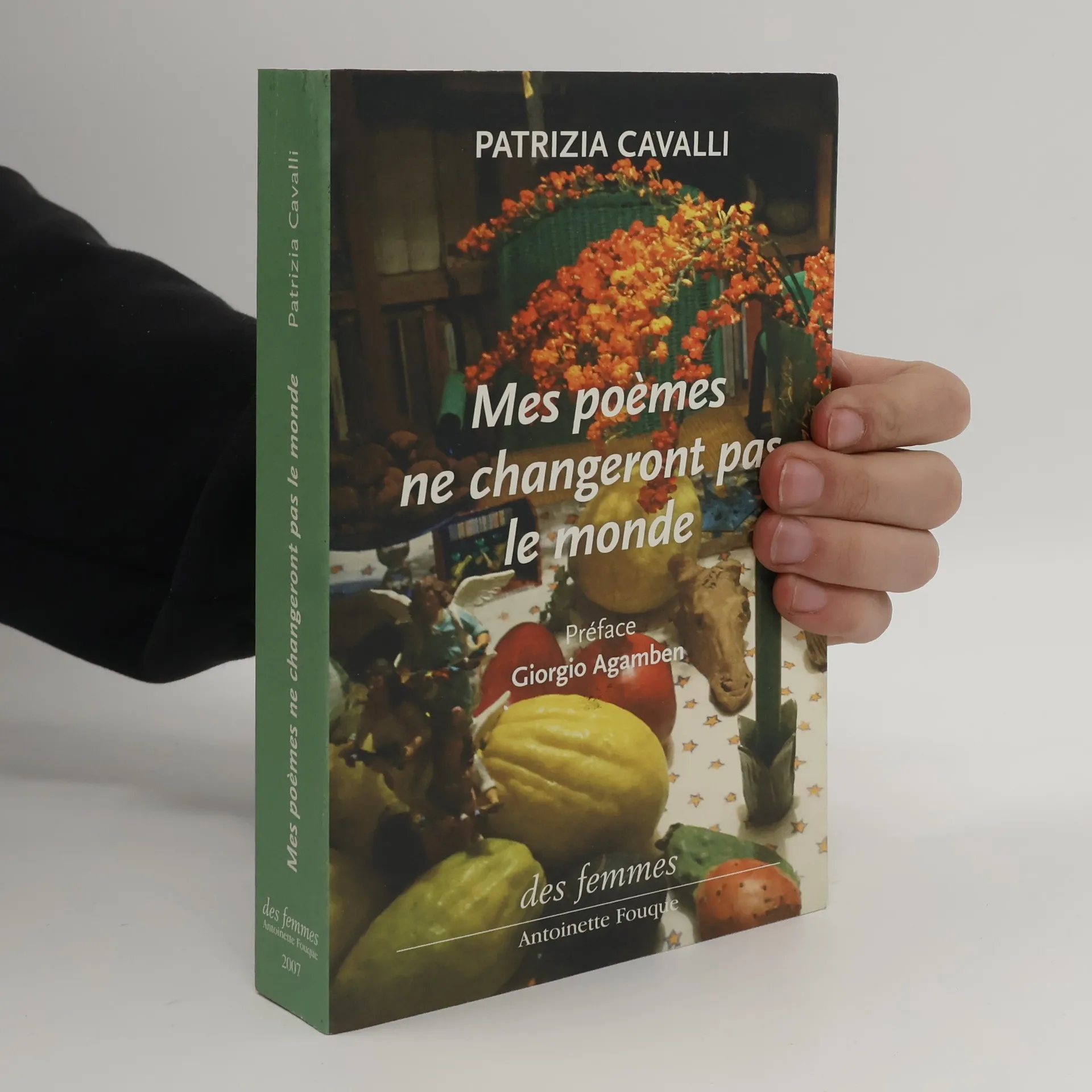
    Mes poèmes ne changeront pas le monde - Edition bilingue français-italien
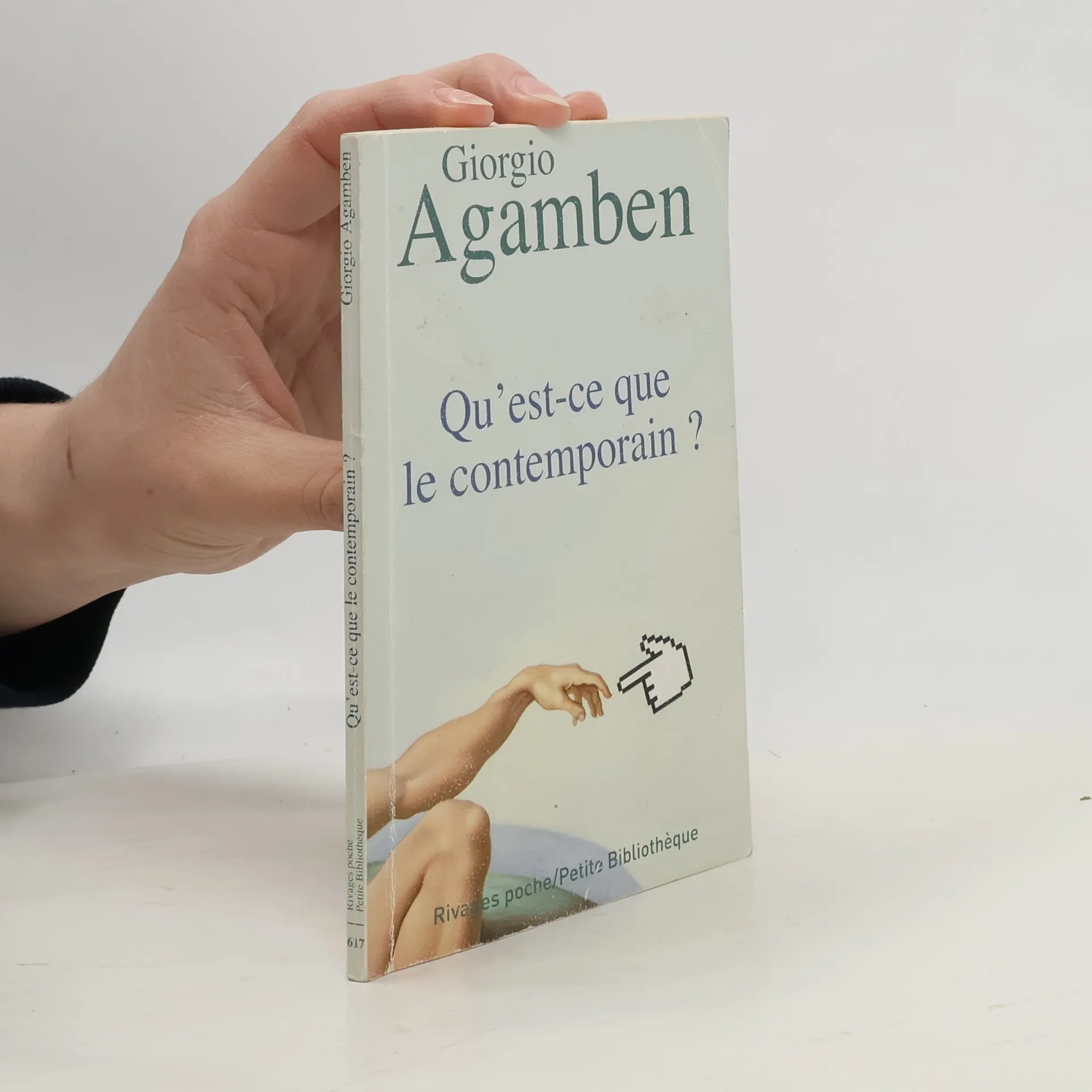
    Qu'est-ce que le contemporain ?
    Le mystère du mal
    • Le mystère du mal

      • 150pages
      • 6 heures de lecture

      En accomplissant son grand refus, Benoit XVI n'a pas fait preuve de lachete, mais d'un courage qui prend un sens et une valeur exemplaires. Sa decision attire l'attention sur la distinction entre deux principes essentiels de notre tradition ethico-politique, dont nos societes semblent avoir perdu toute conscience: la legitimite et la legalite. Si la crise que traverse actuellement notre societe est si grave et si profonde, c'est parce qu'elle ne met pas seulement en question la legalite des institutions, mais aussi leur legitimite, ni seulement, comme on le repete trop souvent, les regles et les modalites de l'exercice du pouvoir, mais le principe meme qui le fonde et le legitime. Le mystere du mal dont parle l'apotre Paul n'est pas un sombre drame theologique qui retarde la fin des temps, paralysant et rendant toute action enigmatique et ambigue, mais un drame historique ou le Dernier Jour coincide avec le moment present et ou chacun est appele a jouer son role sans reserves et sans ambiguite.
      Le mystère du mal
      3,0
    • Qu'est-ce que le contemporain ?

      • 64pages
      • 3 heures de lecture

      Cette étude, fondée sur des écrits de philosophes, de poètes, de scientifiques, offre des pistes de réflexion concernant la question que pose le présent.

      Qu'est-ce que le contemporain ?
      3,8
    • Traduit de l’italien par Danièle Faugeras et Pascale Janot Préface de Giorgio Agamben Cette édition rassemble trois recueils, "Mes poèmes ne changeront pas le monde" (Le mie posie non cambrieranno il mondo, 1974, dédié à Elsa Morante), "Le Ciel" (Il Cielo, 1981) et "Le moi singulier qui n’est qu’à moi" (L’io singolare proprio mio, 2006). Des recueils composés de très courts poèmes : des saynètes où la simplicité de l’écriture, où la futilité des thèmes ne sont qu’apparentes. Où l’expression subtile de sentiments, de sensations opposent une réalité toujours trop étroite à l’aspiration au grandiose. Dans cette écriture intime, autobiographique, le lyrisme côtoie l’humour et la dérision. Dans une condensation qui rappelle l’art de l’aphorisme, les poèmes de Patrizia Cavalli « font mouche » : quelques mots, quelques lignes suffisent à faire surgir une vision du monde très singulière.

      Mes poèmes ne changeront pas le monde - Edition bilingue français-italien
    • Self-Portrait in the Studio

      • 220pages
      • 8 heures de lecture

      Through a unique approach, the book offers an autobiographical insight into the life of philosopher Giorgio Agamben, revealing his identity through the influences of notable figures like Martin Heidegger and Walter Benjamin. Instead of a traditional narrative, it intertwines images, photographs, and objects from his creative spaces, creating a self-portrait that reflects his encounters and passions. This blend of visual and textual elements forms a distinctive auto-heterography, showcasing how others have shaped his thought and writing.

      Self-Portrait in the Studio
      4,8
    • The Use of Bodies

      • 320pages
      • 12 heures de lecture

      The final volume in Homo Sacer, Giorgio Agamben's wide-ranging investigation of the foundations of Western politics and culture.

      The Use of Bodies
      4,4
    • STASIS

      • 64pages
      • 3 heures de lecture

      Offers Agamben's genealogy of power in terms of political, philosophical and legal thought. This book investigates the genealogy of the strife between the Polis and its population with particular regard to the Greek concept of stasis and the strife with the commonwealth of Hobbes' Leviathan.

      STASIS
      4,7
    • A richly illustrated analysis from one of Europe's greatest living philosophers. In Pinocchio, Giorgio Agamben turns his keen philosopher's eye on the famous nineteenth-century novel by Carlo Collodi. To Agamben, Pinocchio's adventures are a kind of initiation into life itself. Like us, the mischievous puppet is caught between two worlds. He is faced with the alternatives of submitting to authority or of carrying on, stubbornly indulging his way of being. From Agamben's virtuoso interpretation of this classic story, we learn that we can harbor the mystery of existence only if we are not aware of it, only if we manage to cohabit with an area of non-knowledge, immemorial and very near. Richly illustrated with images from three early editions of Collodi's novel, this new volume will delight enthusiasts of both literature and philosophy.

      Pinocchio - The Adventures of a Puppet, Doubly Commented Upon and Triply Illustrated
      4,5
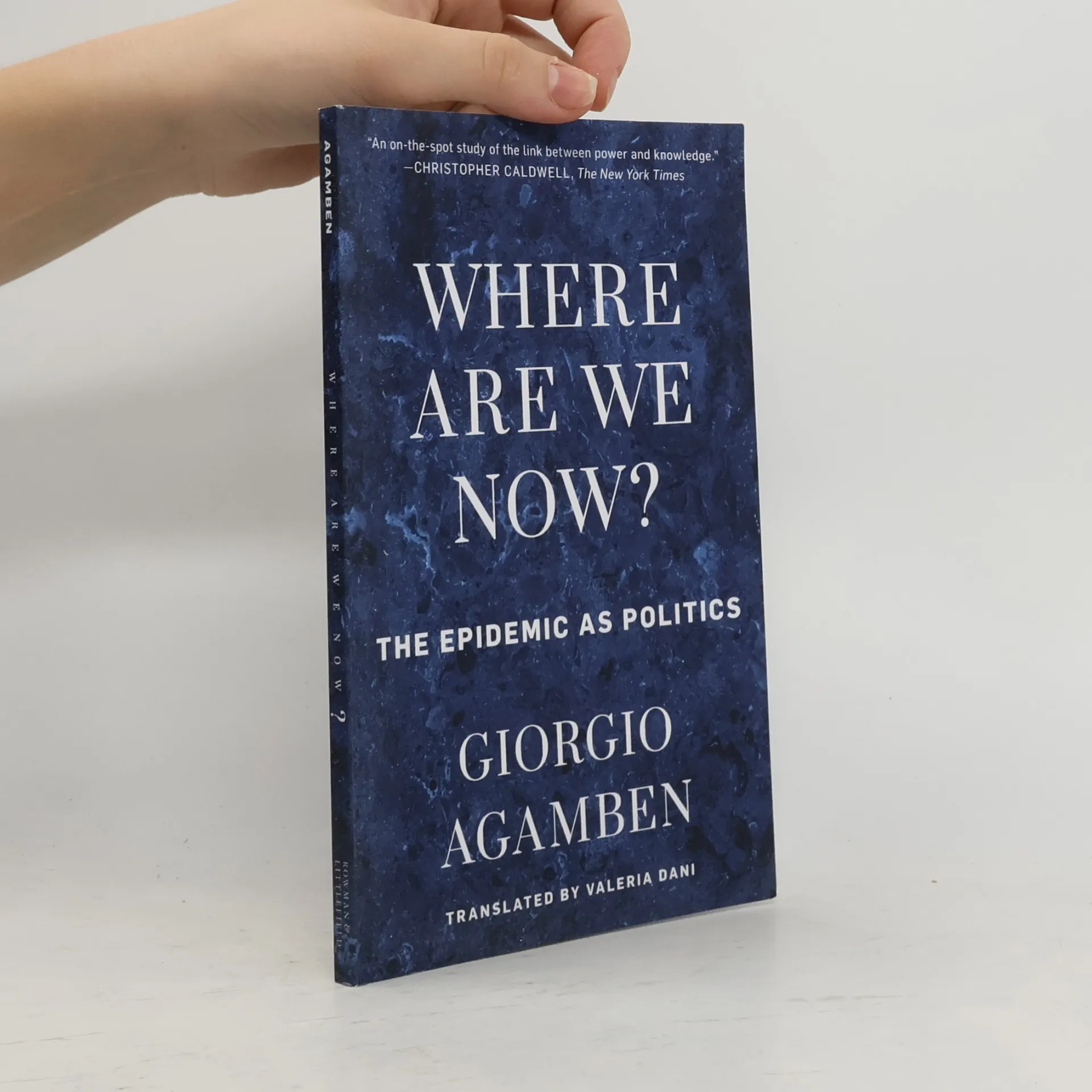
    • Where Are We Now?

      The Epidemic as Politics

      • 104pages
      • 4 heures de lecture

      The book features Giorgio Agamben's intense and personal reflections on the 2020 health emergency, examining its impact in Italy and globally. Through his philosophical lens, he critiques the societal and governmental responses to the crisis, offering profound insights into themes of freedom, authority, and human experience during unprecedented times.

      Where Are We Now?
      4,0
    • The Sacrament of Language

      • 128pages
      • 5 heures de lecture

      Exploring the oath's pivotal role in political and religious history, this book delves into its strategic significance at the crossroads of law, religion, and politics. Agamben conducts an archaeological analysis of Greek and Roman texts, revealing the oath as a foundational event in human development. He argues that the oath serves as both a 'sacrament of power' and a 'sacrament of language,' highlighting how humanity's ability to speak intertwines with the commitments made through oaths, shaping individual and collective identity.

      The Sacrament of Language
      4,0
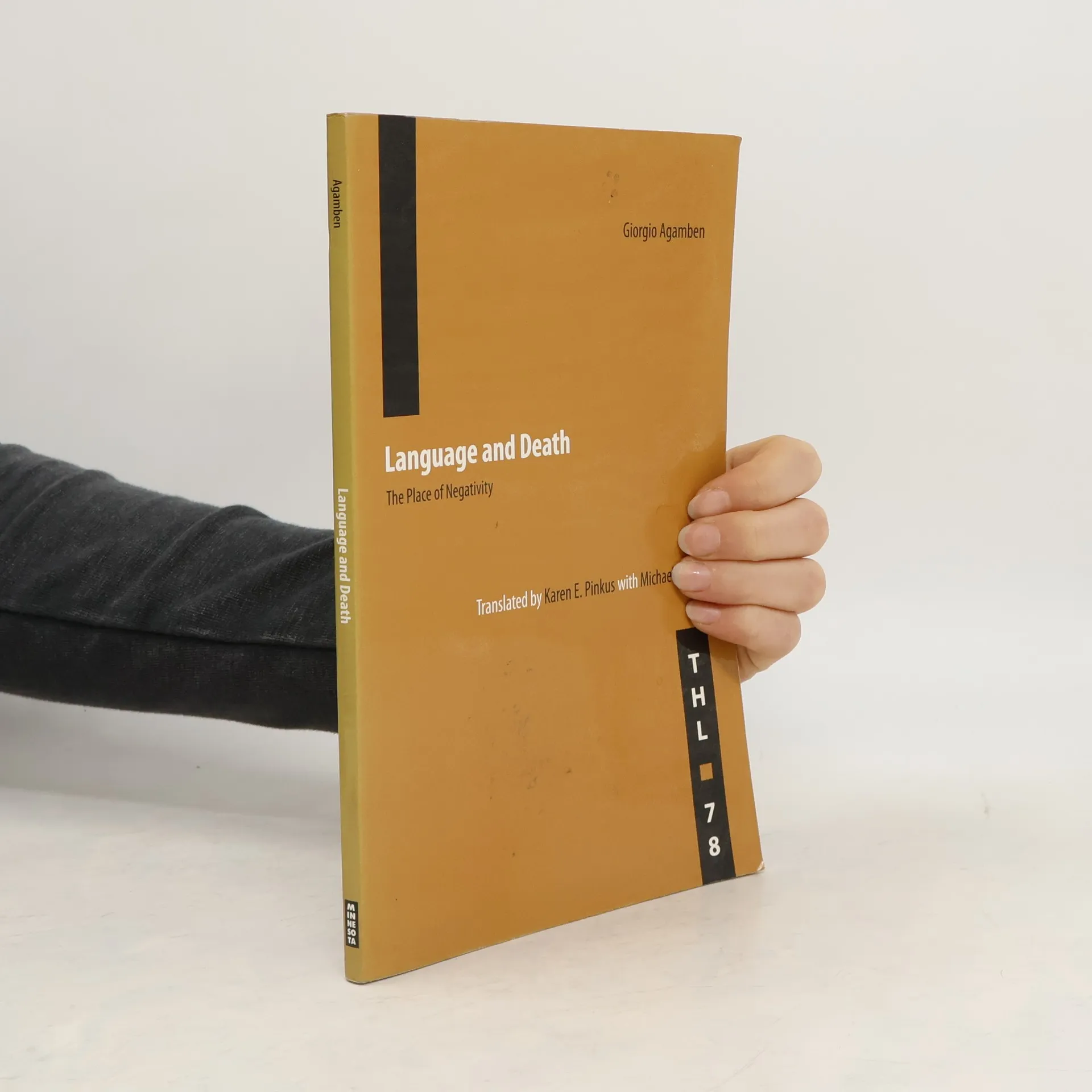
    • Theory and History of Literature - 78: Language and Death

      The Place of Negativity

      • 136pages
      • 5 heures de lecture

      A formidable and influential work, Language and Death sheds a highly original light on issues central to Continental philosophy, literary theory, deconstruction, hermeneutics, and speech-act theory. Focusing especially on the incompatible philosophical systems of Hegel and Heidegger within the space of negativity, Giorgio Agamben offers a rigorous reading of numerous philosophical and poetic works to examine how these issues have been traditionally explored. Agamben argues that the human being is not just “speaking” and “mortal” but irreducibly “social” and “ethical.” Giorgio Agamben teaches philosophy at the Collège International de Philosophie in Paris and at the University of Macerata in Italy. He is the author of Means without End (2000), Stanzas (1993), and The Coming Community (1993), all published by the University of Minnesota Press. Karen E. Pinkus is professor of French and Italian at the University of Southern California. Michael Hardt is professor of literature and romance studies at Duke University.

      Theory and History of Literature - 78: Language and Death
      4,2