

En savoir plus sur le livre
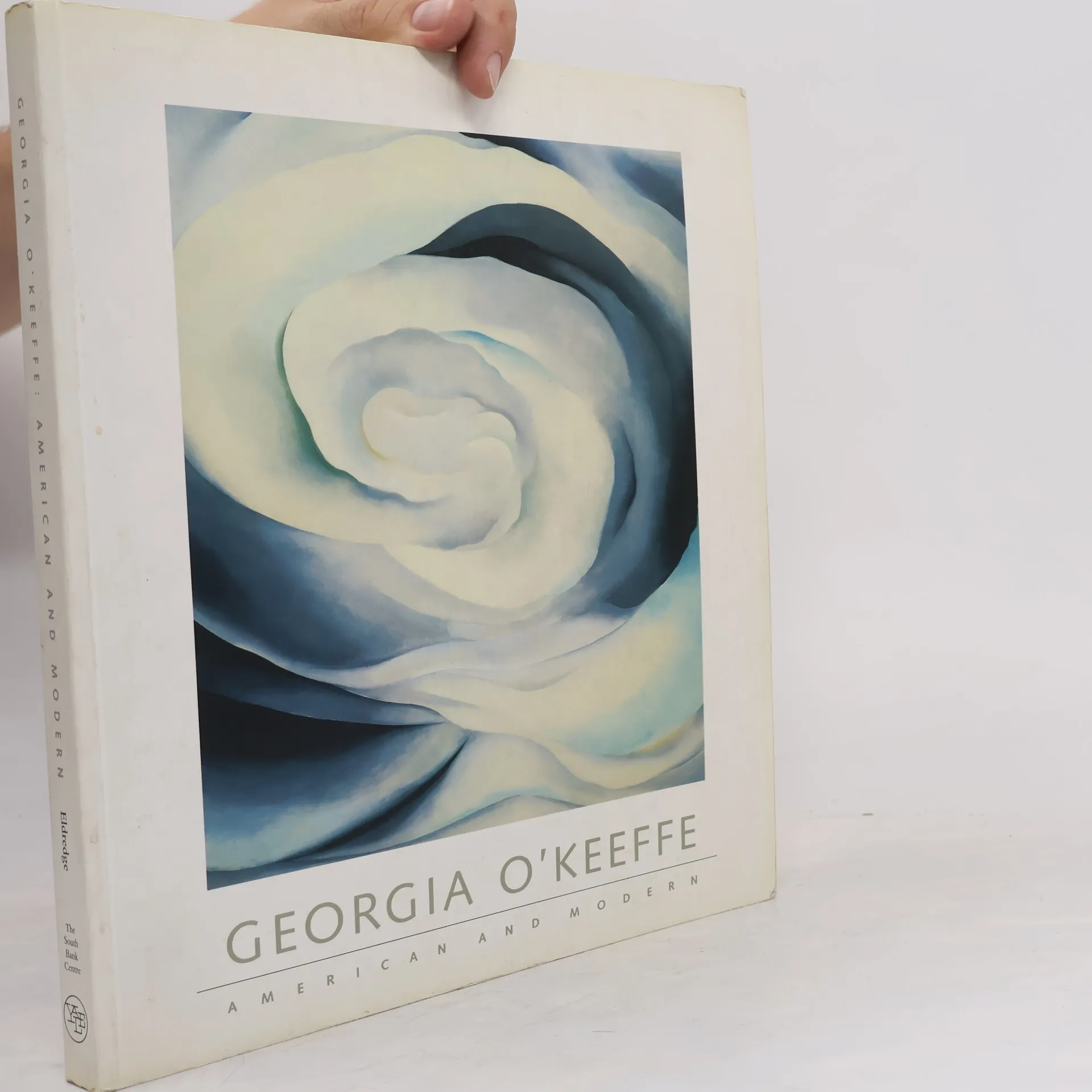
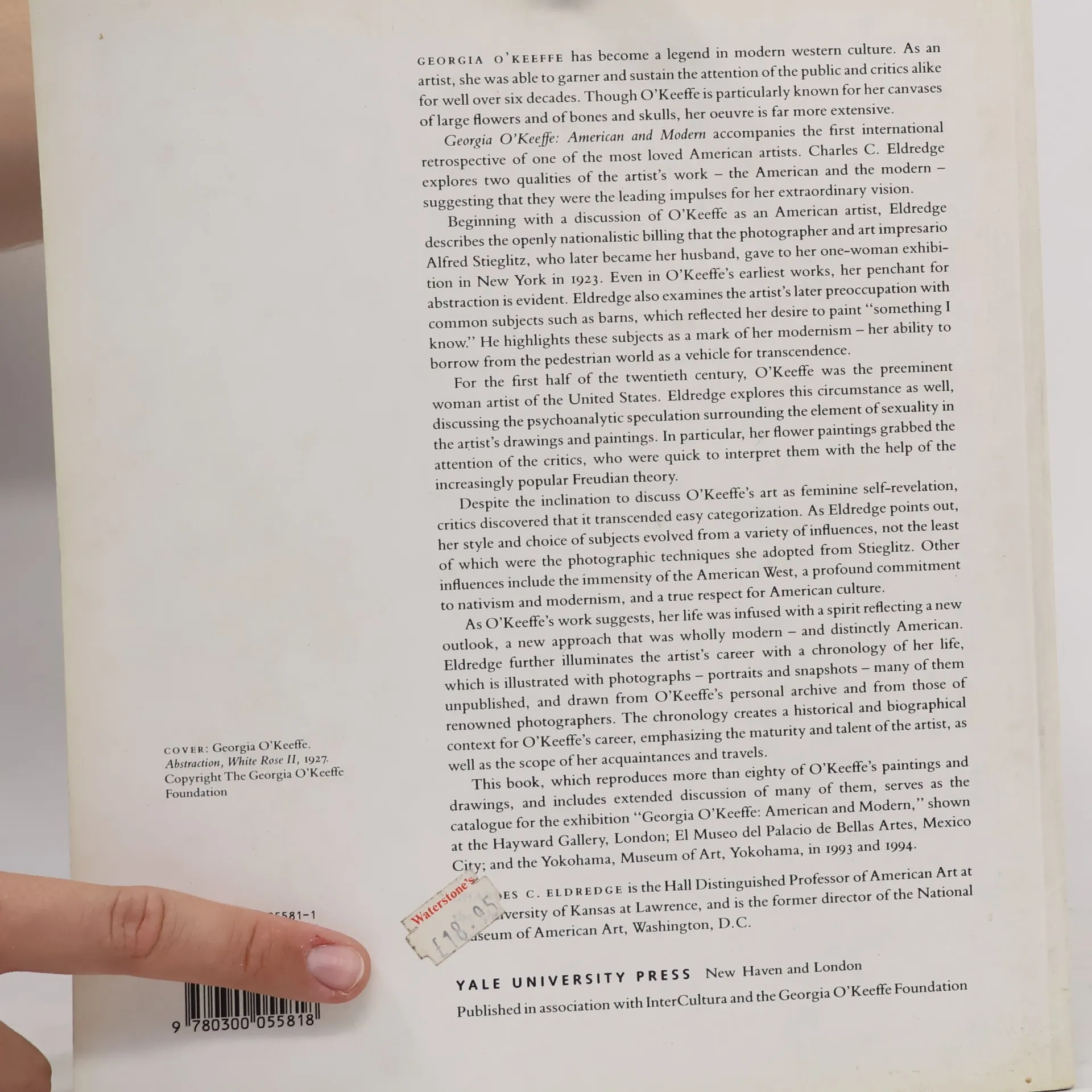
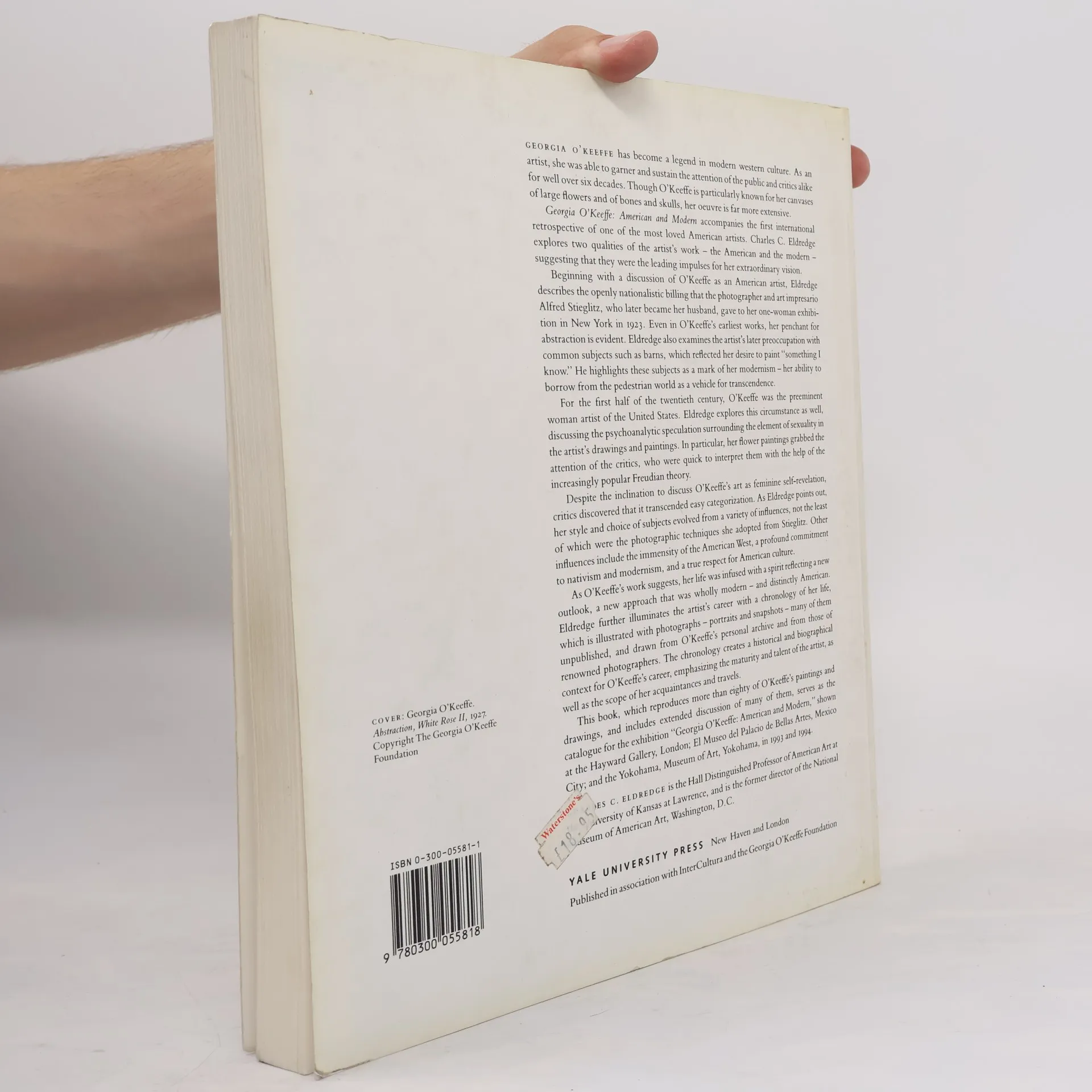
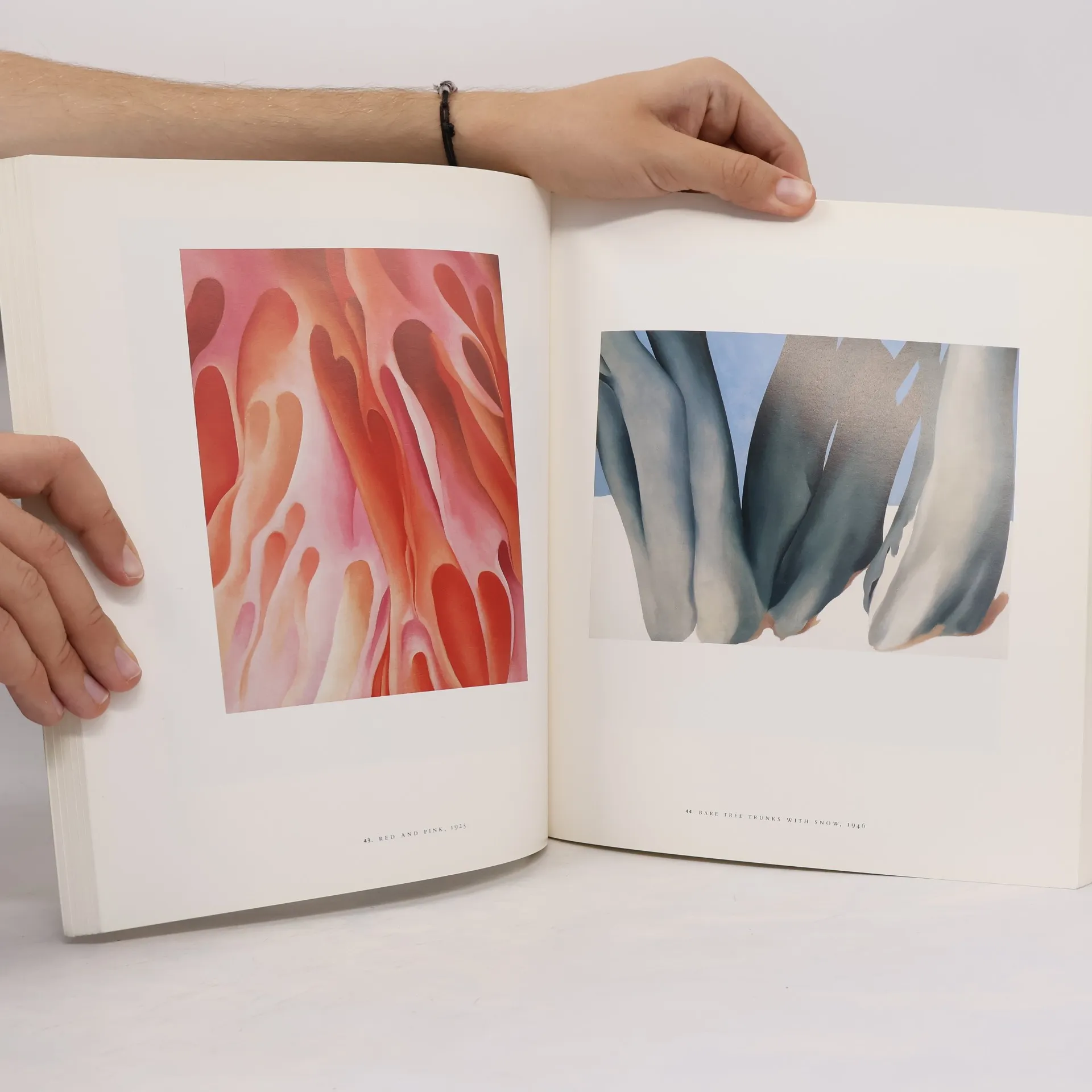
Georgia O'Keeffe has become a legend in modern western culture. As an artist, she was able to garner and sustain the attention of the public and critics alike for well over six decades. Though O'Keeffe is particularly known for her canvases of large flowers and of bones and skulls, her oeuvre is far more extensive. Georgia O'Keeffe: American and Modern accompanies the first international retrospective of one of the most loved American artists. Charles C. Eldredge explores two qualities of the artist's work - the American and the modern - suggesting that they were the leading impulses for her extraordinary vision. Beginning with a discussion of O'Keeffe as an American artist, Eldredge describes the openly nationalistic billing that the photographer and art impresario Alfred Stieglitz, who later became her husband, gave to her one-woman exhibition in New York in 1923. Even in O'Keeffe's earliest works, her penchant for abstraction is evident. Eldredge also examines the artist's later preoccupation with common subjects such as barns, which reflected her desire to paint "something I know." He highlights these subjects as a mark of her modernism - her ability to borrow from the pedestrian world as a vehicle for transcendence. For the first half of the twentieth century, O'Keeffe was the preeminent woman artist of the United States. Eldredge explores this circumstance as well, discussing the psychoanalytic speculation surrounding the element of sexuality in the artist's drawings and paintings. In particular, her flower paintings grabbed the attention of the critics, who were quick to interpret them with the help of the increasingly popular Freudian theory. Despite the inclination to discussO'Keeffe's art as feminine self-revelation, critics discovered that it transcended easy categorization. As Eldredge points out, her style and choice of subjects evolved from a variety of influences, not the least of which were the photographic techniques she adopted from Stieglitz
Achat du livre
Georgia O'Keeffe, Charles C. Eldredge, Georgia O. Keeffe
- Langue

- Année de publication
- 1993
- Reliure
- (souple),
- État du livre
- Bon
- Prix
- 8,99 €
Modes de paiement
Personne n'a encore évalué .
- Titre
- Georgia O'Keeffe
- Sous-titre
- American and Modern
- Langue
- Anglais
- Auteurs
- Charles C. Eldredge, Georgia O. Keeffe
- Éditeur
- Yale University Press
- Publié
- 1993
- Format
- souple
- Pages
- 226
- ISBN10
- 0300055811
- ISBN13
- 9780300055818
- Séries
- Mots clés
- Nonfiction, Thème historique, Art, États-Unis, Biographies, Histoire de l'art
- Description
- Georgia O'Keeffe has become a legend in modern western culture. As an artist, she was able to garner and sustain the attention of the public and critics alike for well over six decades. Though O'Keeffe is particularly known for her canvases of large flowers and of bones and skulls, her oeuvre is far more extensive. Georgia O'Keeffe: American and Modern accompanies the first international retrospective of one of the most loved American artists. Charles C. Eldredge explores two qualities of the artist's work - the American and the modern - suggesting that they were the leading impulses for her extraordinary vision. Beginning with a discussion of O'Keeffe as an American artist, Eldredge describes the openly nationalistic billing that the photographer and art impresario Alfred Stieglitz, who later became her husband, gave to her one-woman exhibition in New York in 1923. Even in O'Keeffe's earliest works, her penchant for abstraction is evident. Eldredge also examines the artist's later preoccupation with common subjects such as barns, which reflected her desire to paint "something I know." He highlights these subjects as a mark of her modernism - her ability to borrow from the pedestrian world as a vehicle for transcendence. For the first half of the twentieth century, O'Keeffe was the preeminent woman artist of the United States. Eldredge explores this circumstance as well, discussing the psychoanalytic speculation surrounding the element of sexuality in the artist's drawings and paintings. In particular, her flower paintings grabbed the attention of the critics, who were quick to interpret them with the help of the increasingly popular Freudian theory. Despite the inclination to discussO'Keeffe's art as feminine self-revelation, critics discovered that it transcended easy categorization. As Eldredge points out, her style and choice of subjects evolved from a variety of influences, not the least of which were the photographic techniques she adopted from Stieglitz