



En savoir plus sur le livre
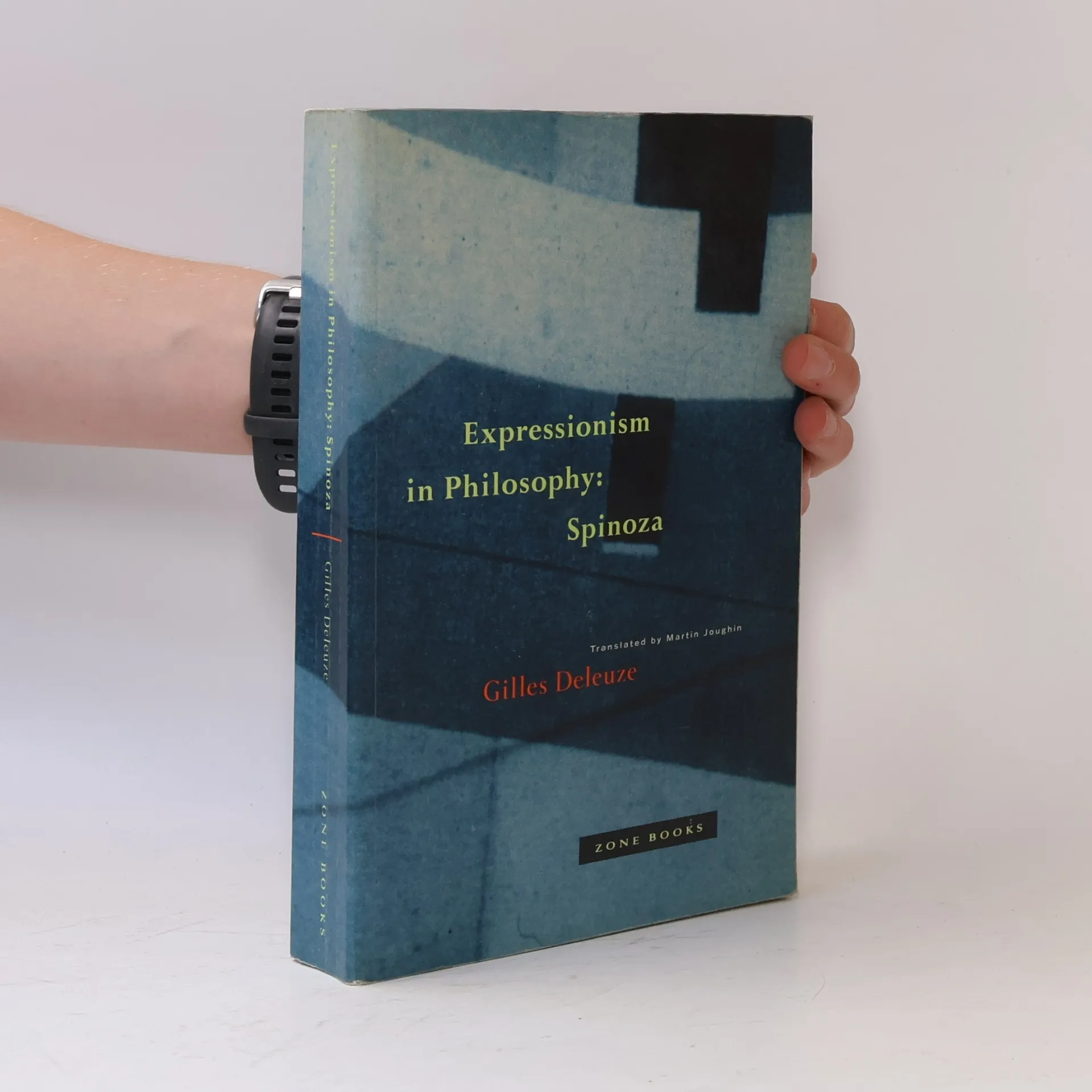
In this remarkable work, Gilles Deleuze, the renowned French philosopher, reflects on one of the thinkers of the past who most influenced his own sweeping reconfiguration of the tasks of philosophy. For Deleuze, Spinoza, along with Nietzsche and Lucretius, conceived of philosophy as an enterprise of liberation and radical demystification. He locates in Spinoza "a set of affects, a kinetic determination, an impulse" and makes Spinoza into "an encounter, a passion." <i>Expressionism in Philosophy</i> was the culmination of a series of monographic studies by Deleuze (on Hume, Bergson, Nietzsche, Proust, Kant, and Sacher-Masoch) and prepared the transition from these abstract treatments of historical schemes of experience to the nomadology of <i>Capitalism and Schizophrenia</i> (<i>Anti-Oedipus</i> and <i>A Thousand Plateaus</i>, co-authored with F�lix Guattari). Thus, <i>Expressionism in Philosophy</i> is both a pivotal reading of Spinoza's work and a crucial text within the development of Deleuze's thought.
Achat du livre
Expressionism in Philosophy, Gilles Deleuze, Martin Joughin
- Langue

- Année de publication
- 1990,
- État du livre
- Abîmé
- Prix
- 16,96 €
Modes de paiement
Personne n'a encore évalué .
- Titre
- Expressionism in Philosophy
- Sous-titre
- Spinoza
- Langue
- Anglais
- Auteurs
- Gilles Deleuze, Martin Joughin
- Éditeur
- Zone Books
- Publié
- 1990
- Pages
- 446
- ISBN10
- 0942299507
- ISBN13
- 9780942299502
- Séries
- Mots clés
- Nonfiction, Philosophie, France, Série, Théories scientifiques, Métaphysique
- Description
- In this remarkable work, Gilles Deleuze, the renowned French philosopher, reflects on one of the thinkers of the past who most influenced his own sweeping reconfiguration of the tasks of philosophy. For Deleuze, Spinoza, along with Nietzsche and Lucretius, conceived of philosophy as an enterprise of liberation and radical demystification. He locates in Spinoza "a set of affects, a kinetic determination, an impulse" and makes Spinoza into "an encounter, a passion." <i>Expressionism in Philosophy</i> was the culmination of a series of monographic studies by Deleuze (on Hume, Bergson, Nietzsche, Proust, Kant, and Sacher-Masoch) and prepared the transition from these abstract treatments of historical schemes of experience to the nomadology of <i>Capitalism and Schizophrenia</i> (<i>Anti-Oedipus</i> and <i>A Thousand Plateaus</i>, co-authored with F�lix Guattari). Thus, <i>Expressionism in Philosophy</i> is both a pivotal reading of Spinoza's work and a crucial text within the development of Deleuze's thought.