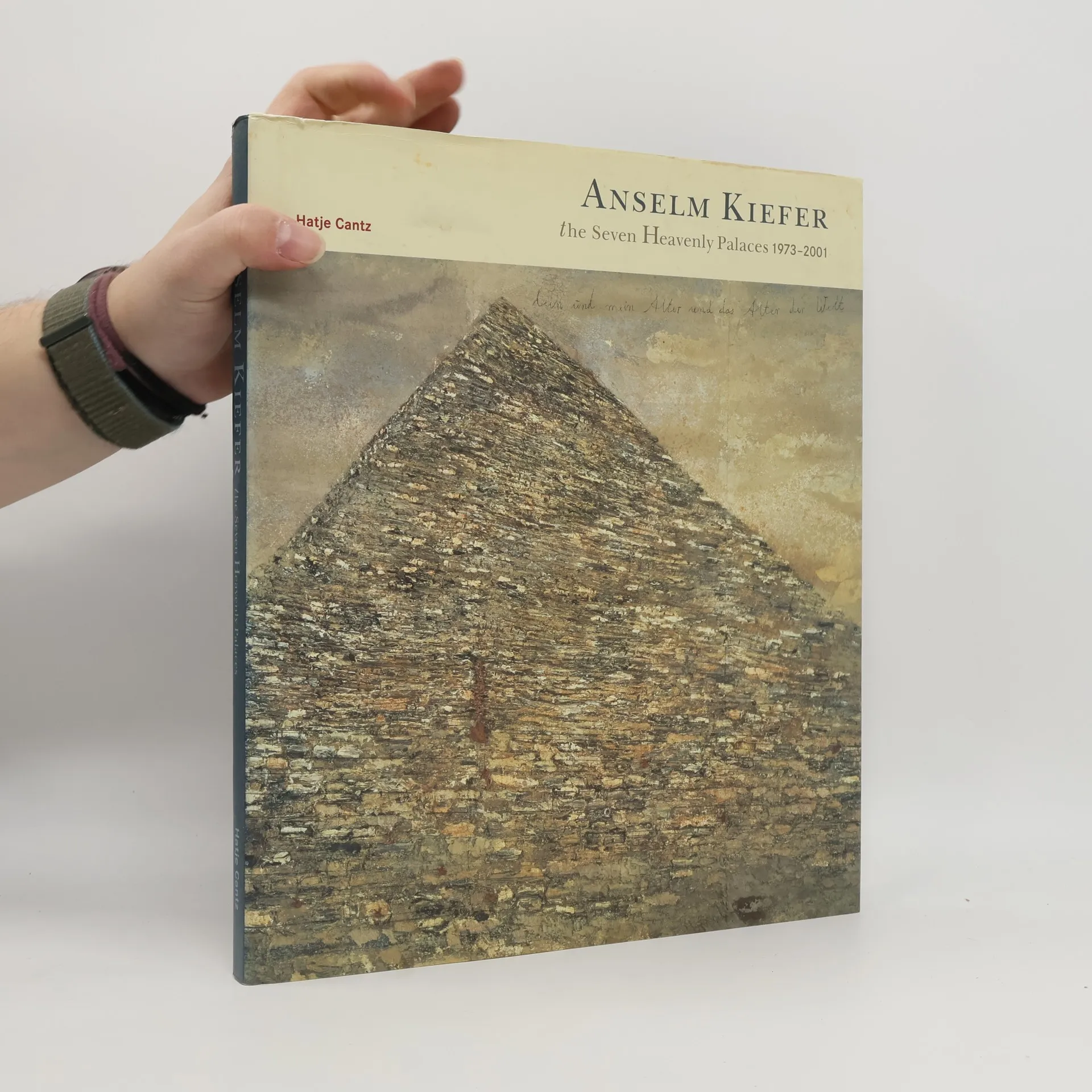

Quelle magnifique exposition du monde réel, au sein duquel, tout, absolument tout, se révéla sens dessus dessous, des caves à ciel ouvert, des églises sans toit - des terrains de jeux. Ce fut beau. Ce fut l'enfance. Que ce fut bien, que ce fut finalement facile de bâtir un nouveau monde à partir des ruines de l'ancien. Un nouveau monde, quoique bien plus petit, réduit à une création de bac à sable. En juin 2000, l'auteur Christoph Ransmayr rendit visite à l'artiste Anselm Kiefer à La Ribaute, dans le Sud de la France. De cette rencontre demeure ce texte.

Christoph Ransmayr Livres
Christoph Ransmayr est célèbre pour ses récits magistralement ciselés qui plongent souvent dans les profondeurs de l'histoire et de la mythologie. Son style se caractérise par une riche texture linguistique et des aperçus profonds de la condition humaine. Ransmayr explore les thèmes de la mémoire, de la perte et de la quête d'identité dans des paysages souvent austères et inconnus. Ses œuvres sont marquées par un fort sens du lieu et une profonde compréhension des aspirations humaines.


Dans la Chine du XVIIIe siècle, l'empereur Qianlong règne en despote sur une cour résignée à la démesure de son souverain. Son dernier caprice est une série d'horloges conçues pour mesurer les variations de la course du temps : le temps fuyant, rampant ou suspendu d'une vie humaine, selon qu'il est ressenti par un enfant, un condamné à mort ou des amants. Venu de Londres à l'invitation du souverain, Alistair Cox, le plus célèbre des horlogers du monde occidental, saura-t-il exaucer les désirs de Qianlong et freiner la course des heures ? Avec la précision d'un peintre, Christoph Ransmayr construit un récit singulier et virtuose, méditation sur la fugacité du temps et l'illusion d'en triompher par l'art.
Cox
- 224pages
- 8 heures de lecture
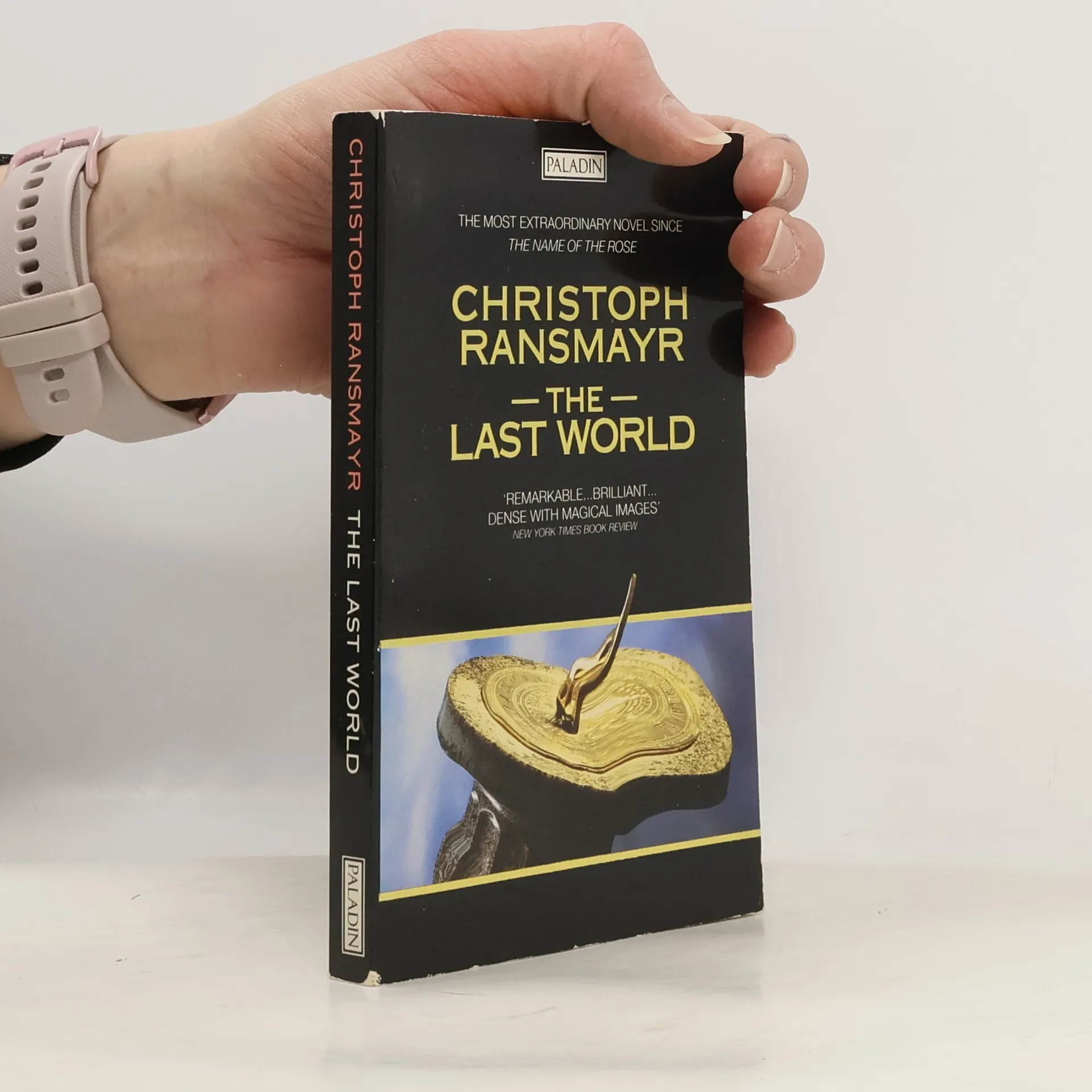
The Last World
- 246pages
- 9 heures de lecture
The Lost World is a modern masterpiece that follows a young man's quest for the exiled poet Ovid and his lost work. Set in a visionary landscape blending ancient and twentieth-century elements, it explores themes of exile, censorship, and environmental decay, making it a profound and timely cultural fable.
The Lockmaster
- 200pages
- 7 heures de lecture
A tragic accident unfolds as a longboat plunges over the Great Falls, leading to the drowning of five passengers. The Lockmaster, tasked with ensuring safe river navigation, faces scrutiny when his son suspects foul play rather than an accident. Driven by the need for answers, the son, a hydraulic engineer knowledgeable about river dynamics, embarks on a quest to uncover the truth behind the disaster and locate his missing father, raising questions about responsibility and the nature of the tragedy.
Herbert Brandl. Exposed to Painting. Die letzten 20 Jahre / The past 20 years
Ausst. Kat. Belvedere, Wien 2020
The world’s most powerful man, Qiánlóng, emperor of China, invites the famous eighteenth-century clockmaker Alister Cox to his court in Beijing. There, in the heart of the Forbidden City, the Englishman and his assistants are to build machines that mark the passing of time as a child or a condemned man might experience it and that capture the many shades of happiness, suffering, love, and loss that come with that passing. Mystified by the rituals of a rigidly hierarchical society dominated by an unimaginably wealthy, god-like ruler, Cox musters all his expertise and ingenuity to satisfy the emperor’s desires. Finally, Qiánlóng, also known by the moniker Lord of Time, requests the construction of a clock capable of measuring eternity—a perpetuum mobile. Seizing this chance to realize a long-held dream and honor the memory of his late beloved daughter, yet conscious of the impossibility of his task, Cox sets to work. As the court is suspended in a never-ending summer, festering with evil gossip about the monster these foreigners are creating, the Englishmen wonder if they will ever escape from their gilded cage. Richly imagined and recounted in vivid prose of extraordinary beauty, Cox, or The Course of Time is a stunning illustration of Christoph Ransmayr’s talent for imbuing a captivating tale with intense metaphorical, indeed metaphysical force. More than a meeting of two men, one isolated by power, the other by grief, this is an exploration of mortality and a virtuoso demonstration that storytelling alone can truly conquer time.
A man goes in search of the Roman poet Ovid, banished to the end of the world. He finds that Ovid's personality and stories have undergone a sea-change, and have fragmented themselves into lots of clues - people, bizarre events, odd stretches of landscape, and a story emerges. From the Inside Flap: The poet Ovid, in his distress over his banishment from Rome, consigns the manuscript of his masterpiece, Metamorphoses, to the flames; years later, when rumors of his death reach Rome, his youthful admirer Cotta follows him to the remote Black Sea port of Tomi. Out of this story Christoph Ransmayr has fashioned an astonishing novel about a journey of adventure that has become Europe's most recent critical and best-selling literary sensation. The Last World is the story of a quest. As Cotta, following a trail of clues Ovid has left behind, searches for the exiled poet and his lost work, he discovers in the rust-corroded town of Tomi an ominous scene suffused with and dominated by Ovidian mythology, a transformed place where the ancient world meets the twentieth century. Cotta is lured into a visionary landscape that impersonates Ovid's vanished poem in which the familiar is forever transmuted in new and wondrous ways. In this world the village idiot turns to stone, the ravishingly beautiful whore disappears from the face of the earth, and the ropemaker takes on the guise of a wolf. These and other singular events furnish the pieces of a puzzle that Cotta assembles into a dramatic and bewitching story--a political and cultural fable about the end of time, the last world. Already acclaimed as a modern masterpiece and currently being translated into thirty languages, The Last World is destined to become one of the most important novels of our time. Ransmayr writes with dazzling power and sensuously charged language about the endlessly shifting flow of time, the lusty cycle of life in which the carrion of the past forever gives birth to the new. A metaphysical thriller both compelling and profound, The Last World draws the reader into a universe governed by the power of mythology, a world of decay on the brink of apocalypse. A novel about exile, censorship, and the destruction of the planet-as well as its constant renewal--The Last World is a cultural and political fable that is blazingly topical, yet timeless. "A brilliant exercise in alternative literary history...Mr. Ransmayr's book is all of a piece--intensely visualized, dense with magical images, and offering many obscure satisfactions."--The New York Times Book Review "Strange and haunting.... [The novel's] smooth blend of gritty detail and high fantasy...resembles the magic realism of Garcia Marquez."--The New Republic "As a parable...it has a vivid and unsettling force."--Los Angeles Times "Original, unusual, and beautifully written, The Last World is a book of many pleasures, as shifting and elusive in its meanings as it is vivid and specific in the images it evokes."--The Philadelphia Inquirer "An allegory of the effects of a repressive state on the survival of artistic thought.... The Last World arrives in America flying the banners of European acclaim; now that it's here, run another couple of flags up poles."--The Washington Post Book World