Bookbot

David Lodge

    28 janvier 1935

    David Lodge est un auteur britannique célébré dont les œuvres se caractérisent par un humour incisif et des observations perspicaces sur la vie universitaire et la société en général. Il tisse magistralement ses vastes connaissances en théorie et critique littéraires dans des récits captivants. Ses romans, souvent situés dans des environnements universitaires, explorent les complexités des relations humaines, les quêtes intellectuelles et la recherche de sens dans le monde moderne. Le style distinctif de Lodge, mêlant esprit, ironie et une profonde compréhension de la nature humaine, en fait une voix significative de la littérature britannique contemporaine.

    David Lodge
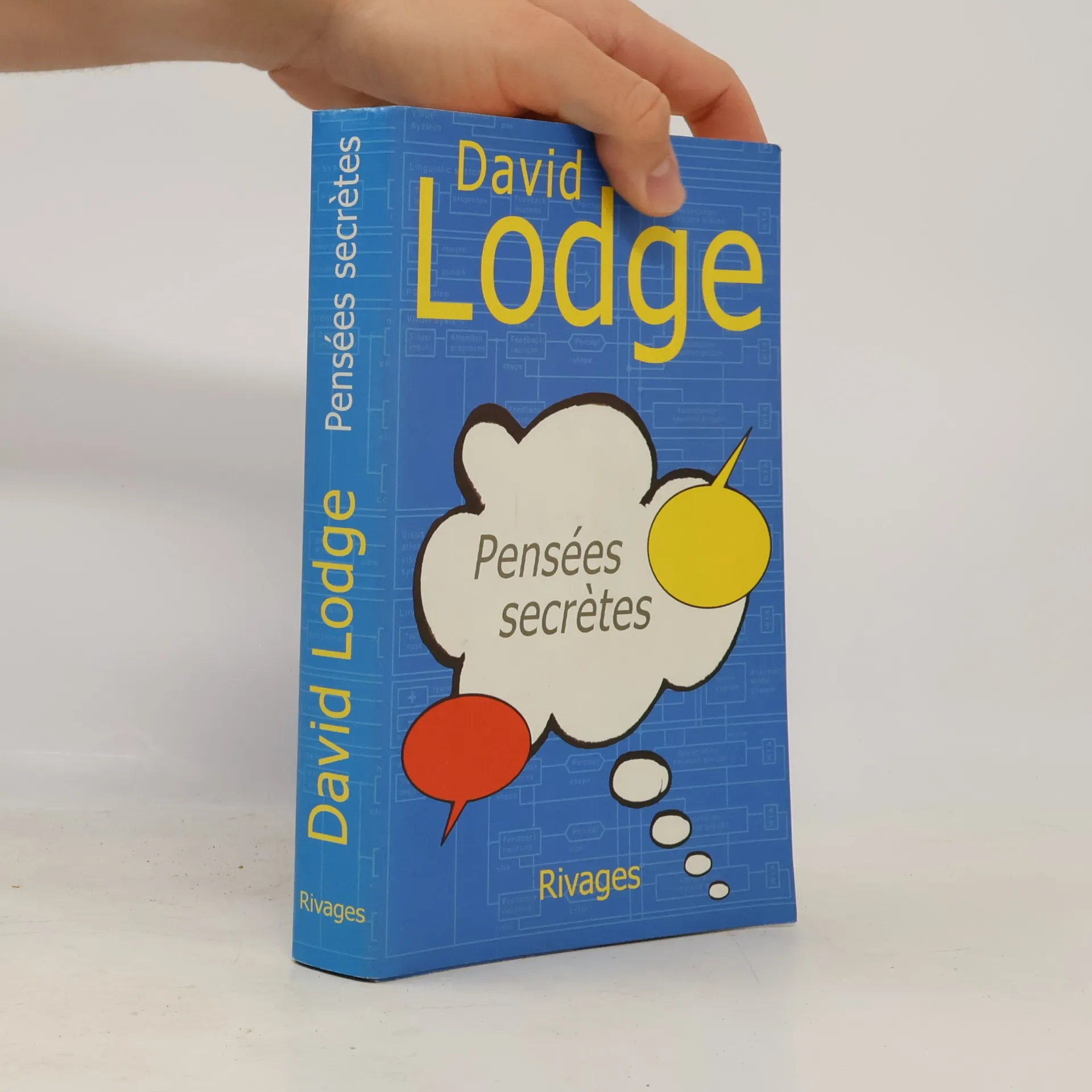
    Pensées secrètes
    Thérapie
    Rivages poche / Bibliothèque étrangère: Hors de l'abri
    Jeu de sociéte: Traduit de l' anglais par Maurice et Yvonne Couturier
    Un tout petit monde
    Changement de décor
    • Varying Degrees of Success

      • 224pages
      • 8 heures de lecture

      In a career spanning six decades, David Lodge has been one of Britain's best-loved and most versatile writers. With Varying Degrees of Success he completes a trilogy of memoirs which describe his life from birth in 1935 to the present day, and together form a remarkable autobiography. His aim is to describe honestly and in some detail the highs and lows of being a professional creative writer in several different genres: prose fiction, literary criticism, plays for live theatre and screenplays for film and television. Few writers have excelled in so many different forms of the written word. Lodge's creativity, and his wonderful sense of humour, have made his work popular in translation in numerous countries, and his extensive travels around the world are recorded here. Each of the three memoirs has its own thematic focus. In this latest one it is on the hope and desire of writers to make a significant and positive impression on their readers and audiences. The elation of success, and the depression that follows disappointment, are familiar emotions to most writers in varying degrees. David Lodge describes these feelings with rare candour. Varying Degrees of Success provides the reader with a privileged insight into the working practices and the creative life of a major British novelist.

      Varying Degrees of Success2021
      3,9
    • The Modes of Modern Writing

      • 368pages
      • 13 heures de lecture

      Reprint. Originally published: London: E. Arnold, 1977.

      The Modes of Modern Writing2015
      3,5
    • Quite a good time to be born

      • 488pages
      • 18 heures de lecture

      Born on January 28, 1935, in a lower-middle-class London family, David Lodge's artistic roots trace back to his musician father and Irish-Belgian Catholic mother. Growing up during World War II, he experienced significant social and cultural transformations that would later inform his writing. This memoir reflects on his life leading up to the publication of his breakthrough book, Changing Places. Lodge recalls his childhood and university years at University College London, where he met his future wife, Mary. After completing National Service and postgraduate research, he finally marries and becomes a father, facing the challenges of establishing himself as a novelist and academic. A fortunate opportunity at the University of Birmingham introduces him to Malcolm Bradbury, a colleague with similar aspirations. His promising career unfolds alongside a fulfilling marriage, offering chances for travel and engagement with new ideas and friends, while also presenting unexpected professional and personal hurdles. Candid, witty, and insightful, this memoir provides a compelling glimpse into a transformative era in British society and the development of a writer who has achieved classic status in his lifetime.

      Quite a good time to be born2015
      3,8
    • A Man of Parts

      • 496pages
      • 18 heures de lecture

      A story inspired by the intimate relationships of English writer H.G. Wells, who at the end of his life evaluates his professional, political, and romantic successes and failures before achieving a greater understanding of himself.

      A Man of Parts2011
      3,5
    • La vie en sourdine

      • 413pages
      • 15 heures de lecture

      Desmond, professeur de linguistique marié à Winifred, vit paisiblement dans une grande ville de province. Il saisit l'opportunité de prendre une retraite anticipée. Son quotidien est rythmé par la lecture du journal, des travaux domestiques, des visites à son père à Londres et des activités avec sa femme. Lors d'un vernissage, il rencontre une étudiante, mais son oui͏̈e lui joue des tours.

      La vie en sourdine2008
      3,8
    • Where do novelists get their ideas from? How do they develop an idea into a narrative with a specific and individual form? David Lodge traces the history of his novel about Henry James, from the very first mention of the basic idea, through the processes of research and writing, to the publication and reception of the finished book.

      The year of Henry James: the story of a novel2007
      3,7
    • Dieser Doppelband vereint die Bestseller „Therapie“ und „Denkt“ von David Lodge. „Therapie“ folgt Tubby Passmore, einem Sitcom-Autor, der durch Therapien und persönliche Krisen versucht, sein Leben zu ordnen. „Denkt“ erzählt von David Messenger, einem Direktor, dessen sexuelles Interesse an einer neuen Dozentin zu unerwarteten Wendungen führt.

      Therapie und Denkt. Zwei Romane in einem Band2006
    • Pocket Penguins: Scenes of Academic Life

      Selected from His Own Novels by David Lodge

      • 55pages
      • 2 heures de lecture

      David Lodge has entertained readers for forty years with his often hilarious tales of on- and off-curriculum shenanigans at university campuses. Penguin has published eighteen of Lodge's books in paperback since 1978, and here he has selected some of the most memorable moments from his novels, illustrating the high-minded (and low-minded) life of the academic, and the changing fortunes of Britain's places of higher education.

      Pocket Penguins: Scenes of Academic Life2005
      3,2
    • Tascabili - 464: Quante volte, figliolo?

      • 300pages
      • 11 heures de lecture

      "Quante volte figliolo?" domandava una volta il sacerdote dalla grata del confessionale, dopo aver ascoltato l'elenco di tutti i peccati... Lo sguardo divertito di David Lodge si appunta questa volta su un gruppo di giovani studenti cattolici, di ognuno dei quali egli segue affettuosamente la storia a partire dalle prime esperienze sessuali - inevitabilmente vissute con senso di colpa - fino agli anni della maturità. Angela e Dennis, Ruth, Adrian, Violet e tutti gli altri si ritrovano in chiesa ogni giovedì mattina, si laureano, si amano, si sposano, lavorano, fanno figli nel contraddittorio travaglio dei mitici anni Sessanta e Settanta. E si interrogano sui dettami morali imposti dalla Chiesa cattolica romana, cui tutti appartengono. Con l'ironia che ben conosciamo Lodge alleggerisce - fino a sfiorare effetti di pura comicità - i toni di una materia che, di per sé, si avvicinerebbe di più al melodramma che alla commedia. Pubblicato direttamente in edizione economica, Quante volte, figliolo? (1980) è un romanzo fresco e divertente, la cui lettura regalerà senza dubbio momenti di grande serenità e piacevolezza.

      Tascabili - 464: Quante volte, figliolo?2004
      3,7
    • Author, Author

      • 400pages
      • 14 heures de lecture

      "Framed by a dramatic and moving account of Henry James's last illness, Author, Author begins in the early 1880s, describing James's friendship with the genial Punch artist George Du Maurier and his intimate but problematic relationship with fellow American novelist Constance Fenimore Woolson. At the end of the decade Henry, worried by the failure of his books to sell, resolves to achieve fame and fortune as a playwright while Du Maurier diversifies into writing novels. The consequences that ensue mingle comedy, irony, pathos and suspense. As Du Maurier's novel Trilby becomes the bestseller of the century, Henry anxiously awaits the opening night of his make-or-break play, Guy Domville. This event, on January 5, 1895, and its complex sequel, form the climax to Lodge's novel."--BOOK JACKET.

      Author, Author2004
      3,7