

Bookbot

Lex Donaldson

    Lex Donaldson est un auteur dont le travail explore en profondeur les structures et les dynamiques organisationnelles. Son approche, ancrée dans l'étude des sciences comportementales et de la sociologie, révèle les interactions complexes au sein des organisations. Donaldson examine comment ces structures influencent le comportement et la prise de décision, offrant aux lecteurs un aperçu pénétrant du fonctionnement du lieu de travail moderne. Ses écrits sont essentiels pour comprendre les forces sociales qui façonnent le paysage de l'entreprise.

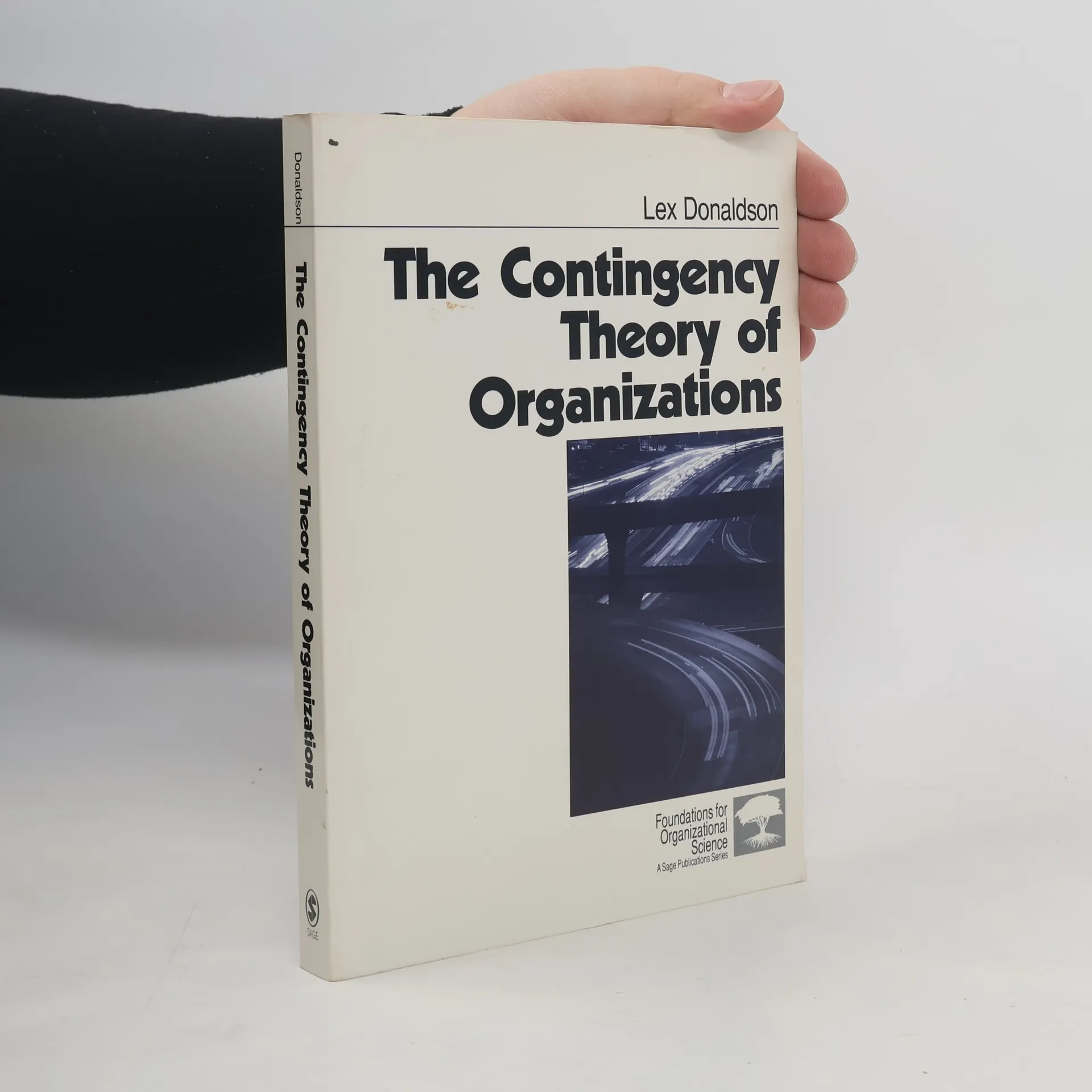
    Foundations for Organizational Science: The Contingency Theory of Organizations
    In Defence of Organisation Theory
    • Written by one of the foremost scholars in the field, this volume presents a comprehensive, in-depth analysis of the theories, evidence and methodological issues of contingency theory - one of the major theoretical lenses used to view organizations. It includes both an appreciation of the coherency of contingency theory overall and a frank recognition of some of the deficiencies in contingency theory research. The coherent underlying model provides the platform from which to make good some of the deficiencies through a series of improvements in theory and method that chart the course for future research.

      Foundations for Organizational Science: The Contingency Theory of Organizations2001
    • In Defence of Organisation Theory

      A Reply to the Critics

      • 206pages
      • 8 heures de lecture

      This book provides a concise, clear survey and defence of organizational theory. That theory and its associated research has in recent years become subject to strong criticism. Rival perspectives on organizations have been put forward. One of these stresses that organizations need to be understood as made up of individual people. Another asserts the need to see organizations as part of the conflicts and radical struggles in society. These alternative views have led to a host of critiques of conventional organization studies. It is attacked as being tautological, philosophically naive, ideological, and managerially biased. To date there has been no substantial reply to these criticisms by a protagonist of organization theory. This volume uniquely fills that gap. In part one the author examines and rebuts each of the major lines of criticism. In part two the rival approaches suggested by the critics are themselves subjected to an analysis of their limitations. The book concludes with a new model of organizational design which provides a synthesis of previous research.

      In Defence of Organisation Theory1985