Spatial Analysis for the Social Sciences
- 259pages
- 10 heures de lecture
This book shows how to model the spatial interactions between actors that are at the heart of the social sciences.


Cette série explore les méthodes empiriques et formelles cruciales pour la recherche en sciences sociales. Elle offre un aperçu approfondi des fondements théoriques des techniques analytiques et de leur application pratique dans la recherche. Les volumes couvrent un large éventail de disciplines, ainsi que des applications méthodologiques spécifiques dans des domaines tels que la science politique, la sociologie et la santé publique. Elle s'adresse aux étudiants et aux chercheurs en quête de connaissances avancées en sciences sociales et en statistique.

This book shows how to model the spatial interactions between actors that are at the heart of the social sciences.
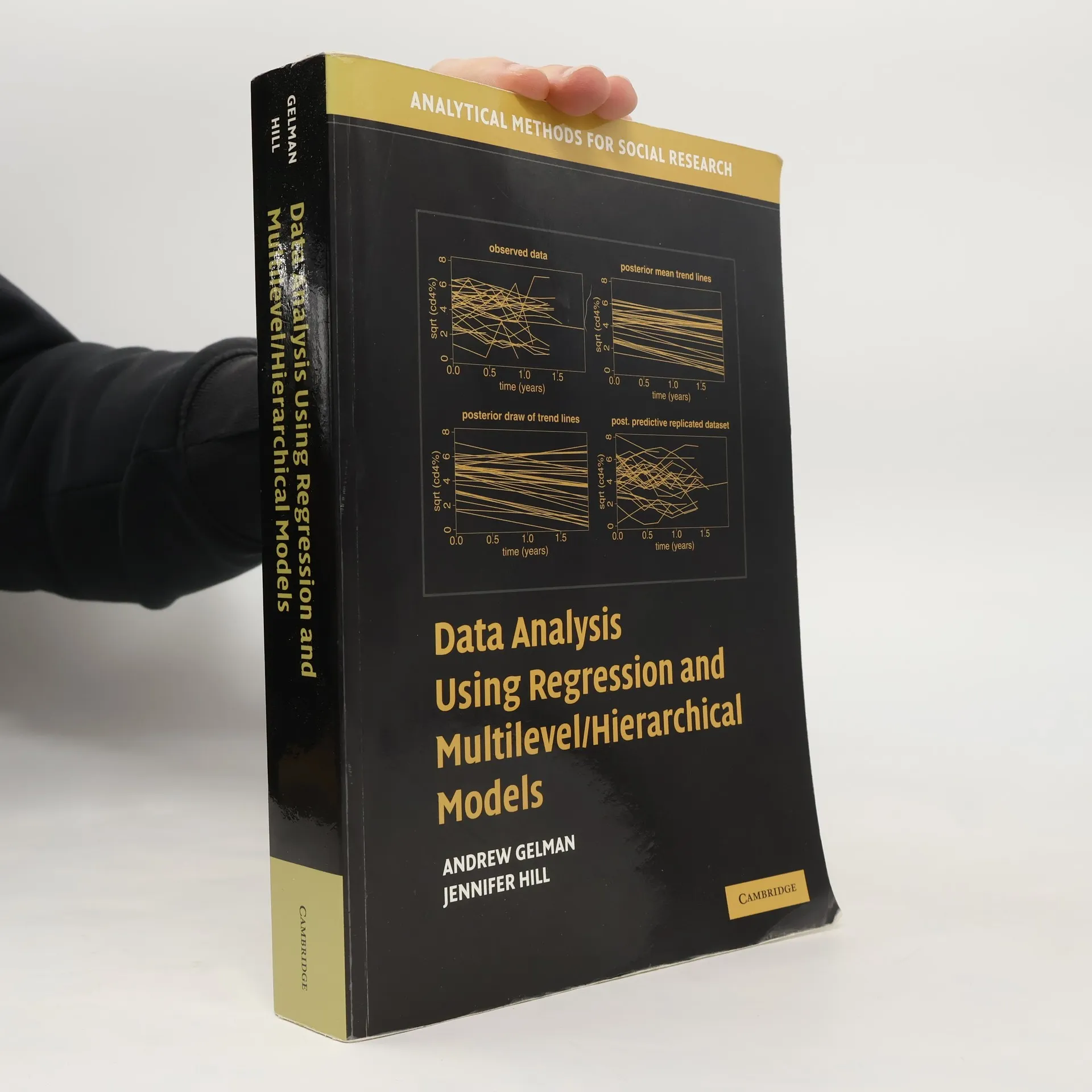
Data Analysis Using Regression and Multilevel/Hierarchical Models is a comprehensive manual for the applied researcher who wants to perform data analysis using linear and nonlinear regression and multilevel models. The book introduces a wide variety of models, whilst at the same time instructing the reader in how to fit these models using available software packages. The book illustrates the concepts by working through scores of real data examples that have arisen from the authors' own applied research, with programming codes provided for each one. Topics covered include causal inference, including regression, poststratification, matching, regression discontinuity, and instrumental variables, as well as multilevel logistic regression and missing-data imputation. Practical tips regarding building, fitting, and understanding are provided throughout.