

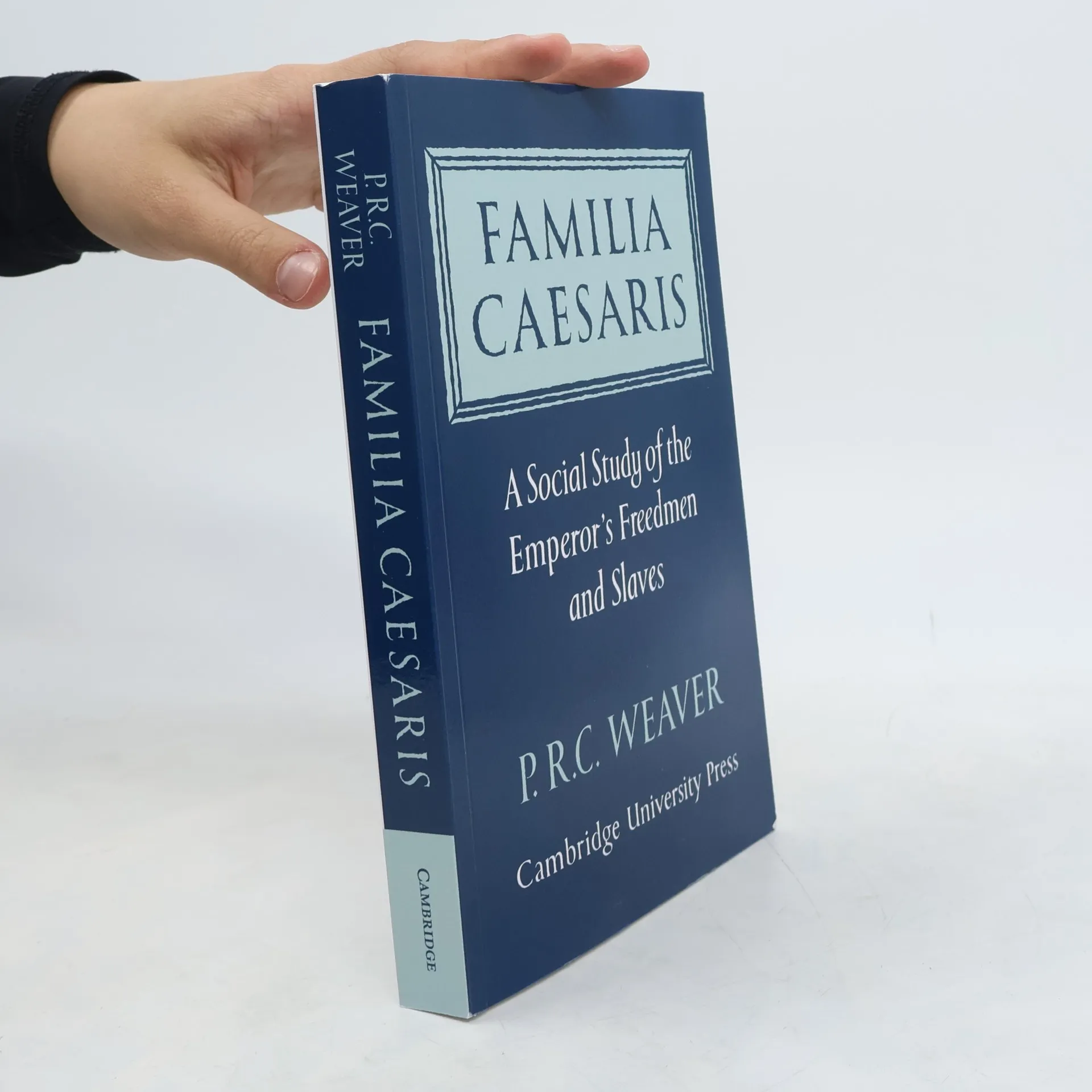


En savoir plus sur le livre
The slave and freed slave classes are of the first importance for any study of the social structure of the Roman world in the first and second centuries AD. Among them the emperor's own slaves and freedmen, the Familia Caesaris, deserve special attention: this was the most important in status and the most mobile socially of all the groups in slave-born classes; it also had the greatest continuity of development and the individuals who comprised it can be identified and dated in sufficient numbers for significant statistical comparisons to be made of their family-relationships and occupations. The primary sources for this study are inscriptions - over four thousand of them - mostly sepulchral, brief, stereotyped and undated. One of Professor Weaver's main achievements has been to establish criteria for dating and interpreting this intractable material so that it can yield the social historian reliable statistical information. He shows how the Familia Caesaris differed from other sections of the slave and freedman classes and how even within it there was a considerable degree of social differentiation.
Achat du livre
Familia Caesaris, P. R. C. Weaver
- Langue

- Année de publication
- 2008
- Reliure
- (souple)
Modes de paiement
Personne n'a encore évalué .
- Titre
- Familia Caesaris
- Sous-titre
- A Social Study of the Emperor's Freedmen and Slaves
- Langue
- Anglais
- Auteurs
- P. R. C. Weaver
- Éditeur
- Cambridge University Press
- Publié
- 2008
- Format
- souple
- Pages
- 344
- ISBN10
- 0521070163
- ISBN13
- 9780521070164
- Séries
- Catégories
- Mots clés
- Thème historique, Europe, Époque antique, Histoire de l'Europe, Rome, Histoire sociale, Rome antique, Esclavage
- Description
- The slave and freed slave classes are of the first importance for any study of the social structure of the Roman world in the first and second centuries AD. Among them the emperor's own slaves and freedmen, the Familia Caesaris, deserve special attention: this was the most important in status and the most mobile socially of all the groups in slave-born classes; it also had the greatest continuity of development and the individuals who comprised it can be identified and dated in sufficient numbers for significant statistical comparisons to be made of their family-relationships and occupations. The primary sources for this study are inscriptions - over four thousand of them - mostly sepulchral, brief, stereotyped and undated. One of Professor Weaver's main achievements has been to establish criteria for dating and interpreting this intractable material so that it can yield the social historian reliable statistical information. He shows how the Familia Caesaris differed from other sections of the slave and freedman classes and how even within it there was a considerable degree of social differentiation.