



Paramètres
- 67pages
- 3 heures de lecture
En savoir plus sur le livre
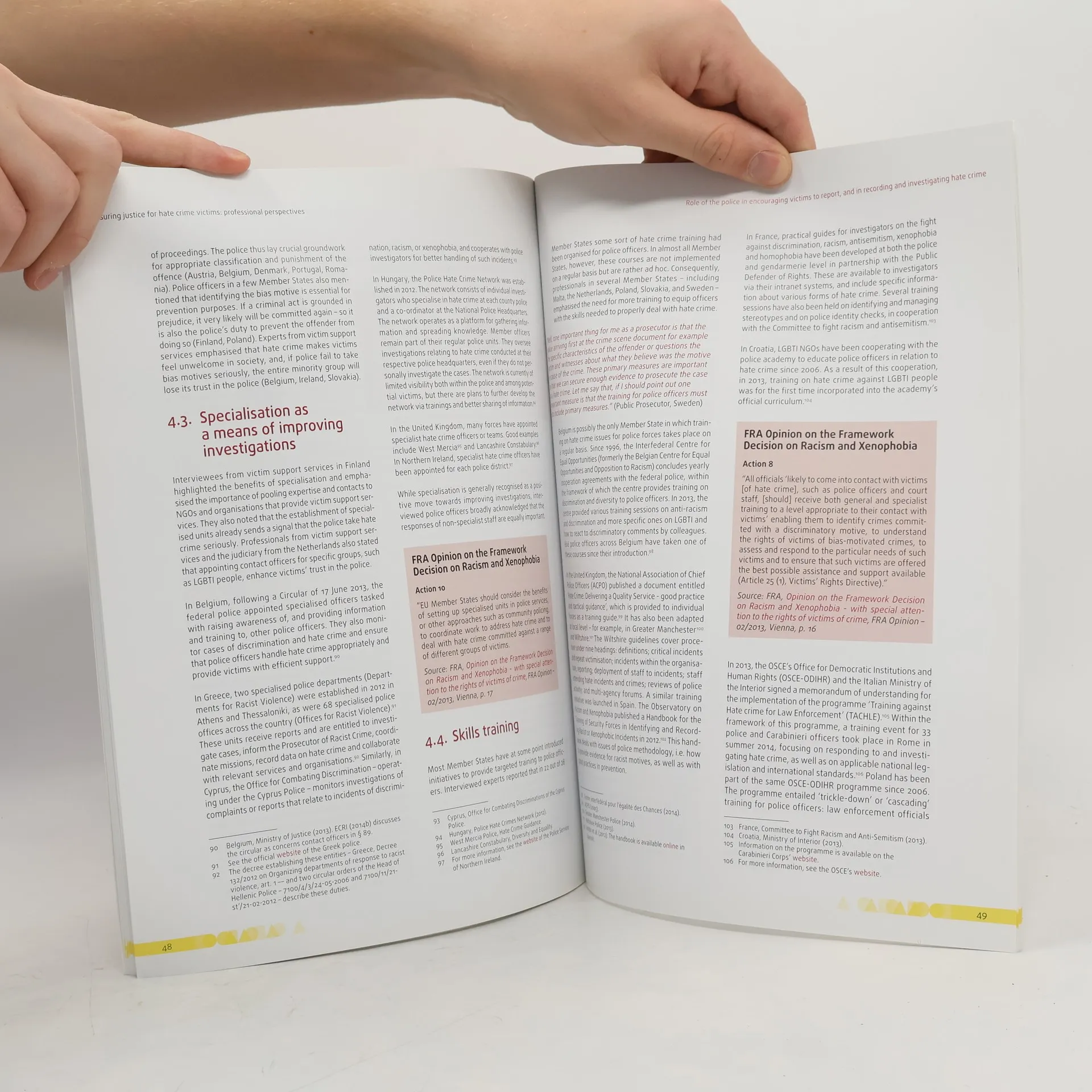
Hate crime is the most severe expression of discrimination, and a core fundamental rights abuse. Various initiatives target such crime, but most hate crime across the EU remains unreported and unprosecuted, leaving victims without redress. To counter this trend, it is essential for Member States to improve access to justice for victims. Drawing on interviews with representatives from criminal courts, public prosecutors' offices, the police, and NGOs involved in supporting hate crime victims, this report sheds light on the diverse hurdles that impede victims' access to justice and the proper recording of hate crime. It also presents promising developments across the EU, and identifies the institutional preconditions necessary to develop effective policies against hate crime. By focusing on the perspective of professionals, the report offers important field-based insights that can help strengthen efforts to empower victims of crime.
Achat du livre
Justice: Ensuring Justice for Hate Crime Victims,
- Langue

- Année de publication
- 2016
- Reliure
- (souple)
Modes de paiement
Personne n'a encore évalué .
- Titre
- Justice: Ensuring Justice for Hate Crime Victims
- Sous-titre
- Professional Perspectives
- Langue
- Anglais
- Auteurs
- Publié
- 2016
- Format
- souple
- Pages
- 67
- ISBN10
- 9294912582
- ISBN13
- 9789294912589
- Séries
- Description
- Hate crime is the most severe expression of discrimination, and a core fundamental rights abuse. Various initiatives target such crime, but most hate crime across the EU remains unreported and unprosecuted, leaving victims without redress. To counter this trend, it is essential for Member States to improve access to justice for victims. Drawing on interviews with representatives from criminal courts, public prosecutors' offices, the police, and NGOs involved in supporting hate crime victims, this report sheds light on the diverse hurdles that impede victims' access to justice and the proper recording of hate crime. It also presents promising developments across the EU, and identifies the institutional preconditions necessary to develop effective policies against hate crime. By focusing on the perspective of professionals, the report offers important field-based insights that can help strengthen efforts to empower victims of crime.