

Épuisé, mais très demandé!
Évaluation du livre
En savoir plus sur le livre
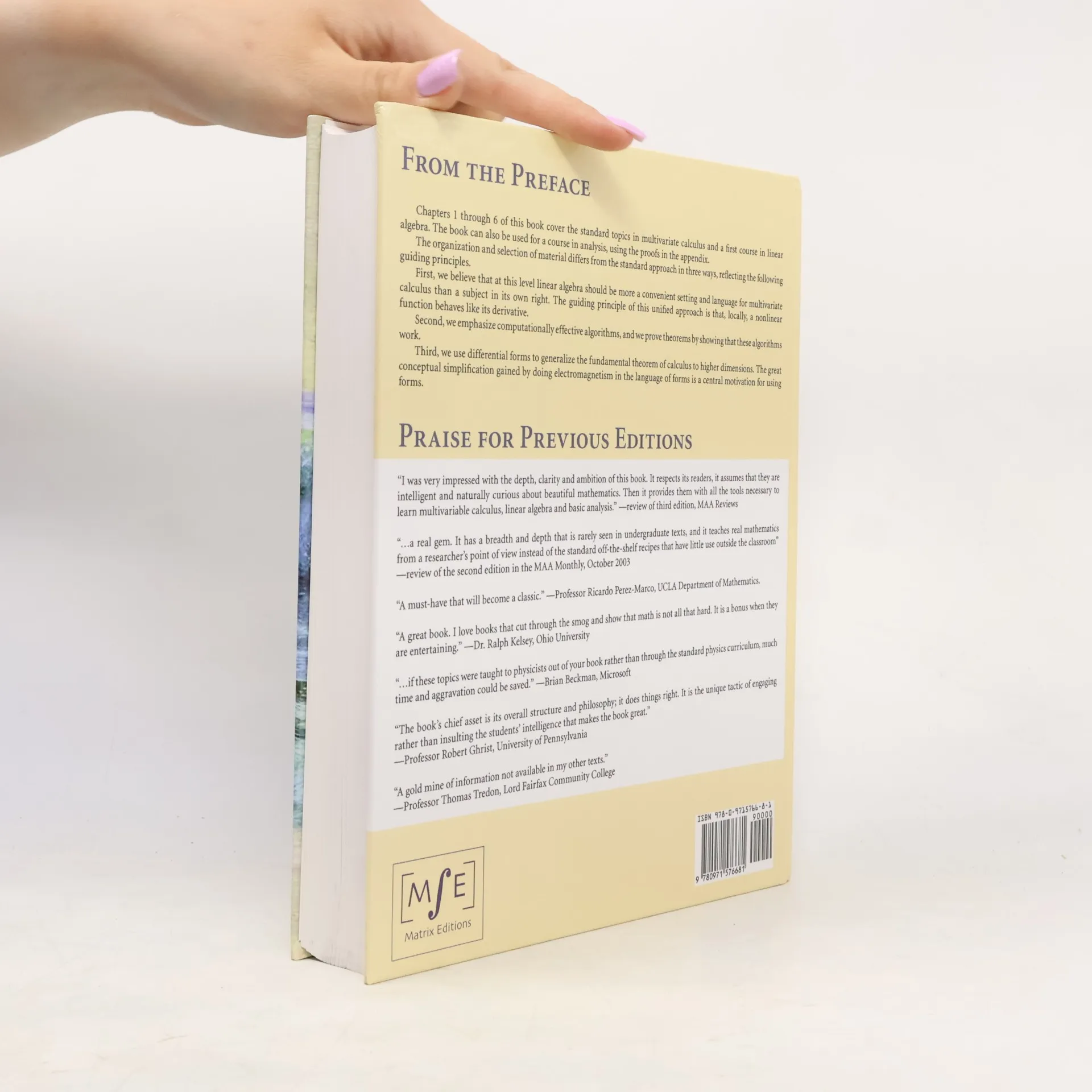
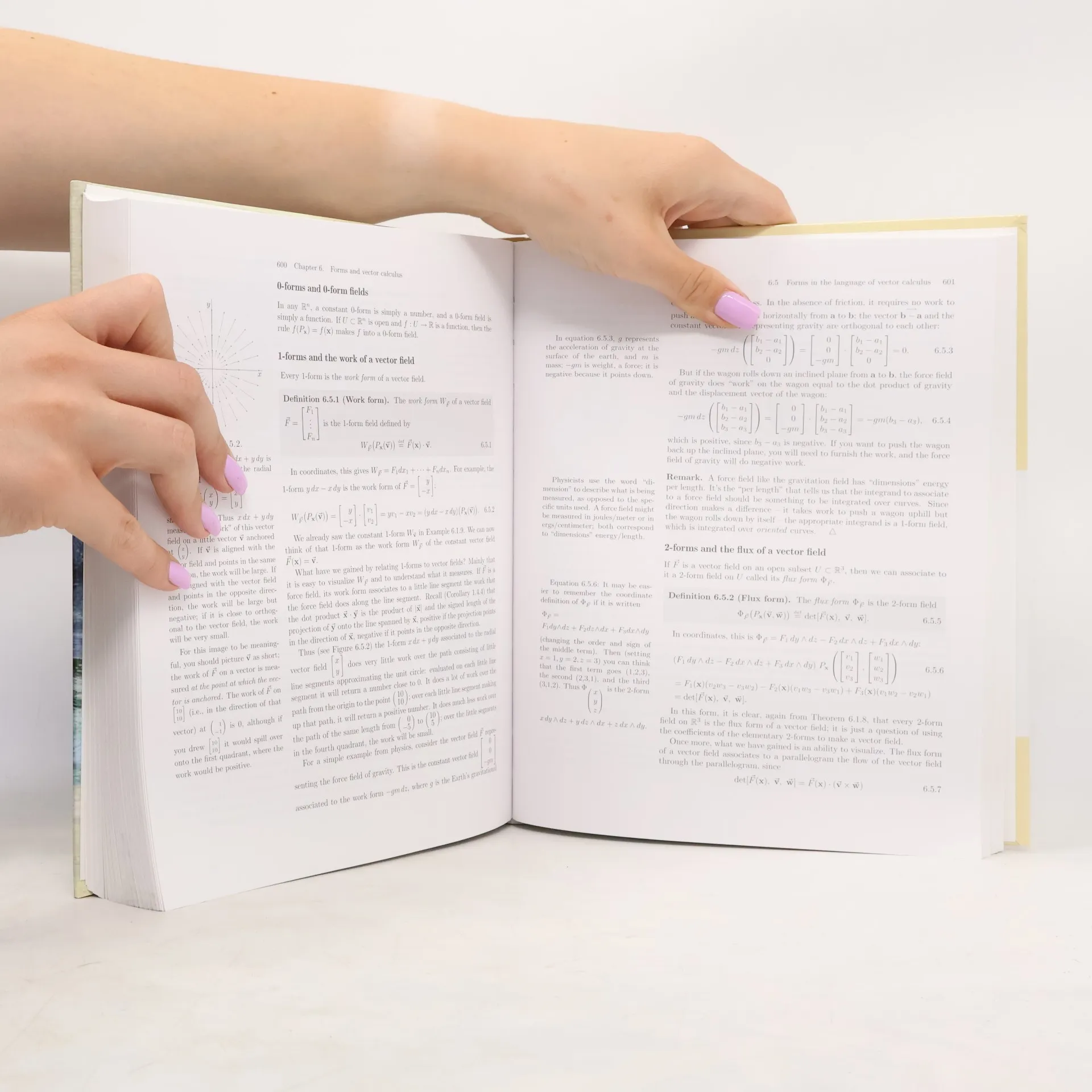
Fifth edition of a combined vector calculus, linear algebra, and differential forms textbook, including new material such as "an example showing how Google uses the Perron-Frobenius theorem to rank web pages, and an example showing how the singular value decomposition can be used for computer face recognition." Student solution manual also available (ISBN 978-0-9715766-9-8).


Achat du livre
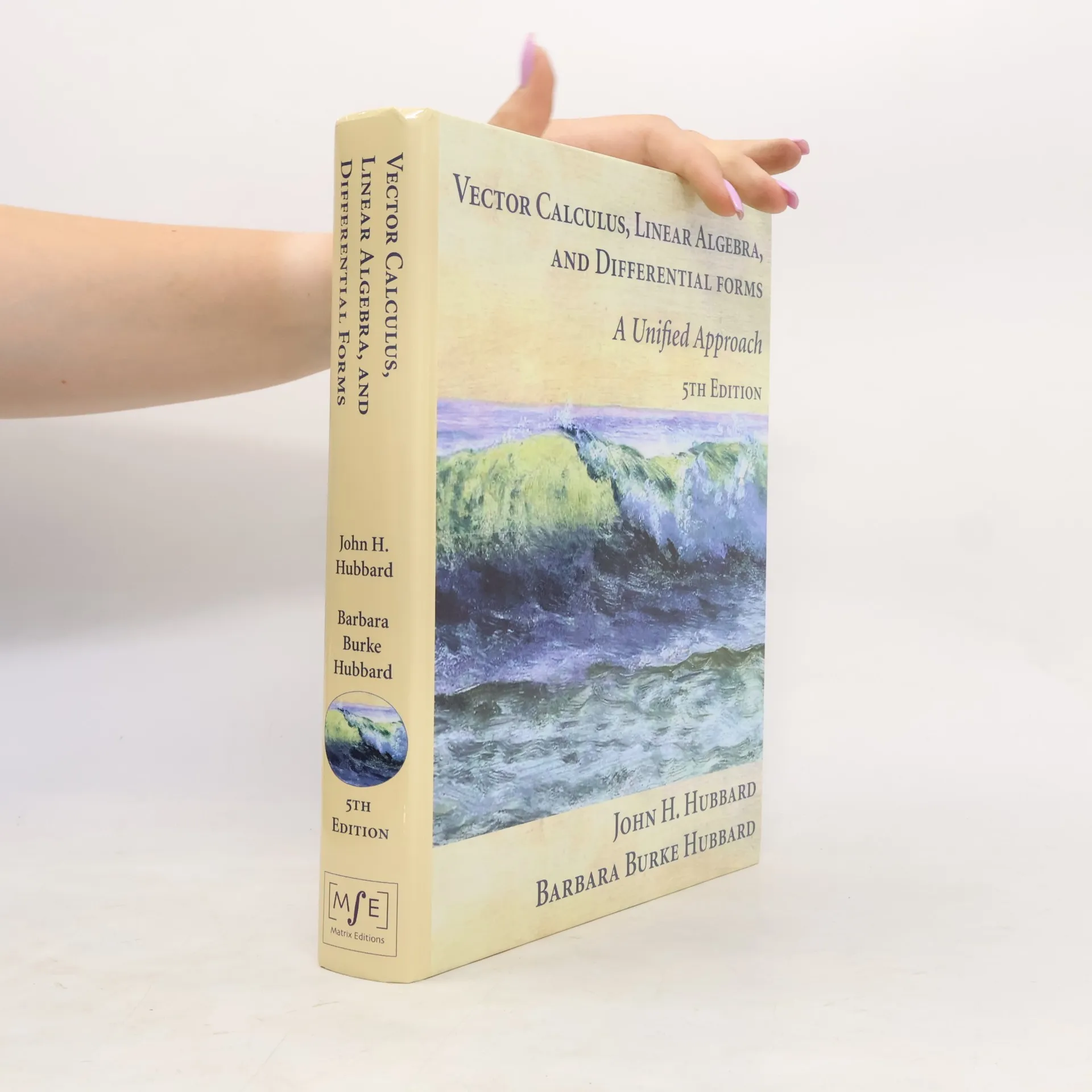
Vector Calculus, Linear Algebra, and Differential Forms, Barbara Burke Hubbard, John H. Hubbard
- Langue

- Année de publication
- 2015
- Reliure
- (rigide)
Nous vous informerons par e-mail dès que nous l’aurons retrouvé.
Modes de paiement
Il manque plus que ton avis ici.
- Titre
- Vector Calculus, Linear Algebra, and Differential Forms
- Sous-titre
- A Unified Approach - 5th Edition
- Langue
- Anglais
- Auteurs
- Barbara Burke Hubbard, John H. Hubbard
- Éditeur
- Matrix Editions
- Publié
- 2015
- Format
- rigide
- Pages
- 818
- ISBN10
- 0971576688
- ISBN13
- 9780971576681
- Séries
- Mots clés
- Science, Technologie, Intelligence Artificielle
- Évaluation
- 5 sur 5
- Description
- Fifth edition of a combined vector calculus, linear algebra, and differential forms textbook, including new material such as "an example showing how Google uses the Perron-Frobenius theorem to rank web pages, and an example showing how the singular value decomposition can be used for computer face recognition." Student solution manual also available (ISBN 978-0-9715766-9-8).