


En savoir plus sur le livre
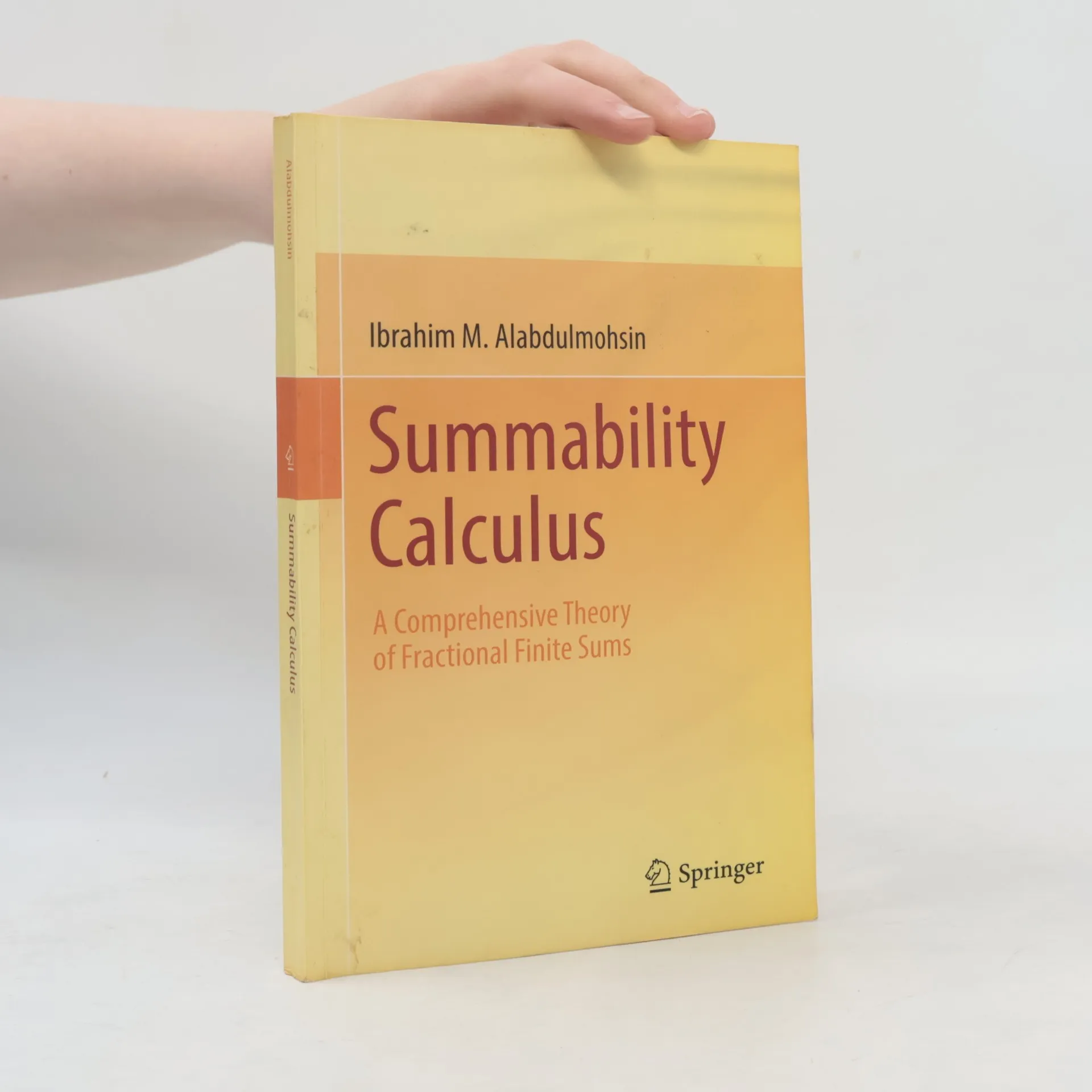
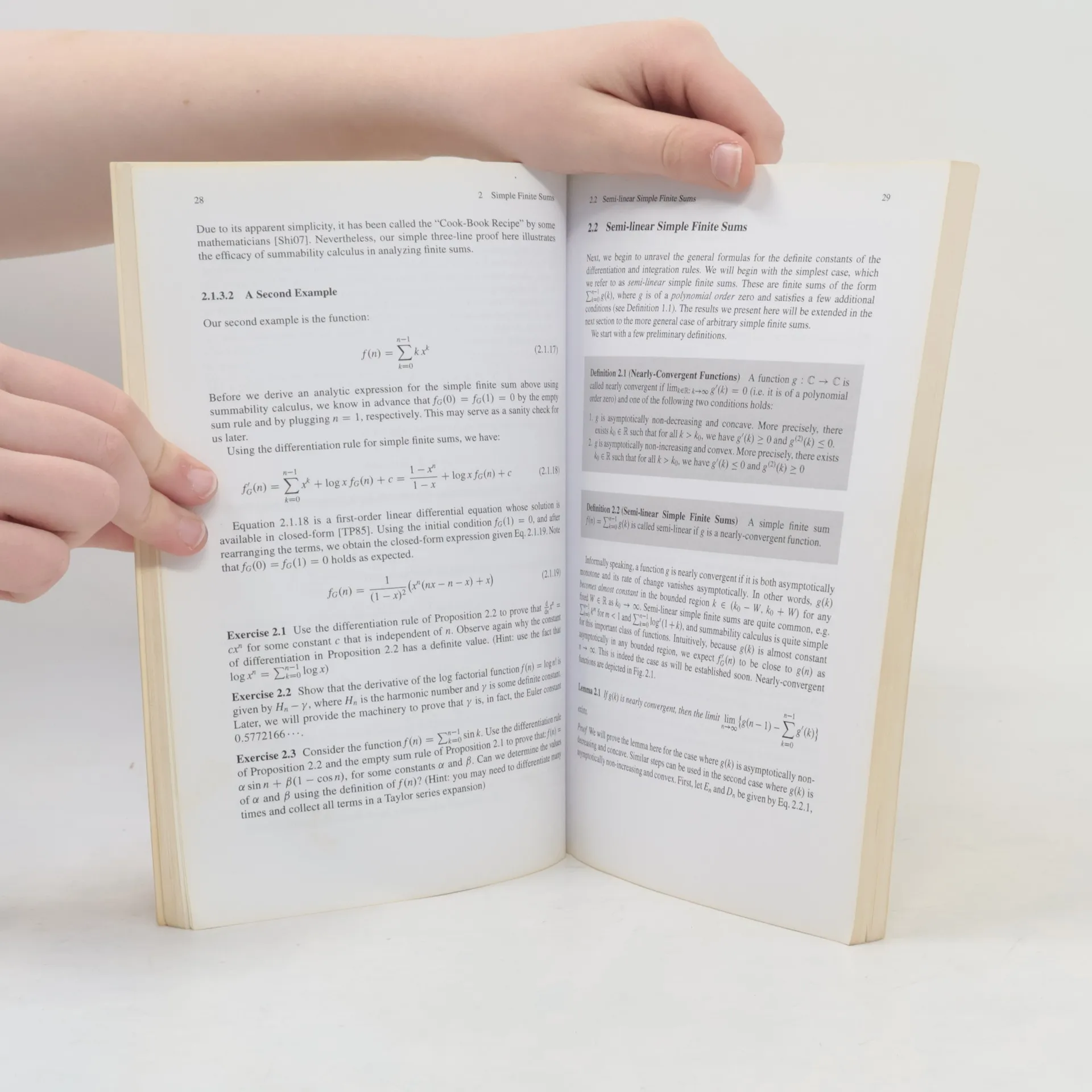
This book develops the foundations of "summability calculus", which is a comprehensive theory of fractional finite sums. It fills an important gap in the literature by unifying and extending disparate historical results. It also presents new material that has not been published before. Importantly, it shows how the study of fractional finite sums benefits from and contributes to many areas of mathematics, such as divergent series, numerical integration, approximation theory, asymptotic methods, special functions, series acceleration, Fourier analysis, the calculus of finite differences, and information theory. As such, it appeals to a wide audience of mathematicians whose interests include the study of special functions, summability theory, analytic number theory, series and sequences, approximation theory, asymptotic expansions, or numerical methods. Richly illustrated, it features chapter summaries, and includes numerous examples and exercises. The content is mostly developed from scratch using only undergraduate mathematics, such as calculus and linear algebra.
Achat du livre
Summability Calculus, Ibrahim M. M. Alabdulmohsin
- Langue

- Année de publication
- 2018
- Reliure
- (souple)
Modes de paiement
Personne n'a encore évalué .
- Titre
- Summability Calculus
- Sous-titre
- A Comprehensive Theory of Fractional Finite Sums
- Langue
- Anglais
- Auteurs
- Ibrahim M. M. Alabdulmohsin
- Éditeur
- Springer
- Publié
- 2018
- Format
- souple
- Pages
- 178
- ISBN10
- 3319746472
- ISBN13
- 9783319746470
- Séries
- Mots clés
- Science, Analyse mathématique, Théorie des nombres
- Description
- This book develops the foundations of "summability calculus", which is a comprehensive theory of fractional finite sums. It fills an important gap in the literature by unifying and extending disparate historical results. It also presents new material that has not been published before. Importantly, it shows how the study of fractional finite sums benefits from and contributes to many areas of mathematics, such as divergent series, numerical integration, approximation theory, asymptotic methods, special functions, series acceleration, Fourier analysis, the calculus of finite differences, and information theory. As such, it appeals to a wide audience of mathematicians whose interests include the study of special functions, summability theory, analytic number theory, series and sequences, approximation theory, asymptotic expansions, or numerical methods. Richly illustrated, it features chapter summaries, and includes numerous examples and exercises. The content is mostly developed from scratch using only undergraduate mathematics, such as calculus and linear algebra.