



Évaluation du livre
Paramètres
- 277pages
- 10 heures de lecture
En savoir plus sur le livre
This textbook introduces embedded systems through exercises with Arduino Uno, targeting advanced undergraduate and graduate students in computer science, computer engineering, and electrical engineering. It provides a balanced discussion on hardware and software aspects of embedded systems, emphasizing co-design. Applications span IoT, wearables, self-driving cars, smart devices, cyberphysical systems, drones, and robotics. The hardware section covers various microcontrollers, sensors, amplifiers, filters, actuators, communication topologies, schematic and PCB designs, and more. The software section addresses OS-less programming, bitmath, polling, interrupts, timers, sleep modes, direct memory access, shared memory, mutexes, and smart algorithms, featuring numerous C-code examples for Arduino Uno. Additional topics include prototyping, testing, verification, reliability, optimization, and regulations. Suitable for courses on embedded systems, microcontrollers, and instrumentation, this textbook equips aspiring embedded system programmers with practical skills through engaging projects, preparing them for industry roles. It offers a comprehensive focus on hardware and software co-design, alongside exercises, tutorials, and assignments.
Achat du livre
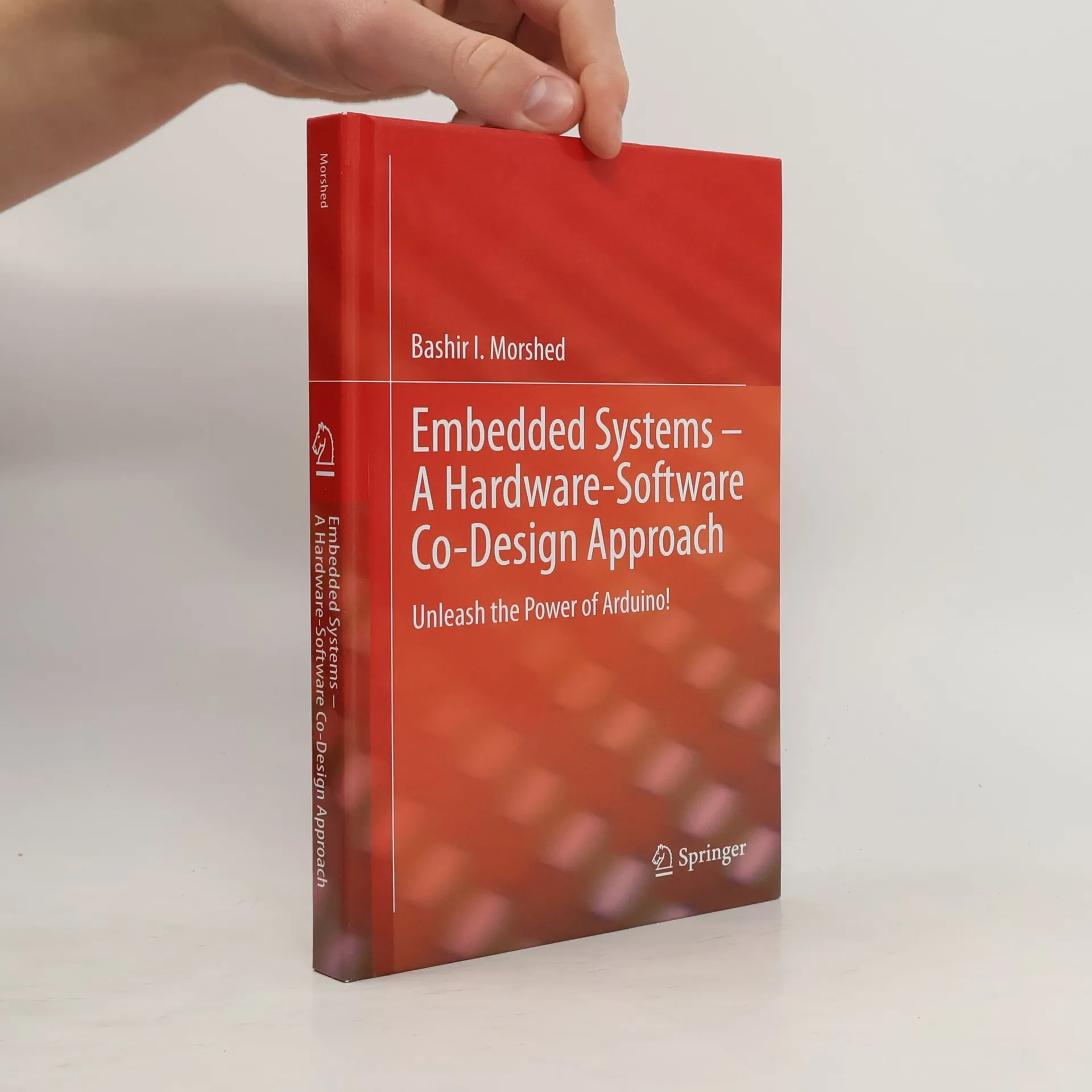
Embedded Systems – A Hardware-Software Co-Design Approach, Bashir I. Morshed
- Langue

- Année de publication
- 2021
- Reliure
- (rigide)
Modes de paiement
Il manque plus que ton avis ici.
- Titre
- Embedded Systems – A Hardware-Software Co-Design Approach
- Sous-titre
- Unleash the Power of Arduino!
- Langue
- Anglais
- Auteurs
- Bashir I. Morshed
- Publié
- 2021
- Format
- rigide
- Pages
- 277
- ISBN10
- 303066807X
- ISBN13
- 9783030668075
- Séries
- Catégories
- Mots clés
- Technologie, Suisse, Électronique, Matériel informatique, Microcontrôleurs, Virtualisation, Arduino
- Évaluation
- 5 sur 5
- Description
- This textbook introduces embedded systems through exercises with Arduino Uno, targeting advanced undergraduate and graduate students in computer science, computer engineering, and electrical engineering. It provides a balanced discussion on hardware and software aspects of embedded systems, emphasizing co-design. Applications span IoT, wearables, self-driving cars, smart devices, cyberphysical systems, drones, and robotics. The hardware section covers various microcontrollers, sensors, amplifiers, filters, actuators, communication topologies, schematic and PCB designs, and more. The software section addresses OS-less programming, bitmath, polling, interrupts, timers, sleep modes, direct memory access, shared memory, mutexes, and smart algorithms, featuring numerous C-code examples for Arduino Uno. Additional topics include prototyping, testing, verification, reliability, optimization, and regulations. Suitable for courses on embedded systems, microcontrollers, and instrumentation, this textbook equips aspiring embedded system programmers with practical skills through engaging projects, preparing them for industry roles. It offers a comprehensive focus on hardware and software co-design, alongside exercises, tutorials, and assignments.