

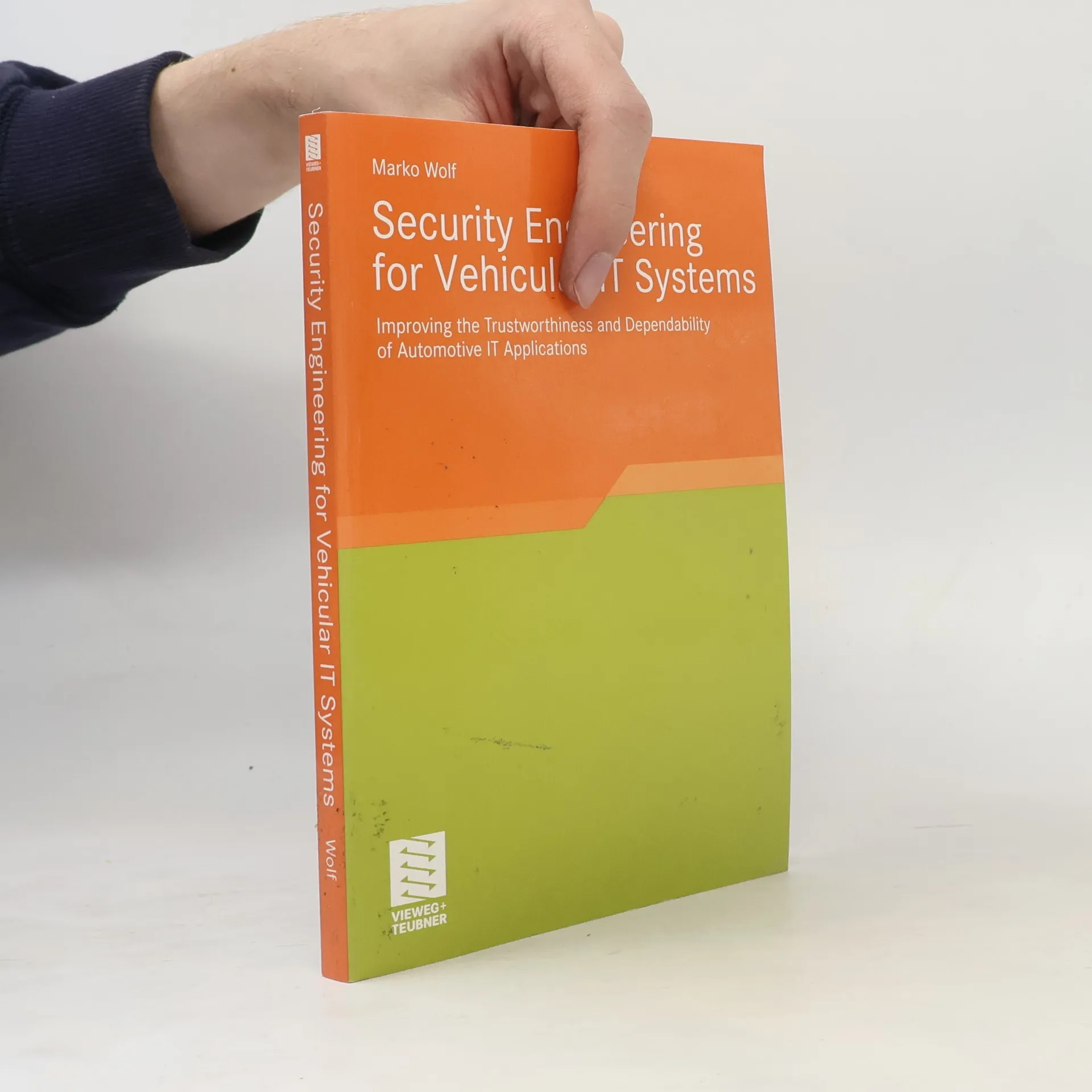
Security Engineering for Vehicular IT Systems
Improving the Trustworthiness and Dependability of Automotive IT Applications
Auteurs
Évaluation du livre
Paramètres
- 250pages
- 9 heures de lecture
En savoir plus sur le livre
Information technology drives nearly all innovations in the automotive industry, with about 90% of advancements in vehicles relying on digital electronics and software. Modern compact cars contain numerous networked microprocessors and hundreds of megabytes of software that manage engine functions, assist drivers, and provide comfort, infotainment, and safety features. A critical aspect of these digital systems is their security. While software safety is relatively well-established, protecting automotive IT systems from malicious attacks is a more recent focus. European car manufacturers have begun forming dedicated R&D groups for embedded security, but a comprehensive reference on this topic has been lacking. Dr. Marko Wolf addresses this gap with an extensive examination of IT security in vehicles. The challenge of automotive IT security lies in its interdisciplinary nature, which Dr. Wolf skillfully navigates by integrating various fields into a cohesive discussion. The work covers relevant security technologies, a systematic analysis of security risks, and solutions utilizing state-of-the-art methods. Although much of the content draws from research, it presents a thorough overview of the current landscape in automotive security.
Achat du livre
Security Engineering for Vehicular IT Systems, Marko Wolf
- Langue

- Année de publication
- 2009
- Reliure
- (souple)
Modes de paiement
Il manque plus que ton avis ici.
- Titre
- Security Engineering for Vehicular IT Systems
- Sous-titre
- Improving the Trustworthiness and Dependability of Automotive IT Applications
- Langue
- Anglais
- Auteurs
- Marko Wolf
- Éditeur
- Vieweg+Teubner Verlag
- Publié
- 2009
- Format
- souple
- Pages
- 250
- ISBN10
- 3834807958
- ISBN13
- 9783834807953
- Séries
- Catégories
- Mots clés
- Manuels universitaires, Allemagne, Technologie, Automobile, Ingénierie, Protection des données, Technologie de protection
- Évaluation
- 4 sur 5
- Description
- Information technology drives nearly all innovations in the automotive industry, with about 90% of advancements in vehicles relying on digital electronics and software. Modern compact cars contain numerous networked microprocessors and hundreds of megabytes of software that manage engine functions, assist drivers, and provide comfort, infotainment, and safety features. A critical aspect of these digital systems is their security. While software safety is relatively well-established, protecting automotive IT systems from malicious attacks is a more recent focus. European car manufacturers have begun forming dedicated R&D groups for embedded security, but a comprehensive reference on this topic has been lacking. Dr. Marko Wolf addresses this gap with an extensive examination of IT security in vehicles. The challenge of automotive IT security lies in its interdisciplinary nature, which Dr. Wolf skillfully navigates by integrating various fields into a cohesive discussion. The work covers relevant security technologies, a systematic analysis of security risks, and solutions utilizing state-of-the-art methods. Although much of the content draws from research, it presents a thorough overview of the current landscape in automotive security.