


Paramètres
- 302pages
- 11 heures de lecture
En savoir plus sur le livre
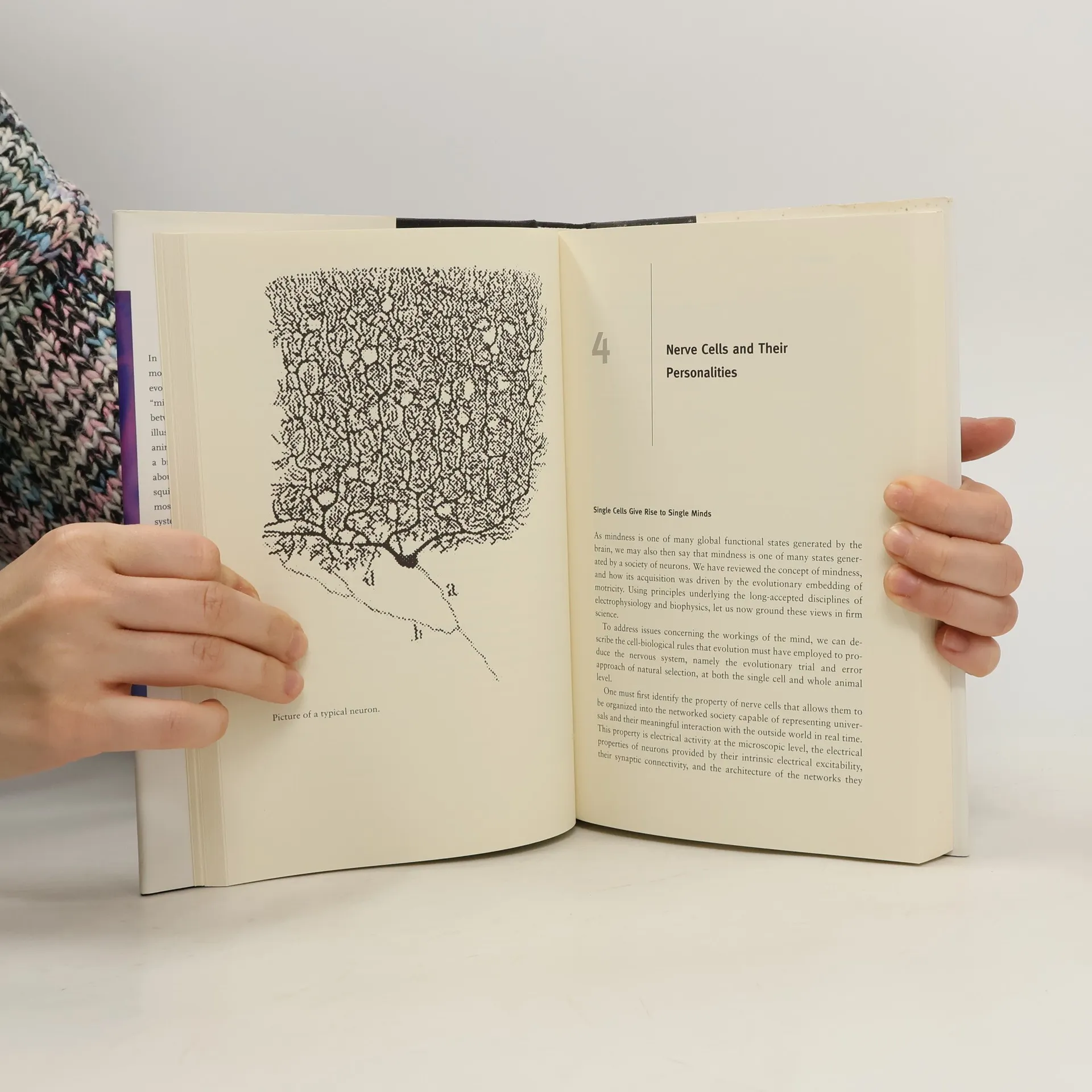
In I of the Vortex, Rodolfo Llinas, a pioneer in brain science, offers a unique perspective on the evolution and essence of the mind. He posits that the "mindness state" developed to facilitate predictive interactions between mobile organisms and their surroundings. Llinas traces the origins of mind to the sea squirt, a primitive creature with a brainlike ganglion that processes sensory information. Remarkably, as adults, sea squirts attach to a surface and consume most of their own brain, indicating that the nervous system evolved primarily to support movement. To navigate their environment safely, animals must predict the outcomes of their actions based on sensory input, making prediction a fundamental brain function. The concept of Self emerges as the centralization of this predictive capability. Central to Llinas's theory is oscillation, where many neurons exhibit electrical activity through oscillating voltage changes across their membranes. Larger electrical events occur at the peaks of these oscillations, enabling communication between neurons. When groups of neurons oscillate in sync, they resonate with other neuron groups, forming the neurobiological basis of cognition. While the mind is influenced by sensory experiences, it is also shaped by these internal oscillations, suggesting that reality is not solely external but resembles a form of virtual reality.


Achat du livre
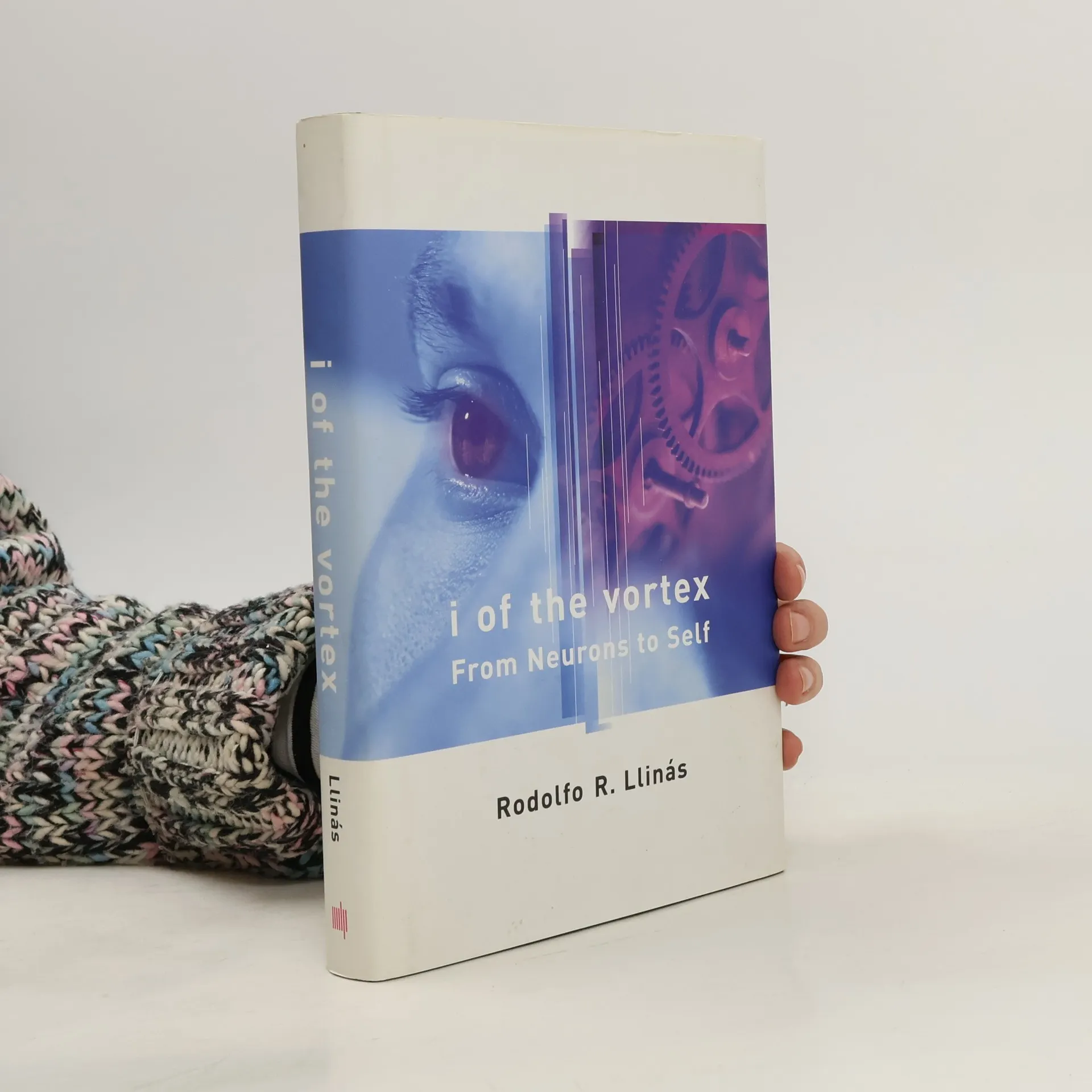
I of the Vortex, Rodolfo R. Llinas
- Langue

- Année de publication
- 2001
- Reliure
- (rigide)
Modes de paiement
Il manque plus que ton avis ici.
- Titre
- I of the Vortex
- Sous-titre
- From Neurons to Self
- Langue
- Anglais
- Auteurs
- Rodolfo R. Llinas
- Éditeur
- MIT Press
- Publié
- 2001
- Format
- rigide
- Pages
- 302
- ISBN10
- 0262122332
- ISBN13
- 9780262122337
- Séries
- Mots clés
- Nonfiction, Sciences sociales, Science et Mathématiques, Sciences naturelles, Philosophie, Psychologie, Biologie, Science, États-Unis, Médecine, L'école, Littérature spécialisée, Neurosciences, Cerveau, Conscience, Neurologie, Fondements, Neurobiologie
- Évaluation
- 4,2 sur 5
- Description
- In I of the Vortex, Rodolfo Llinas, a pioneer in brain science, offers a unique perspective on the evolution and essence of the mind. He posits that the "mindness state" developed to facilitate predictive interactions between mobile organisms and their surroundings. Llinas traces the origins of mind to the sea squirt, a primitive creature with a brainlike ganglion that processes sensory information. Remarkably, as adults, sea squirts attach to a surface and consume most of their own brain, indicating that the nervous system evolved primarily to support movement. To navigate their environment safely, animals must predict the outcomes of their actions based on sensory input, making prediction a fundamental brain function. The concept of Self emerges as the centralization of this predictive capability. Central to Llinas's theory is oscillation, where many neurons exhibit electrical activity through oscillating voltage changes across their membranes. Larger electrical events occur at the peaks of these oscillations, enabling communication between neurons. When groups of neurons oscillate in sync, they resonate with other neuron groups, forming the neurobiological basis of cognition. While the mind is influenced by sensory experiences, it is also shaped by these internal oscillations, suggesting that reality is not solely external but resembles a form of virtual reality.