



En savoir plus sur le livre
Madness is a complex and contested term, varying across cultures and time. While some equate it with unreason and violence, others link it to creativity, spirituality, or view it as a mental disorder. A prevalent perspective is that madness is a disorder of the mind. However, contemporary mental health activism challenges these psychiatric and societal views. Movements like Mad Pride and mad-positive activism reject the labels of mental 'illness' and 'disorder', reclaiming the term 'mad' and seeking to transform its negative connotations. Activists advocate for a cultural shift in the perception of madness and assert that it can serve as a basis for identity. This raises critical questions: Can madness truly form the basis for identity? How can we reconcile the experiences of delusions and self-discontinuity often associated with mental health conditions with identity formation? What should society's response be? This book presents a comprehensive philosophical examination of Mad activism's claims and demands, situated within the philosophy of psychiatry, Mad studies, and activist literature. It develops a robust theoretical framework for understanding, justifying, and addressing the call for recognition from Mad activism.
Achat du livre
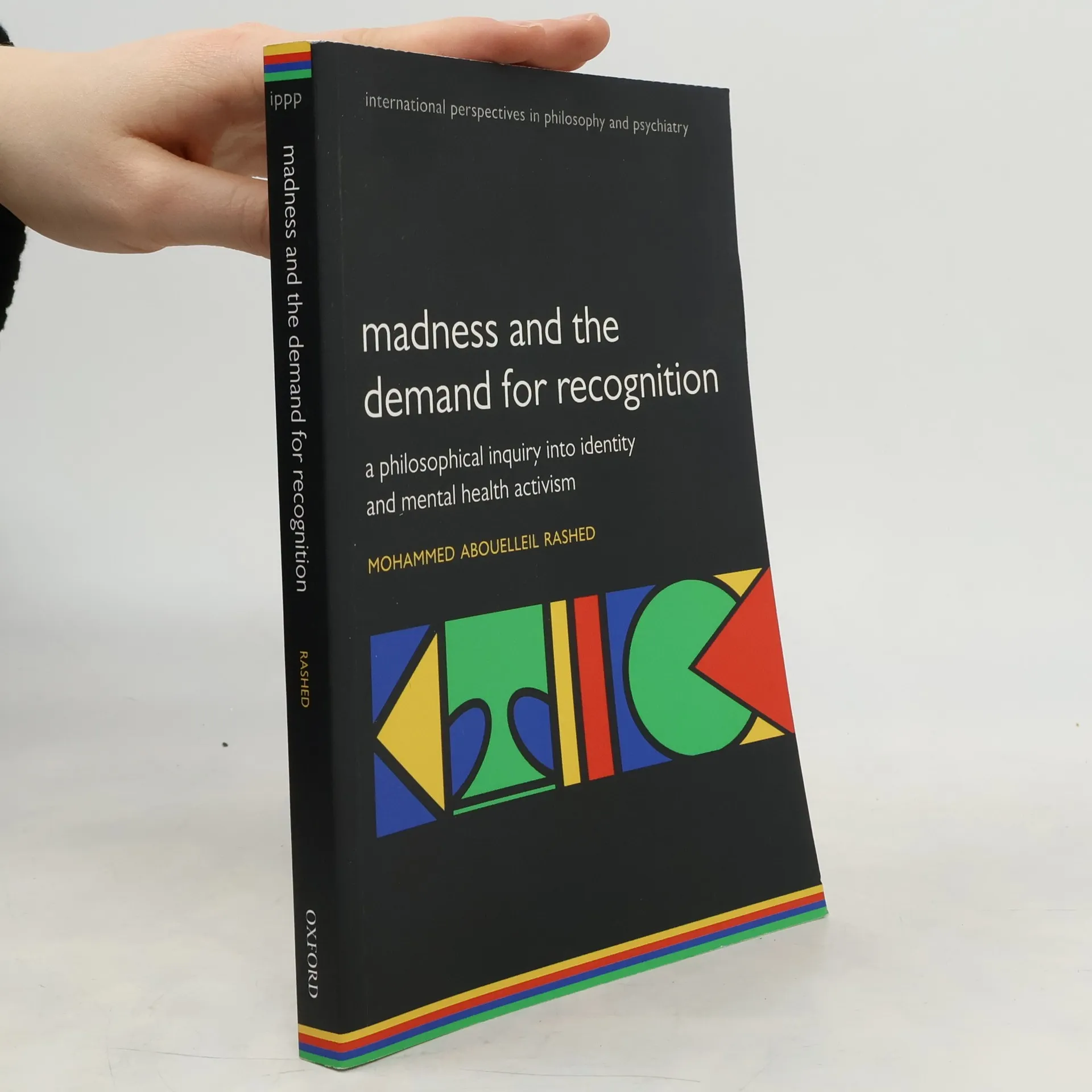
Madness and the Demand for Recognition, Mohammed Abouelleil Rashed
- Langue

- Année de publication
- 2019
- Reliure
- (souple)
Modes de paiement
Personne n'a encore évalué .
- Titre
- Madness and the Demand for Recognition
- Sous-titre
- A Philosophical Inquiry into Identity and Mental Health Activism
- Langue
- Anglais
- Auteurs
- Mohammed Abouelleil Rashed
- Éditeur
- Oxford University Press
- Publié
- 2019
- Format
- souple
- Pages
- 288
- ISBN10
- 0198786867
- ISBN13
- 9780198786863
- Séries
- Description
- Madness is a complex and contested term, varying across cultures and time. While some equate it with unreason and violence, others link it to creativity, spirituality, or view it as a mental disorder. A prevalent perspective is that madness is a disorder of the mind. However, contemporary mental health activism challenges these psychiatric and societal views. Movements like Mad Pride and mad-positive activism reject the labels of mental 'illness' and 'disorder', reclaiming the term 'mad' and seeking to transform its negative connotations. Activists advocate for a cultural shift in the perception of madness and assert that it can serve as a basis for identity. This raises critical questions: Can madness truly form the basis for identity? How can we reconcile the experiences of delusions and self-discontinuity often associated with mental health conditions with identity formation? What should society's response be? This book presents a comprehensive philosophical examination of Mad activism's claims and demands, situated within the philosophy of psychiatry, Mad studies, and activist literature. It develops a robust theoretical framework for understanding, justifying, and addressing the call for recognition from Mad activism.