

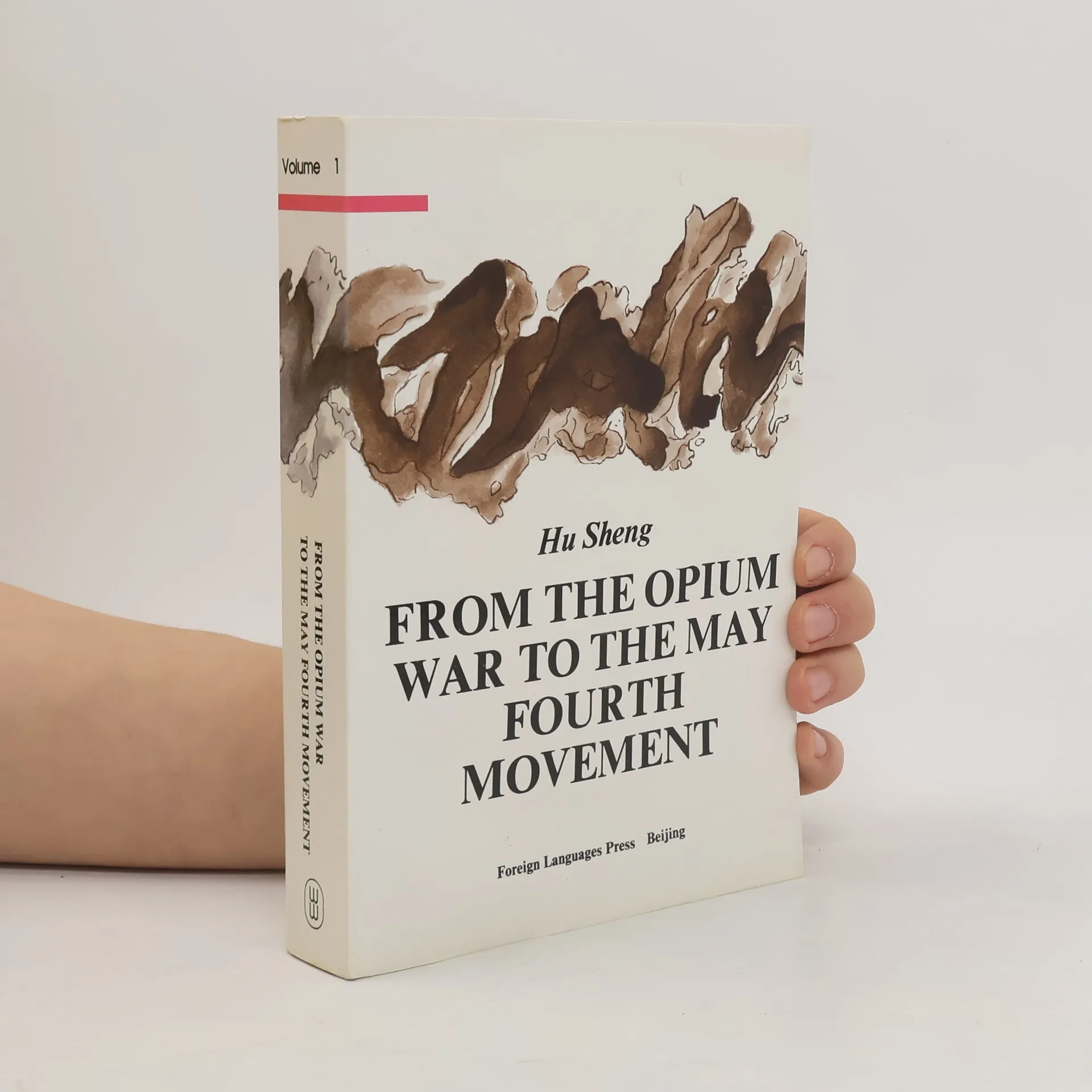


En savoir plus sur le livre
"From the Opium War to the May Fourth Movement" by Hu Sheng is the result of years of research on modern Chinese history. The book is divided into five parts, with 27 chapters in total. The author analyzes modern Chinese history through three waves of revolution. In Part I, he discusses the Opium War and the Taiping Peasant Revolution, the first wave of revolution; in Part II, he examines the formation of a semicolonial and semifeudal regime, which ultimately led to a new wave of revolution; in Part III, he covers the Reform Movement of 1898 and the Yi He Tuan (Boxer) Movement, the second wave of revolution; in Part IV, he addresses the Bourgeois Revolution of 1911, the third wave of revolution; and in Part V, he explores the transition toward the New-Democratic Revolution that led China out of darkness. Using primary sources, this book analyzes key events in modern Chinese history and reflects the Chinese people's struggle against foreign aggressors and their own feudal rulers in their fight for national independence, democracy, and freedom from 1840 to 1919.


Achat du livre
From the Opium War to the May Fourth Movement, Hu Sheng
- Langue

- Année de publication
- 1991
- Reliure
- (souple)
Modes de paiement
Il manque plus que ton avis ici.
- Langue
- Anglais
- Auteurs
- Hu Sheng
- Éditeur
- Foreign Languages Press
- Publié
- 1991
- Format
- souple
- Pages
- 581
- ISBN10
- 0835119505
- ISBN13
- 9780835119504
- Séries
- Mots clés
- Nonfiction, Thème historique, Histoire, Politique, Chine
- Évaluation
- 4 sur 5
- Description
- "From the Opium War to the May Fourth Movement" by Hu Sheng is the result of years of research on modern Chinese history. The book is divided into five parts, with 27 chapters in total. The author analyzes modern Chinese history through three waves of revolution. In Part I, he discusses the Opium War and the Taiping Peasant Revolution, the first wave of revolution; in Part II, he examines the formation of a semicolonial and semifeudal regime, which ultimately led to a new wave of revolution; in Part III, he covers the Reform Movement of 1898 and the Yi He Tuan (Boxer) Movement, the second wave of revolution; in Part IV, he addresses the Bourgeois Revolution of 1911, the third wave of revolution; and in Part V, he explores the transition toward the New-Democratic Revolution that led China out of darkness. Using primary sources, this book analyzes key events in modern Chinese history and reflects the Chinese people's struggle against foreign aggressors and their own feudal rulers in their fight for national independence, democracy, and freedom from 1840 to 1919.