

En savoir plus sur le livre
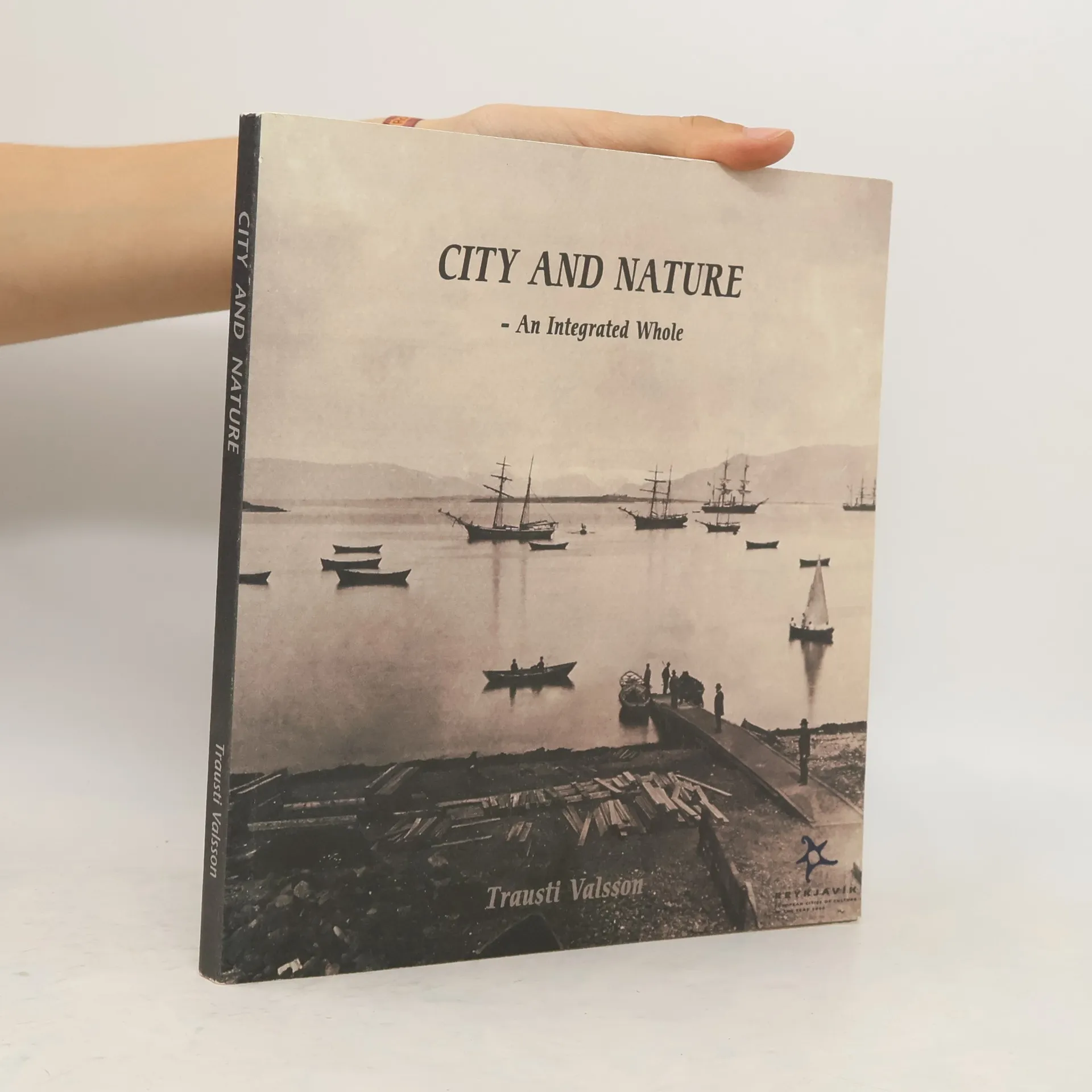
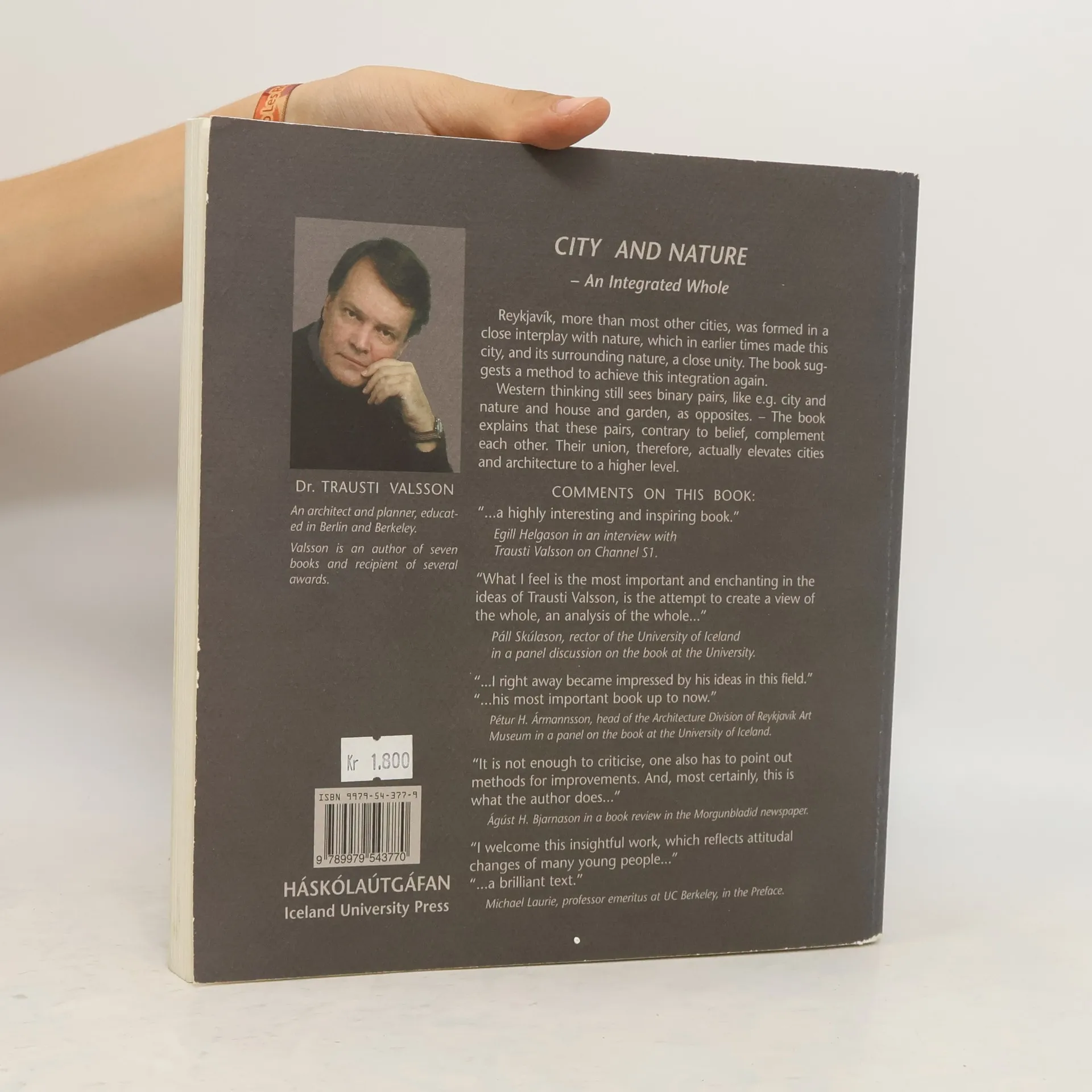
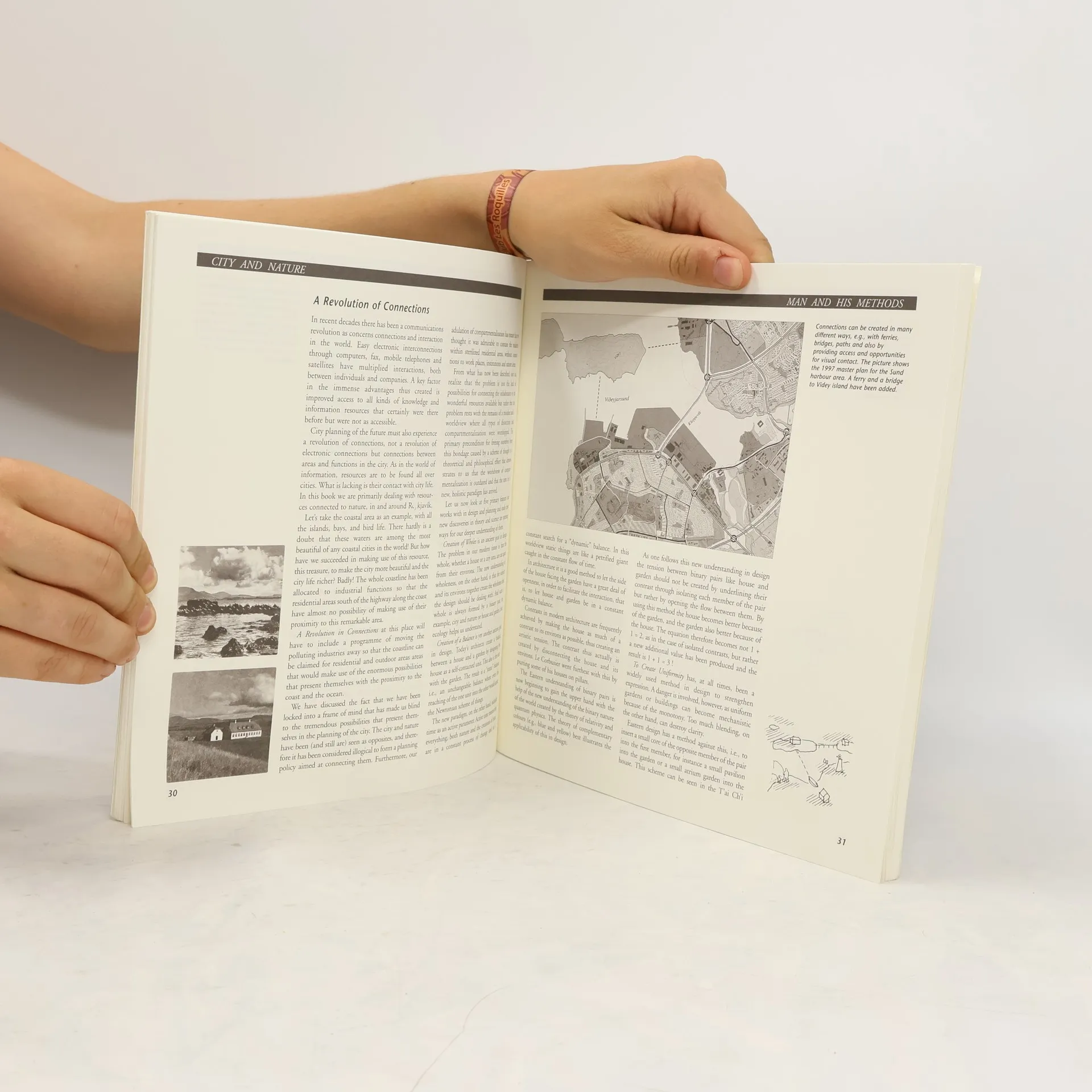
Reykjavík was shaped, like Icelandic culture and settlement, in close interaction with the fundamental elements of earth, water, air, and fire. Few modern cities enjoy this close relationship with nature, and it is precisely this aspect that gives Reykjavík much of its beauty and depth. Traditional Western culture, in contrast, tends to view pairs such as city and nature as opposites, unlikely to benefit from establishing connections between them. In this book, the author, Trausti Valsson, an urban planner, explains that pairs like city and nature, and house and garden, can strengthen each other, similar to how red and green complement each other in color theory. By bringing them together, a synergistic whole emerges that can elevate the planning and architecture of cities to a higher level.
Achat du livre
City and Nature, Trausti Valsson
- Langue

- Année de publication
- 2000
- Reliure
- (rigide)
Modes de paiement
Il manque plus que ton avis ici.
- Titre
- City and Nature
- Sous-titre
- An Integrated Whole
- Langue
- Anglais
- Auteurs
- Trausti Valsson
- Éditeur
- Iceland University Press
- Publié
- 2000
- Format
- rigide
- Pages
- 111
- ISBN10
- 9979543779
- ISBN13
- 9789979543770
- Séries
- Catégories
- Évaluation
- 3,5 sur 5
- Description
- Reykjavík was shaped, like Icelandic culture and settlement, in close interaction with the fundamental elements of earth, water, air, and fire. Few modern cities enjoy this close relationship with nature, and it is precisely this aspect that gives Reykjavík much of its beauty and depth. Traditional Western culture, in contrast, tends to view pairs such as city and nature as opposites, unlikely to benefit from establishing connections between them. In this book, the author, Trausti Valsson, an urban planner, explains that pairs like city and nature, and house and garden, can strengthen each other, similar to how red and green complement each other in color theory. By bringing them together, a synergistic whole emerges that can elevate the planning and architecture of cities to a higher level.