



En savoir plus sur le livre
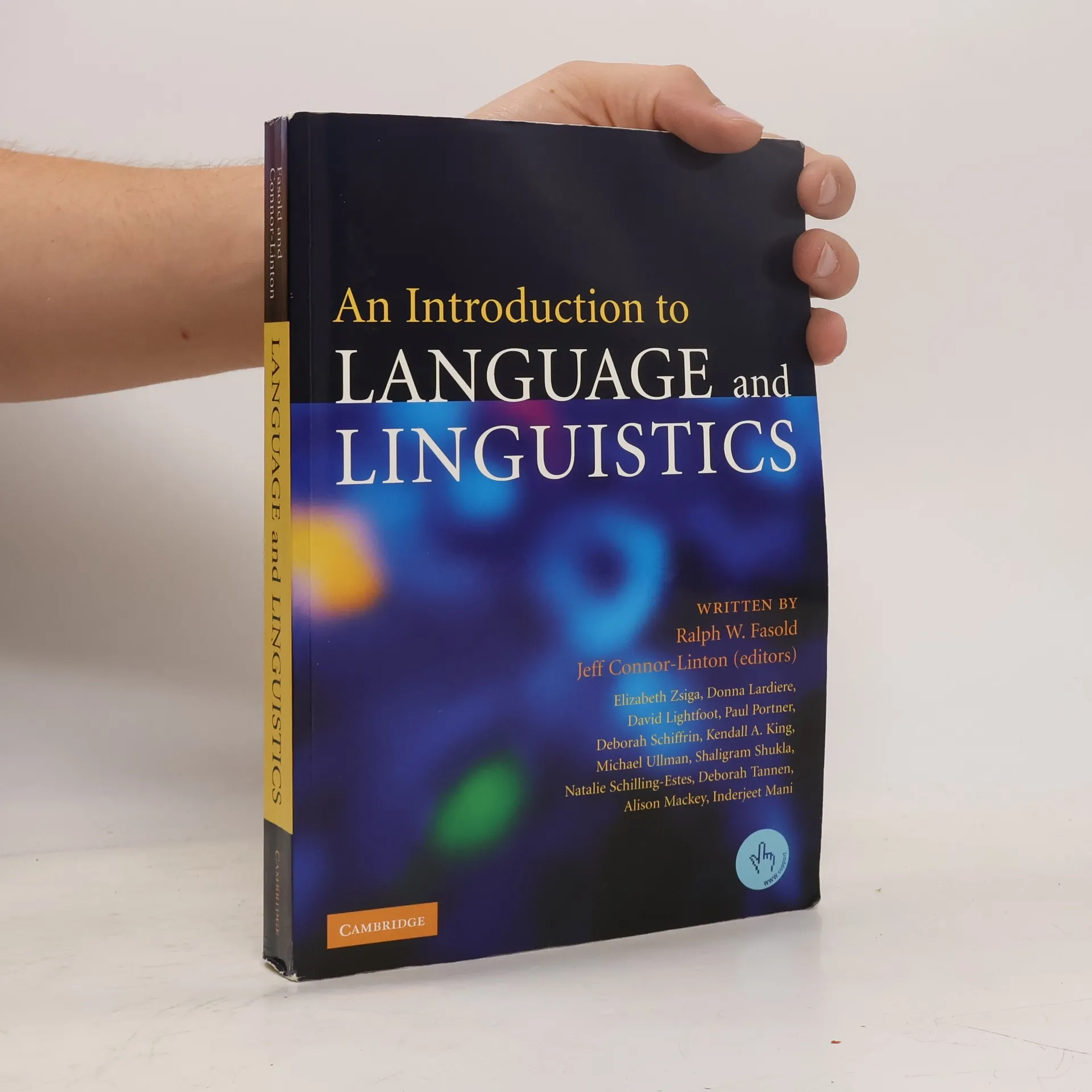
This accessible textbook is the only introduction to linguistics in which each chapter is written by an expert who teaches courses on that topic, ensuring balanced and uniformly excellent coverage of the full range of modern linguistics. Assuming no prior knowledge the text offers a clear introduction to the traditional topics of structural linguistics (theories of sound, form, meaning, and language change), and in addition provides full coverage of contextual linguistics, including separate chapters on discourse, dialect variation, language and culture, and the politics of language. There are also up-to-date separate chapters on language and the brain, computational linguistics, writing, child language acquisition, and second-language learning. The breadth of the textbook makes it ideal for introductory courses on language and linguistics offered by departments of English, sociology, anthropology, and communications, as well as by linguistics departments.


Achat du livre
An Introduction to Language and Linguistics, Ralph W. Fasold, Jeff LintonConnor
- Langue

- Année de publication
- 2010
- Reliure
- (souple)
Modes de paiement
Il manque plus que ton avis ici.
- Titre
- An Introduction to Language and Linguistics
- Langue
- Anglais
- Auteurs
- Ralph W. Fasold, Jeff LintonConnor
- Éditeur
- Cambridge University Press
- Publié
- 2010
- Format
- souple
- Pages
- 556
- ISBN10
- 0521612357
- ISBN13
- 9780521612357
- Séries
- Mots clés
- Éducation, système scolaire, L'école, Linguistique
- Évaluation
- 3,45 sur 5
- Description
- This accessible textbook is the only introduction to linguistics in which each chapter is written by an expert who teaches courses on that topic, ensuring balanced and uniformly excellent coverage of the full range of modern linguistics. Assuming no prior knowledge the text offers a clear introduction to the traditional topics of structural linguistics (theories of sound, form, meaning, and language change), and in addition provides full coverage of contextual linguistics, including separate chapters on discourse, dialect variation, language and culture, and the politics of language. There are also up-to-date separate chapters on language and the brain, computational linguistics, writing, child language acquisition, and second-language learning. The breadth of the textbook makes it ideal for introductory courses on language and linguistics offered by departments of English, sociology, anthropology, and communications, as well as by linguistics departments.