

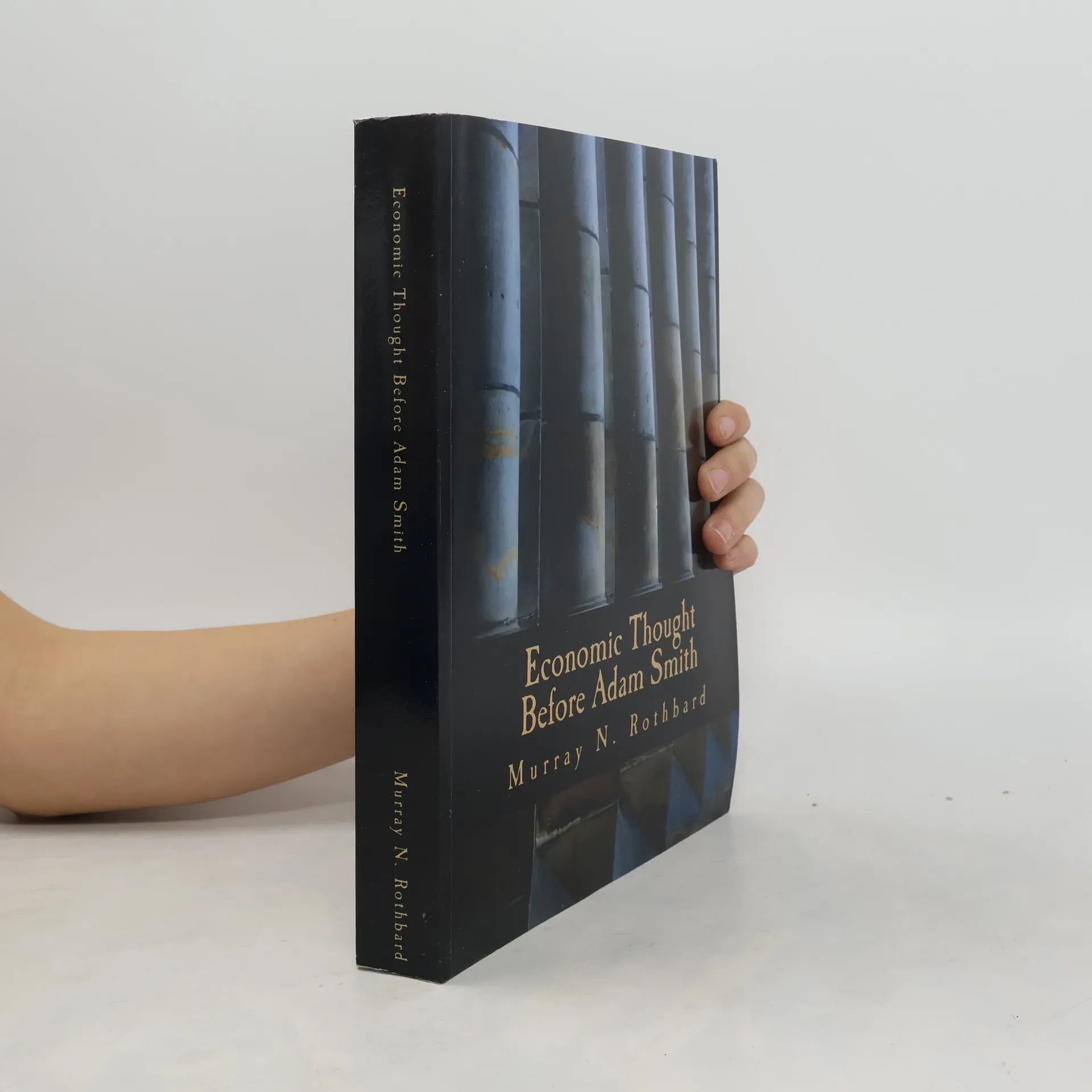

En savoir plus sur le livre
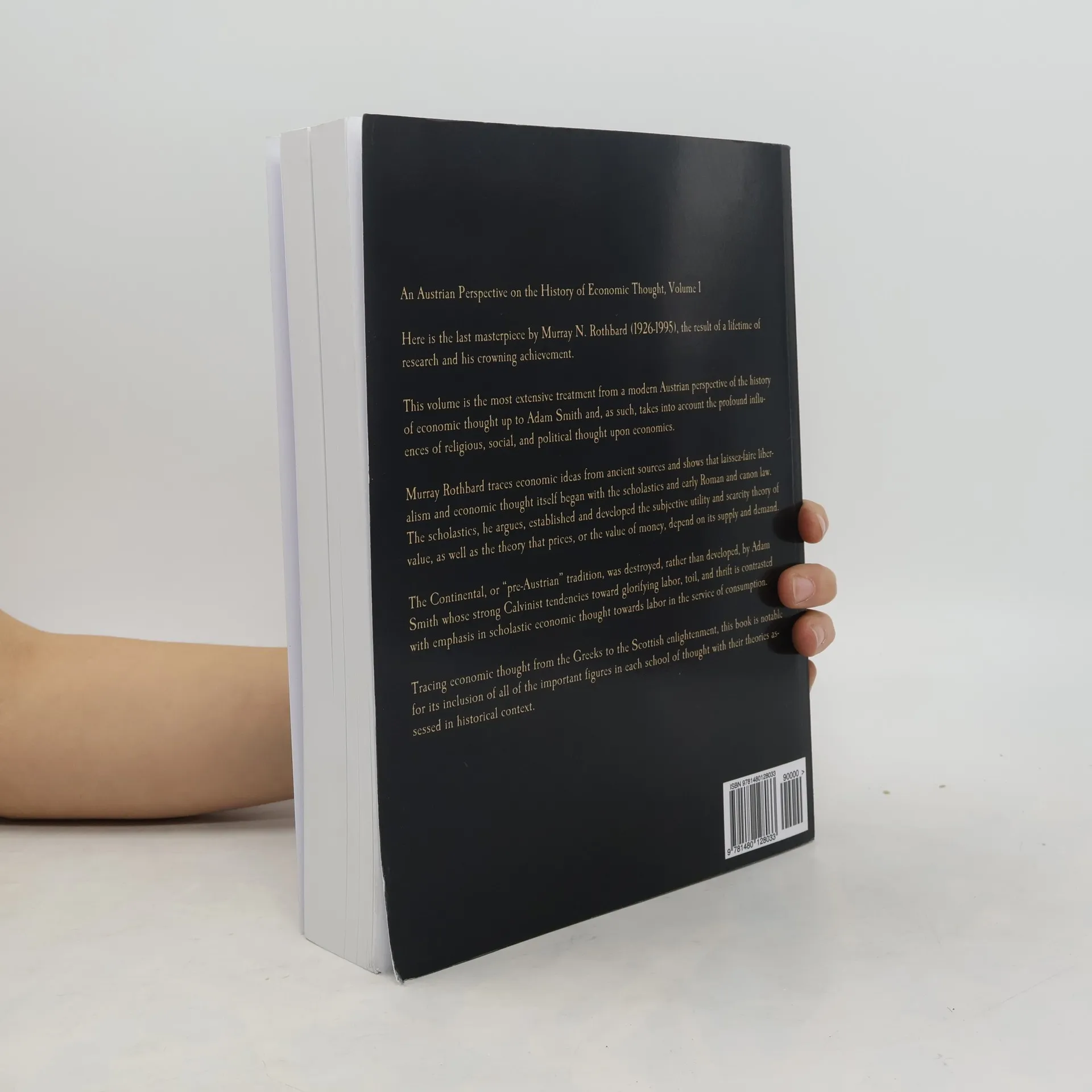
LARGE PRINT EDITION! More at LargePrintLiberty.com Here is the last masterpiece by Murray N. Rothbard (1926-1995), the result of a lifetime of research and his crowning achievement.This volume is the most extensive treatment from a modern Austrian perspective of the history of economic thought up to Adam Smith and, as such, takes into account the profound influences of religious, social, and political thought upon economics.Murray Rothbard traces economic ideas from ancient sources and shows that laissez-faire liberalism and economic thought itself began with the scholastics and early Roman and canon law. The scholastics, he argues, established and developed the subjective utility and scarcity theory of value, as well as the theory that prices, or the value of money, depend on its supply and demand.The Continental, or "pre-Austrian" tradition, was destroyed, rather than developed, by Adam Smith whose strong Calvinist tendencies toward glorifying labor, toil, and thrift is contrasted with emphasis in scholastic economic thought towards labor in the service of consumption.Tracing economic thought from the Greeks to the Scottish enlightenment, this book is notable for its inclusion of all of the important figures in each school of thought with their theories assessed in historical context.
Achat du livre
Economic Thought Before Adam Smith, Murray Newton Rothbard
- Langue

- Année de publication
- 2006
- Reliure
- (souple)
Modes de paiement
Il manque plus que ton avis ici.
- Titre
- Economic Thought Before Adam Smith
- Langue
- Anglais
- Auteurs
- Murray Newton Rothbard
- Publié
- 2006
- Format
- souple
- Pages
- 572
- ISBN10
- 1480128031
- ISBN13
- 9781480128033
- Séries
- Catégories
- Mots clés
- Thème historique, Commerce, Thématique philosophique, Finance
- Évaluation
- 4 sur 5
- Description
- LARGE PRINT EDITION! More at LargePrintLiberty.com Here is the last masterpiece by Murray N. Rothbard (1926-1995), the result of a lifetime of research and his crowning achievement.This volume is the most extensive treatment from a modern Austrian perspective of the history of economic thought up to Adam Smith and, as such, takes into account the profound influences of religious, social, and political thought upon economics.Murray Rothbard traces economic ideas from ancient sources and shows that laissez-faire liberalism and economic thought itself began with the scholastics and early Roman and canon law. The scholastics, he argues, established and developed the subjective utility and scarcity theory of value, as well as the theory that prices, or the value of money, depend on its supply and demand.The Continental, or "pre-Austrian" tradition, was destroyed, rather than developed, by Adam Smith whose strong Calvinist tendencies toward glorifying labor, toil, and thrift is contrasted with emphasis in scholastic economic thought towards labor in the service of consumption.Tracing economic thought from the Greeks to the Scottish enlightenment, this book is notable for its inclusion of all of the important figures in each school of thought with their theories assessed in historical context.