

Évaluation du livre
En savoir plus sur le livre
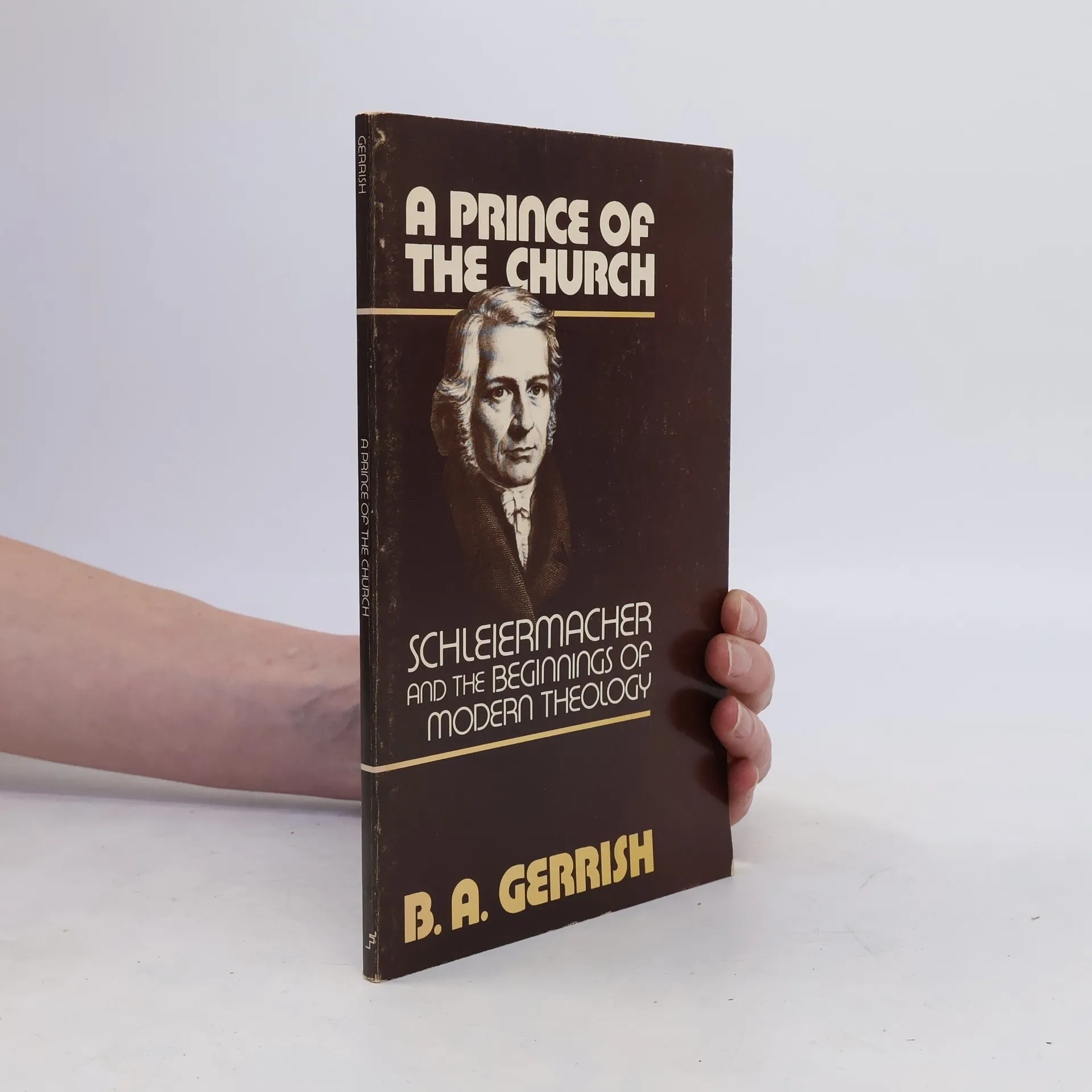
Although Friedrich Schleiermacher (1768-1834) is commonly regarded as the father of modern theology, many contemporary Christians think of him only as a difficult and outmoded German theologian. With this work, B.A. Gerrish offers a fresh view of Schleiermacher that breaks through the stereotypes and places Schleiermacher's work as a theologian into a broader context. Gerrish examines the elements of Schleiermacher's twofold theology - a specifically Christian relationship with Christ and a universally human consciousness of God - in the hope that this view of Schleiermacher's theological enterprise will lead contemporary Christians to reappraise him as a church theologian in the legitimate succession of Luther and Calvin.
Achat du livre
A Prince of the Church, B. A. Gerrish
- Langue

- Année de publication
- 1984
- Reliure
- (souple)
Modes de paiement
Il manque plus que ton avis ici.
- Titre
- A Prince of the Church
- Sous-titre
- Schleiermacher and the Beginnings of Modern Theology
- Langue
- Anglais
- Auteurs
- B. A. Gerrish
- Éditeur
- Augsburg Fortress Publishing
- Publié
- 1984
- Format
- souple
- Pages
- 79
- ISBN10
- 0800617878
- ISBN13
- 9780800617875
- Séries
- Catégories
- Mots clés
- Thème historique, Thèmes religieux, Théologie
- Évaluation
- 4,4 sur 5
- Description
- Although Friedrich Schleiermacher (1768-1834) is commonly regarded as the father of modern theology, many contemporary Christians think of him only as a difficult and outmoded German theologian. With this work, B.A. Gerrish offers a fresh view of Schleiermacher that breaks through the stereotypes and places Schleiermacher's work as a theologian into a broader context. Gerrish examines the elements of Schleiermacher's twofold theology - a specifically Christian relationship with Christ and a universally human consciousness of God - in the hope that this view of Schleiermacher's theological enterprise will lead contemporary Christians to reappraise him as a church theologian in the legitimate succession of Luther and Calvin.