

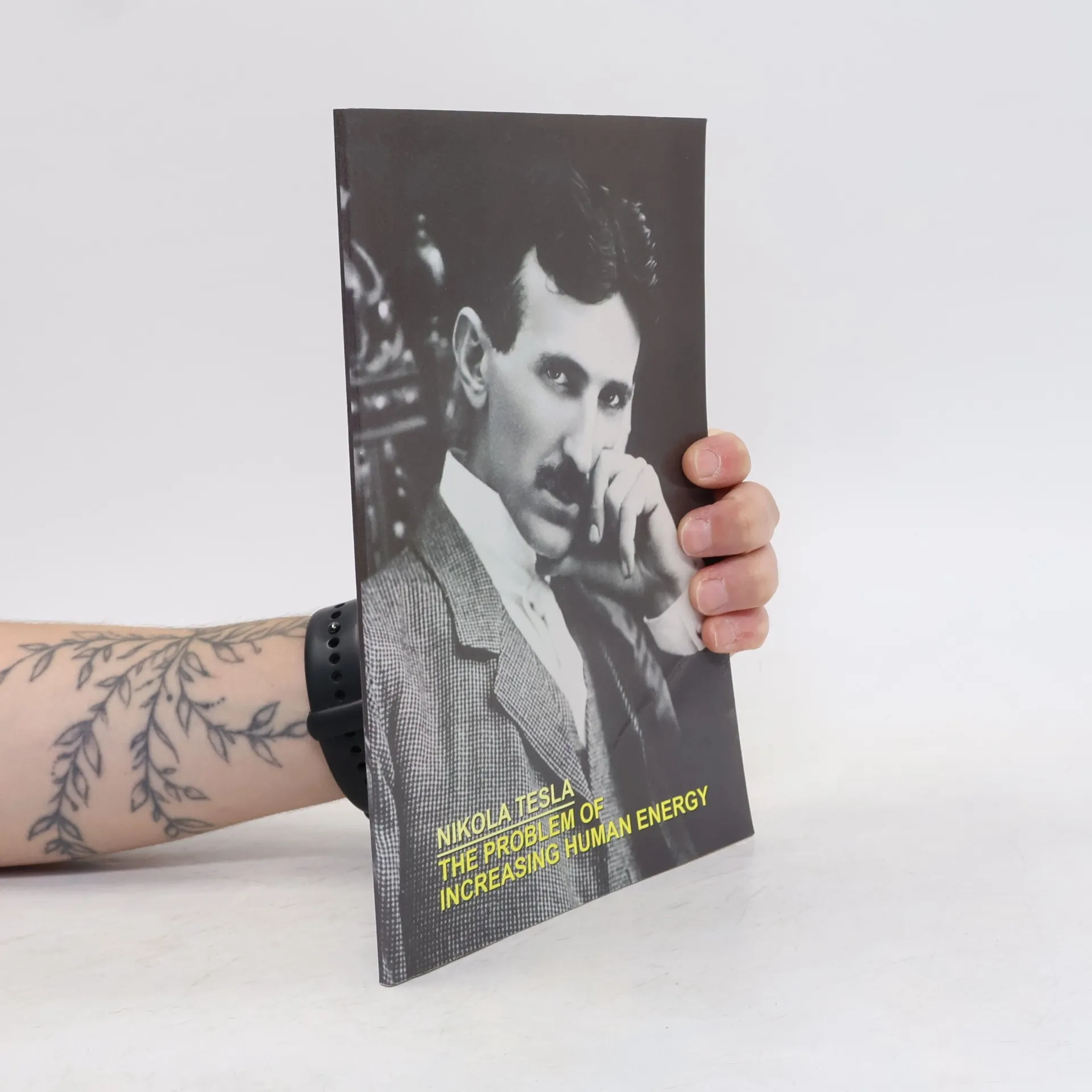



The Problem of Increasing Human Energy With Special References to the Harnessing of the Sun's Energy
Auteurs
Évaluation du livre
En savoir plus sur le livre
Among the myriad phenomena of nature, none evokes greater wonder than the complex movement we call human life. Its mysterious origin is shrouded in the past, its character is incomprehensible due to its intricacy, and its future remains hidden. Questions about its source, essence, and direction have perplexed sages throughout history. Modern science suggests that the sun represents the past, the earth the present, and the moon the future, indicating a cycle from an incandescent mass to a frozen state. Lord Kelvin posits a brief lifespan for humanity, around six million years, after which the sun will fade, leaving Earth a frozen remnant in eternal night. Yet, hope persists; a spark of life may endure, potentially igniting anew on distant stars, supported by experiments showing that organic life can survive extreme cold. Meanwhile, the illuminating advances in science and art distract us from a bleak future. While we may never fully grasp human life, we recognize it as a movement, necessitating a body and a force. Every movement in nature is rhythmical, a truth identified by Herbert Spencer, evident in planetary motion, tides, sound waves, and the cycles of life. Ultimately, all manifestations of life, despite their complexity, adhere to the same fundamental laws governing movement in the universe.



Achat du livre
The Problem of Increasing Human Energy With Special References to the Harnessing of the Sun's Energy, Nikola Tesla
- Langue

- Année de publication
- 2005
- Reliure
- (souple)
Modes de paiement
Il manque plus que ton avis ici.
- Titre
- The Problem of Increasing Human Energy With Special References to the Harnessing of the Sun's Energy
- Langue
- Anglais
- Auteurs
- Nikola Tesla
- Éditeur
- Wildside Press
- Publié
- 2005
- Format
- souple
- Pages
- 72
- ISBN10
- 080950166X
- ISBN13
- 9780809501663
- Séries
- Catégories
- Mots clés
- Thème historique, Santé & Médecine, Sciences naturelles, Thématique philosophique, Science, Santé, Technologie
- Évaluation
- 4,25 sur 5
- Description
- Among the myriad phenomena of nature, none evokes greater wonder than the complex movement we call human life. Its mysterious origin is shrouded in the past, its character is incomprehensible due to its intricacy, and its future remains hidden. Questions about its source, essence, and direction have perplexed sages throughout history. Modern science suggests that the sun represents the past, the earth the present, and the moon the future, indicating a cycle from an incandescent mass to a frozen state. Lord Kelvin posits a brief lifespan for humanity, around six million years, after which the sun will fade, leaving Earth a frozen remnant in eternal night. Yet, hope persists; a spark of life may endure, potentially igniting anew on distant stars, supported by experiments showing that organic life can survive extreme cold. Meanwhile, the illuminating advances in science and art distract us from a bleak future. While we may never fully grasp human life, we recognize it as a movement, necessitating a body and a force. Every movement in nature is rhythmical, a truth identified by Herbert Spencer, evident in planetary motion, tides, sound waves, and the cycles of life. Ultimately, all manifestations of life, despite their complexity, adhere to the same fundamental laws governing movement in the universe.