

Paramètres
- 519pages
- 19 heures de lecture
En savoir plus sur le livre
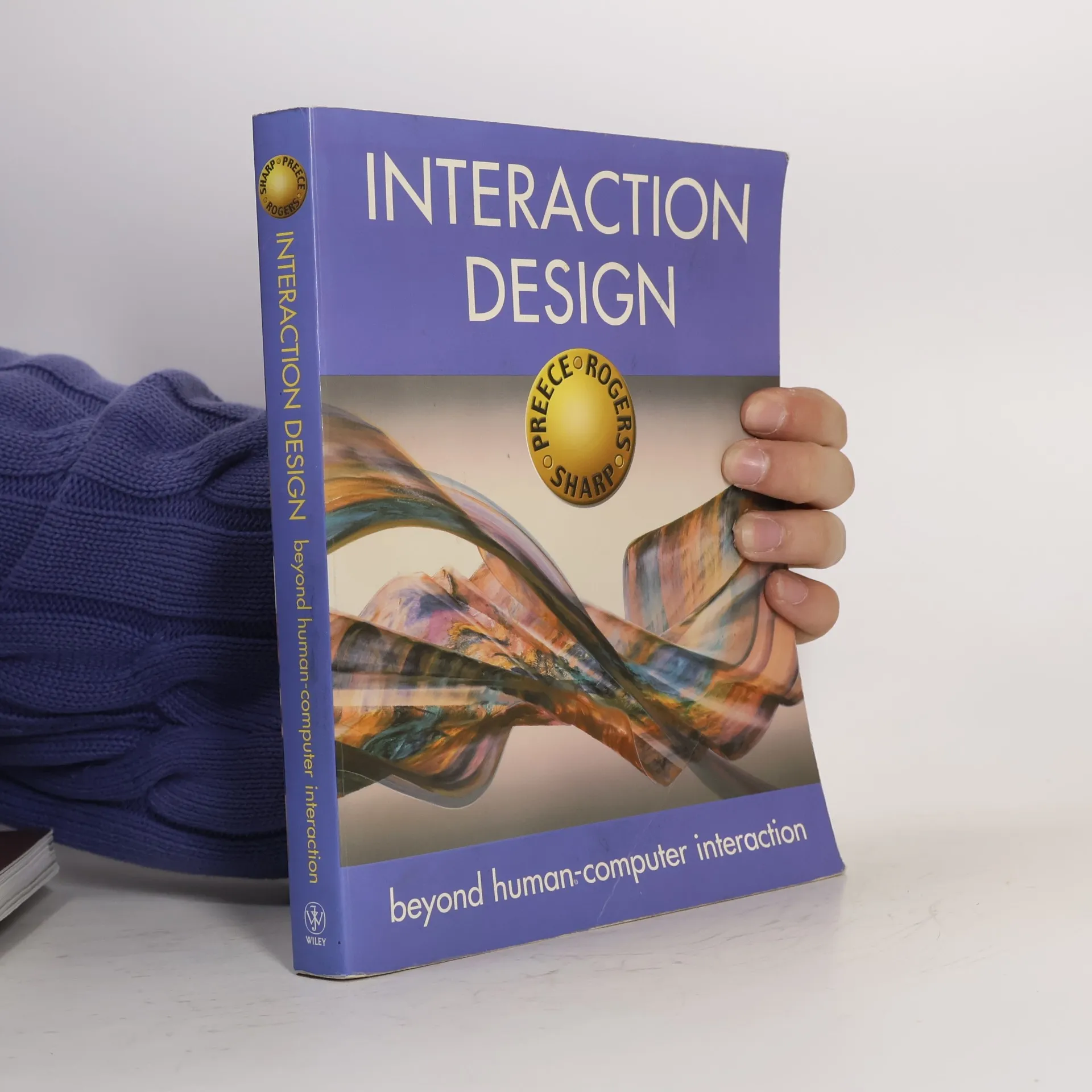
Accomplished authors Preece, Rogers, and Sharp present a key textbook on Interaction Design, encompassing a wide range of issues traditionally covered in Human-Computer Interaction (HCI). The book explores psychological and social aspects of users, interaction styles, user requirements, design approaches, usability, evaluation, and both traditional and future interface paradigms, all grounded in the design process. The aim is to present these topics in an integrated manner rather than as isolated chapters. Key features include an integrated approach that draws on psychology, sociology, anthropology, information systems, and computer science, equipping students with principles and skills for designing technology through engaging, state-of-the-art examples. An interactive website complements the text, offering resources for collaboration on experiments, design competitions, and communication with peers, along with examples, exercises, and templates for questionnaires. The contents cover various aspects of interaction design, including understanding users, designing for collaboration, the design process, user-centered approaches, and evaluation methods, featuring interviews with notable experts in the field. This comprehensive resource is essential for anyone looking to deepen their understanding of interaction design and its practical applications.


Achat du livre
Interaction Design, Jenny Preece, Helen Sharp, Yvonne Rogers
- Langue

- Année de publication
- 2002
- product-detail.submit-box.info.binding
- (souple)
Modes de paiement
Il manque plus que ton avis ici.
- Titre
- Interaction Design
- Sous-titre
- Beyond Human-Computer Interaction
- Langue
- Anglais
- Auteurs
- Jenny Preece, Helen Sharp, Yvonne Rogers
- Éditeur
- John Wiley & Sons
- Publié
- 2002
- Format
- souple
- Pages
- 519
- ISBN10
- 0471492787
- ISBN13
- 9780471492788
- Séries
- Mots clés
- Nonfiction, Art / Culture, Manuels, Technologie & Ingénierie, Manuels et guides, Informatique & Internet, Technologie, Design
- Évaluation
- 3,75 sur 5
- Description
- Accomplished authors Preece, Rogers, and Sharp present a key textbook on Interaction Design, encompassing a wide range of issues traditionally covered in Human-Computer Interaction (HCI). The book explores psychological and social aspects of users, interaction styles, user requirements, design approaches, usability, evaluation, and both traditional and future interface paradigms, all grounded in the design process. The aim is to present these topics in an integrated manner rather than as isolated chapters. Key features include an integrated approach that draws on psychology, sociology, anthropology, information systems, and computer science, equipping students with principles and skills for designing technology through engaging, state-of-the-art examples. An interactive website complements the text, offering resources for collaboration on experiments, design competitions, and communication with peers, along with examples, exercises, and templates for questionnaires. The contents cover various aspects of interaction design, including understanding users, designing for collaboration, the design process, user-centered approaches, and evaluation methods, featuring interviews with notable experts in the field. This comprehensive resource is essential for anyone looking to deepen their understanding of interaction design and its practical applications.