

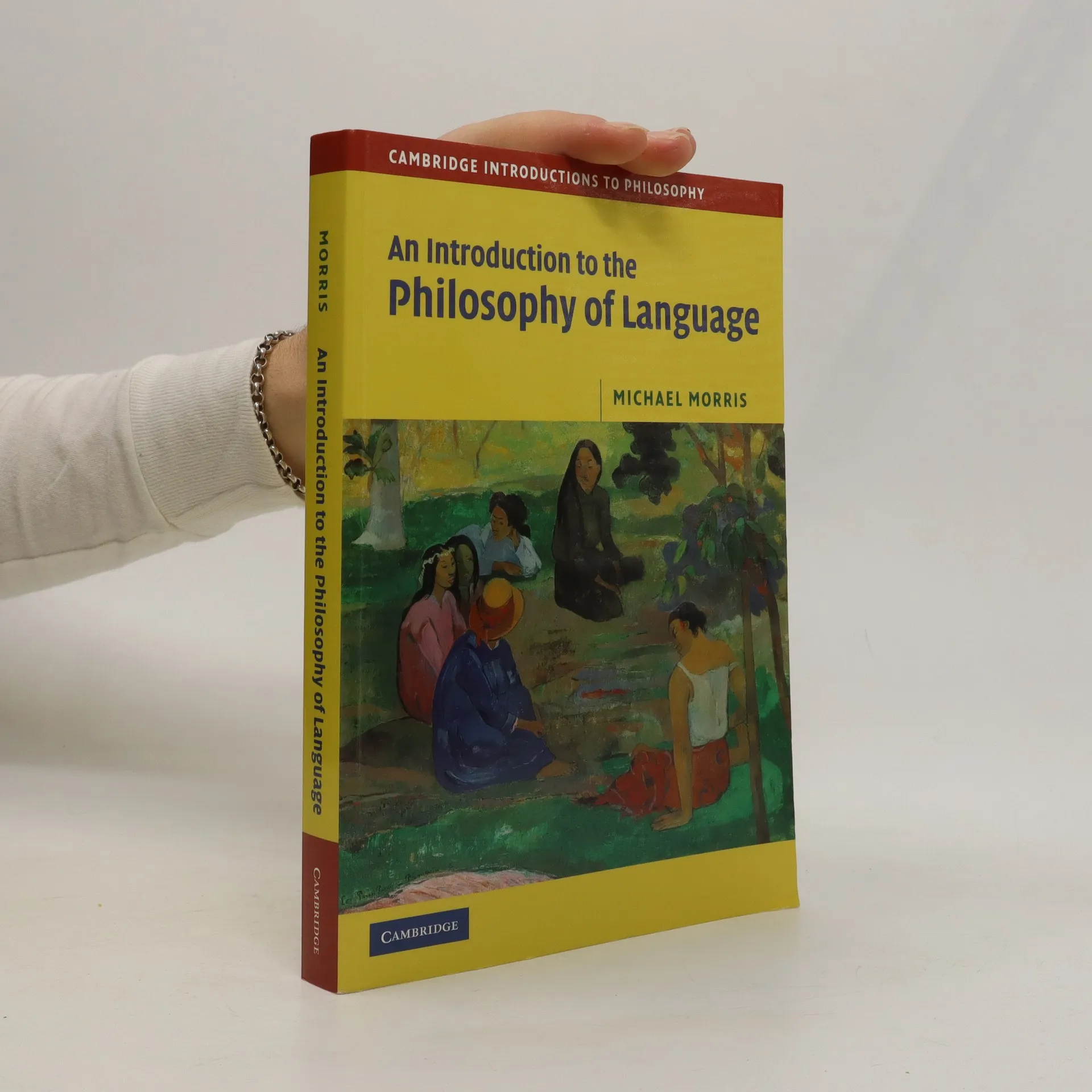
En savoir plus sur le livre
In this textbook, Michael Morris offers a critical introduction to the central issues of the philosophy of language. Each chapter focusses on one or two texts which have had a seminal influence on work in the subject, and uses these as a way of approaching both the central topics and the various traditions of dealing with them. Texts include classic writings by Frege, Russell, Kripke, Quine, Davidson, Austin, Grice and Wittgenstein. Theoretical jargon is kept to a minimum and is fully explained whenever it is introduced. The range of topics covered includes sense and reference, definite descriptions, proper names, natural-kind terms, de re and de dicto necessity, propositional attitudes, truth-theoretical approaches to meaning, radical interpretation, indeterminacy of translation, speech acts, intentional theories of meaning, and scepticism about meaning. The book will be invaluable to students and to all readers who are interested in the nature of linguistic meaning.


Achat du livre
An Introduction to the Philosophy of Language, Michael Morris
- Langue

- Année de publication
- 2007
- Reliure
- (souple)
Modes de paiement
Il manque plus que ton avis ici.
- Titre
- An Introduction to the Philosophy of Language
- Langue
- Anglais
- Auteurs
- Michael Morris
- Éditeur
- Cambridge University Press
- Publié
- 2007
- Format
- souple
- Pages
- 334
- ISBN10
- 0521603110
- ISBN13
- 9780521603119
- Mots clés
- Linguistique
- Évaluation
- 3,5 sur 5
- Description
- In this textbook, Michael Morris offers a critical introduction to the central issues of the philosophy of language. Each chapter focusses on one or two texts which have had a seminal influence on work in the subject, and uses these as a way of approaching both the central topics and the various traditions of dealing with them. Texts include classic writings by Frege, Russell, Kripke, Quine, Davidson, Austin, Grice and Wittgenstein. Theoretical jargon is kept to a minimum and is fully explained whenever it is introduced. The range of topics covered includes sense and reference, definite descriptions, proper names, natural-kind terms, de re and de dicto necessity, propositional attitudes, truth-theoretical approaches to meaning, radical interpretation, indeterminacy of translation, speech acts, intentional theories of meaning, and scepticism about meaning. The book will be invaluable to students and to all readers who are interested in the nature of linguistic meaning.