



En savoir plus sur le livre
Henry Kissinger's extensive connections with Germany have not been thoroughly examined in historiography. A Jewish emigrant from Nazi Germany, he returned as an American soldier and later advised Kennedy during the Berlin crisis in 1961. As National Security Adviser to Nixon, he sought to extricate the U.S. from Vietnam and engage in negotiations with the USSR, navigating the Eastern policy of the Brandt-Scheel government. The first immigrant to become Secretary of State, Kissinger also maintained a lasting passion for German soccer. Drawing on extensive research and newly declassified documents, this work explores Kissinger's relationship with Germany, situating his views and policies within the broader context of German-American relations. It also examines Germany's role in shaping this complex connection. Throughout the Cold War and beyond, Kissinger aimed to enhance transatlantic dialogue, yet his approach to the German question was primarily influenced by U.S. interests. His deep concern over the potential resurgence of German nationalism shaped his perception of Germany, alongside his respect for Bonn's post-war reconstruction. This narrative reveals how these tensions influenced Kissinger's orchestration of the American response to Ostpolitik.
Achat du livre
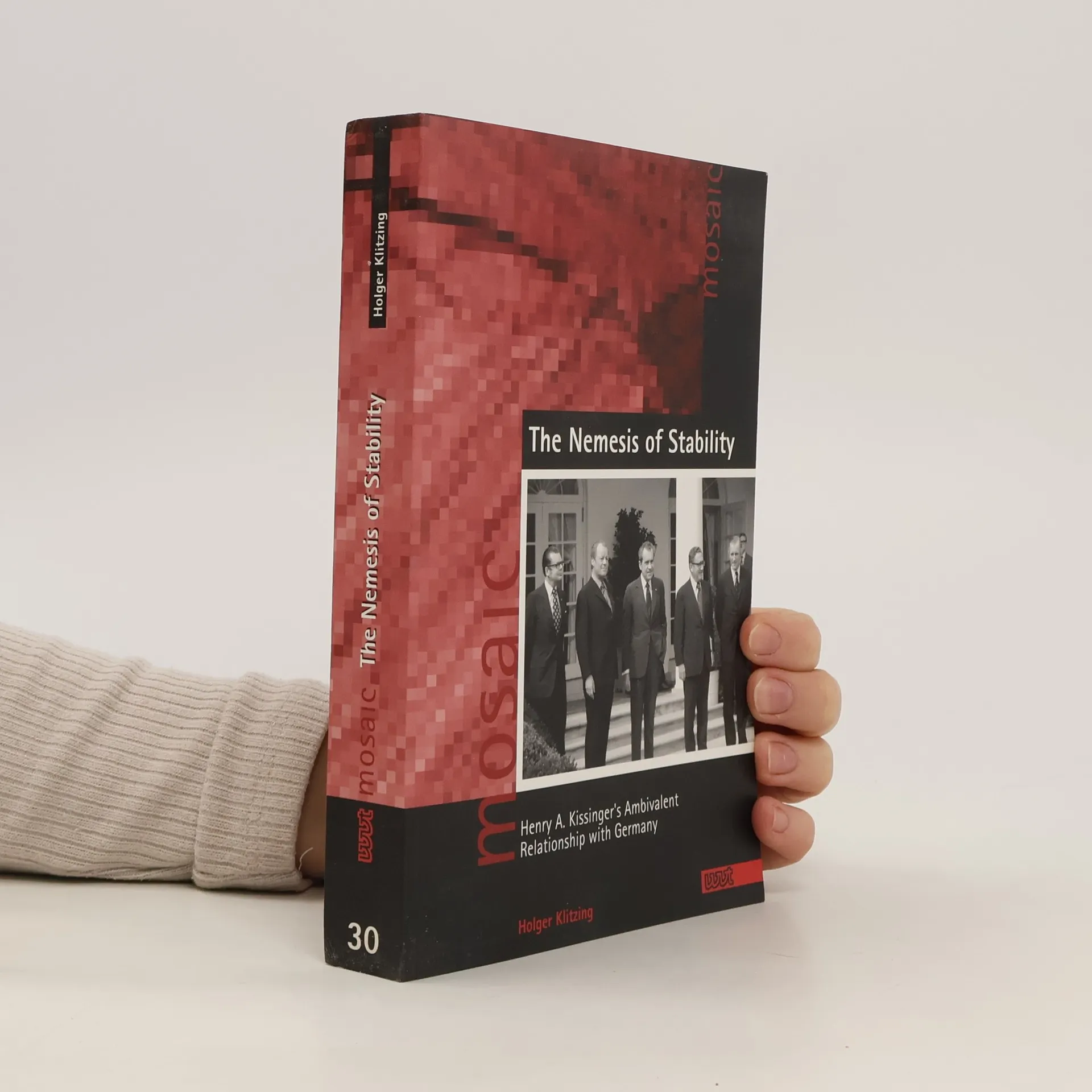
The Nemesis of Stability, Holger Klitzing
- Langue

- Année de publication
- 2007
- Reliure
- (souple)
Modes de paiement
Personne n'a encore évalué .
- Titre
- The Nemesis of Stability
- Sous-titre
- Henry A. Kissinger's Ambivalent Relationship with Germany
- Langue
- Anglais
- Auteurs
- Holger Klitzing
- Éditeur
- Wiss. Verl. Trier
- Publié
- 2007
- Format
- souple
- Pages
- 515
- ISBN10
- 3884769421
- ISBN13
- 9783884769423
- Séries
- Catégories
- Mots clés
- Description
- Henry Kissinger's extensive connections with Germany have not been thoroughly examined in historiography. A Jewish emigrant from Nazi Germany, he returned as an American soldier and later advised Kennedy during the Berlin crisis in 1961. As National Security Adviser to Nixon, he sought to extricate the U.S. from Vietnam and engage in negotiations with the USSR, navigating the Eastern policy of the Brandt-Scheel government. The first immigrant to become Secretary of State, Kissinger also maintained a lasting passion for German soccer. Drawing on extensive research and newly declassified documents, this work explores Kissinger's relationship with Germany, situating his views and policies within the broader context of German-American relations. It also examines Germany's role in shaping this complex connection. Throughout the Cold War and beyond, Kissinger aimed to enhance transatlantic dialogue, yet his approach to the German question was primarily influenced by U.S. interests. His deep concern over the potential resurgence of German nationalism shaped his perception of Germany, alongside his respect for Bonn's post-war reconstruction. This narrative reveals how these tensions influenced Kissinger's orchestration of the American response to Ostpolitik.