

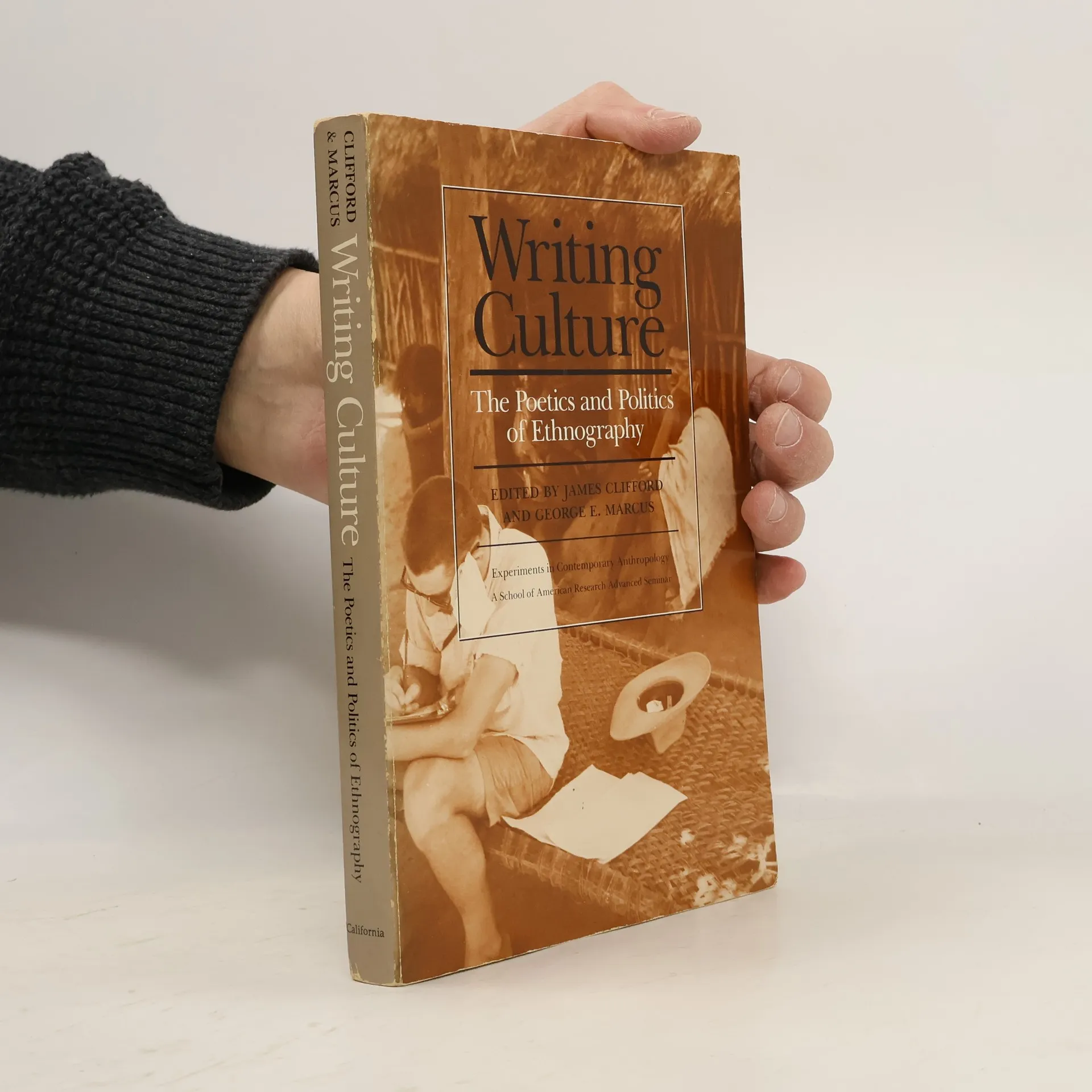
In these new essays, a group of experienced ethnographers, a literary critic, and a historian of anthropology, all known for advanced analytic work on ethnographic writing, place ethnography at the center of a new intersection of social history, interpretive anthropology, travel writing, discourse theory, and textual criticism.The authors analyze classic examples of cultural description, from Goethe and Catlin to Malinowski, Evans-Pritchard, and Le Roy Ladurie, showing the persistence of allegorial patterns and rhetorical tropes. They assess recent experimental trends and explore the functions of orality, ethnicity, and power in ethnographic composition. "Writing Culture" argues that ethnography is in the midst of a political and epistemological crisis: Western writers no longer portray non-Western peoples with unchallenged authority; the process of cultural representation is now inescapably contingent, historical, and contestable. The essays in this volume help us imagine a fully dialectical ethnography acting powerfully in the postmodern world system. They challenge all writers in the humanities and social sciences to rethink the poetics and politics of cultural invention.
James Clifford Livres
James Clifford est un historien dont l'œuvre s'engage profondément dans la culture, l'anthropologie et l'histoire. Son examen critique de l'ethnographie et des manières dont les cultures et les traditions sont enregistrées et représentées a suscité des débats importants dans les sciences humaines. L'influence de Clifford réside dans sa capacité à relier la théorie à l'art, à la littérature et au voyage, offrant des perspectives nouvelles sur l'échange culturel et l'identité dans un contexte mondial. Son approche incite les lecteurs à réfléchir aux complexités de la compréhension culturelle.

Was in den 80er Jahren eine erschütternde Erkenntnis in der Ethnologie war, ist heute Konsens: Jede Ethnographie handelt ebenso sehr von "uns" wie von "denen", deren Welt untersucht wird. Aber was genau fließt in die ethnologische Schrift ein? Nicht zuletzt sind es persönliche Lektüren: Kein Text ist ohne andere Texte denkbar. Für den vorliegenden Band trat die Redaktion der Edition Trickster an 22 Ethnolog:innen mit der Frage heran: "Welcher Text hat dein Denken geformt?" Die Antworten waren unerwartet vielfältig. Die Autor:innen beschreiben in sehr persönlichen Texten, wie bestimmte Filme, Ethnographien, Graphic Novels, ein akademischer Aufsatz oder ein Gedicht diesen "Aha-Moment" ausgelöst haben, der sich formativ auf ihr ethnologisches Denken ausgewirkt oder gar ihren Lebensweg verändert hat und auf den sie seitdem immer wieder zurückkommen. Abseits der wissenschaftlichen Reflexion ist diese Anthologie eine Lesefreude, die zum Nachschlagen, Stöbern und Genießen anregt - Inspiration eben!Mit Beiträgen u.a. von Donna Haraway, James Clifford, Kirin Narayan und Tim Ingold.