
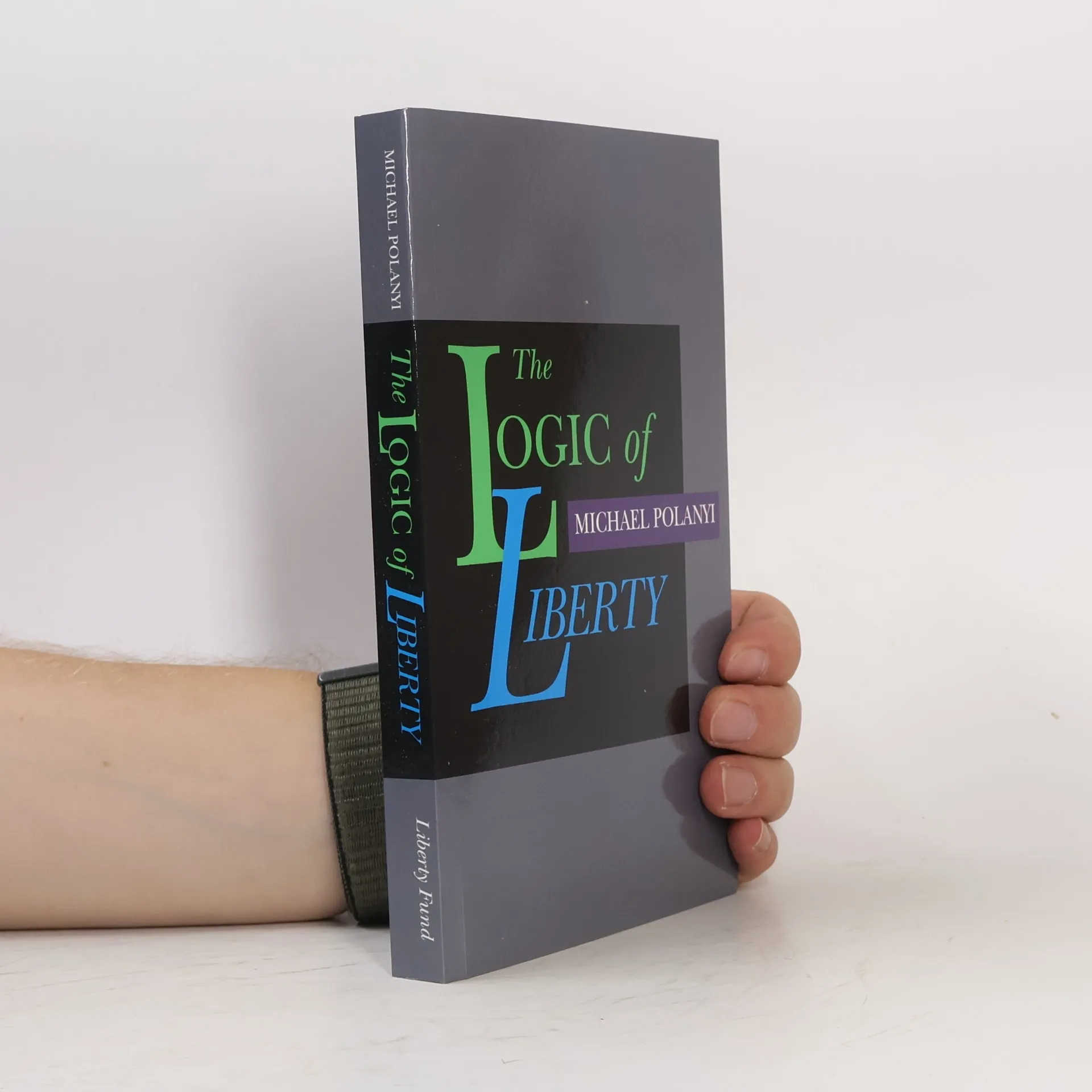

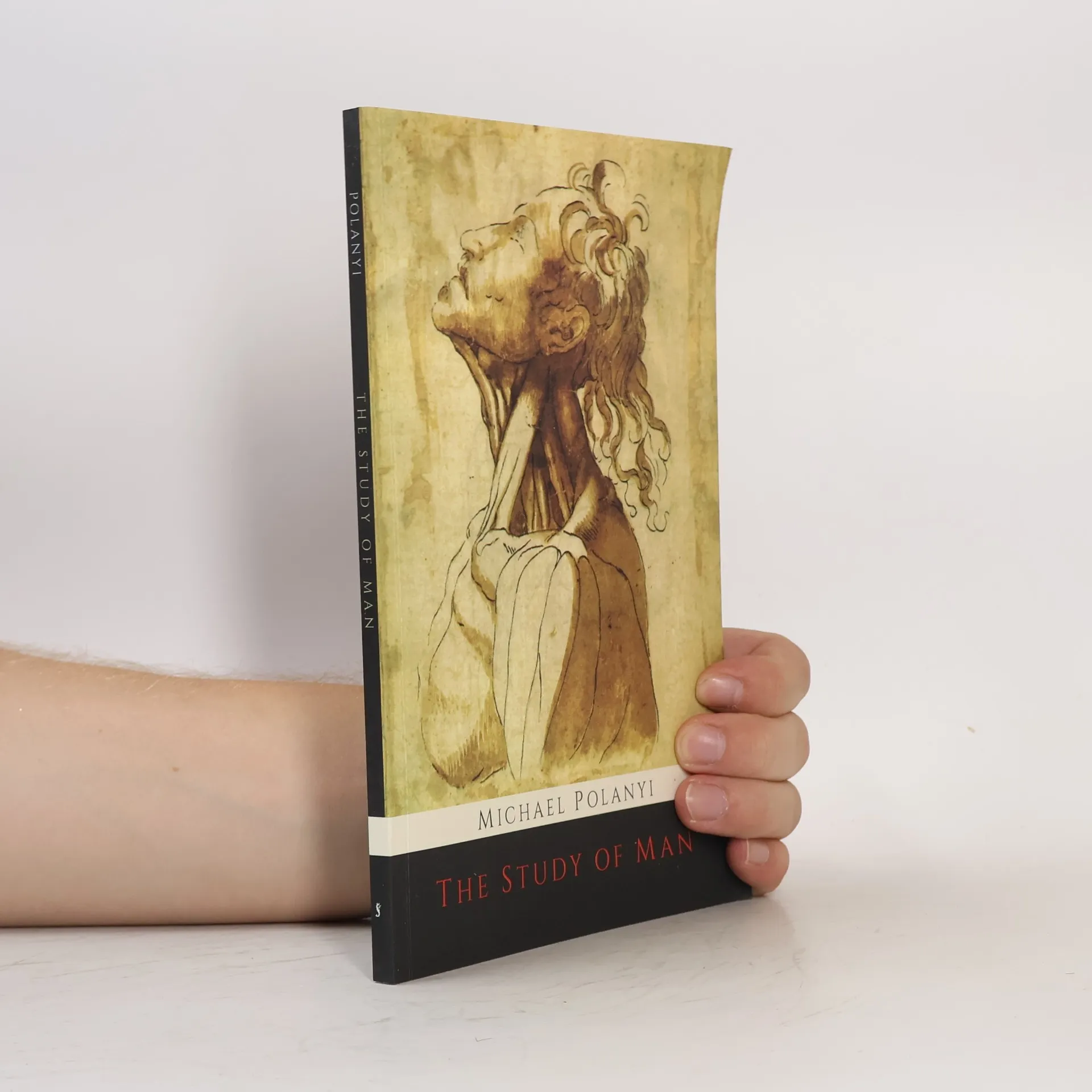
Michael Polanyi était un polymathe hongrois-britannique dont les contributions théoriques couvraient la chimie physique, l'économie et la philosophie. Ses recherches scientifiques comprenaient des domaines tels que la cinétique chimique et l'adsorption des gaz. Polanyi a critiqué le positivisme, arguant qu'il offrait une description erronée de la connaissance qui pourrait saper des réalisations humaines significatives. Il a également été un pionnier dans des théories clés de la science des matériaux, y compris la théorie de la diffraction des fibres et la théorie des dislocations de la déformation plastique.
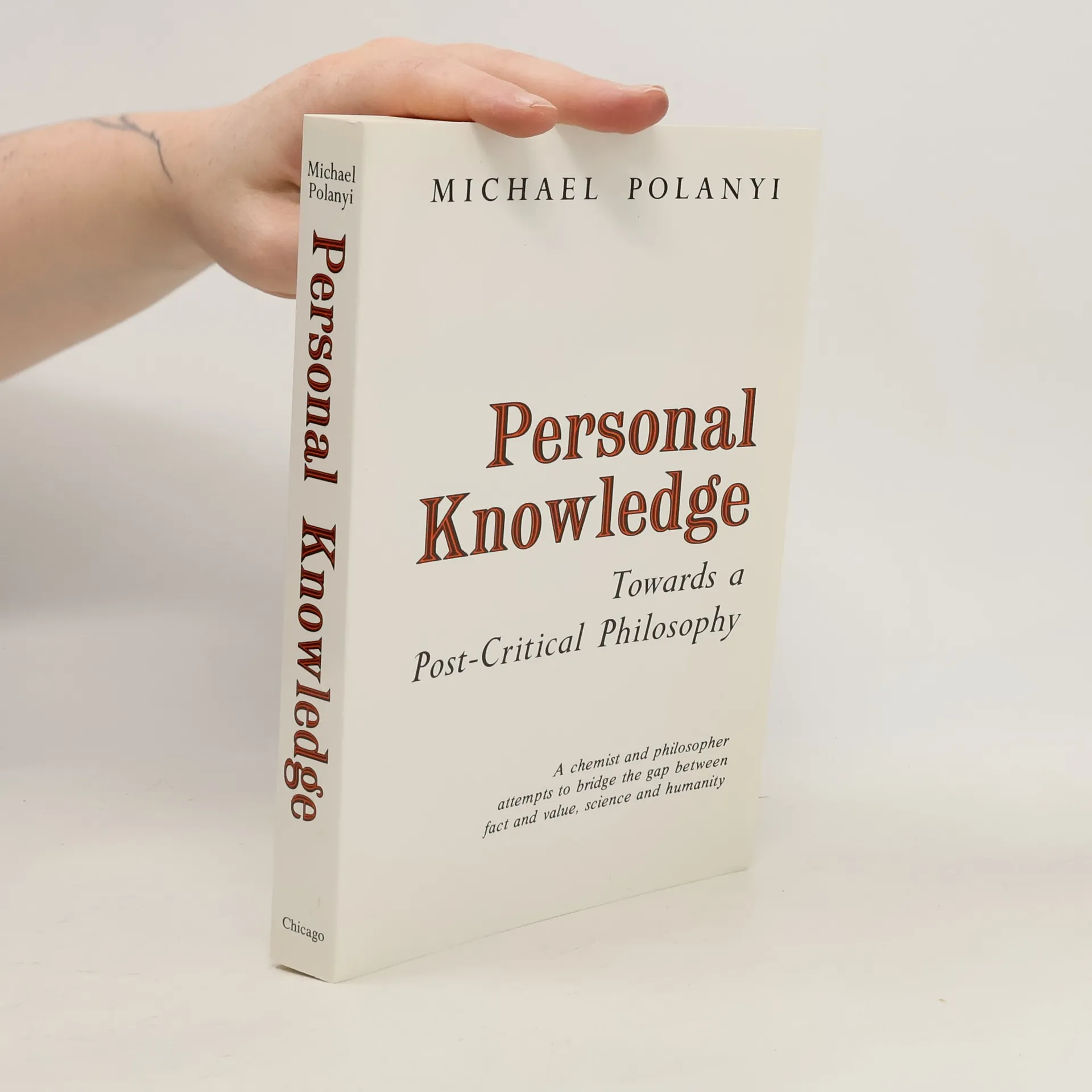
In seinem zum Klassiker gewordenen Buch Personales Wissen von 1958 legt Michael Polanyi das Augenmerk auf die personengebundenen Elemente wissenschaftlicher Erkenntnisprozesse – auf Erfahrung und Vorwissen, Geschicklichkeit und Können. Mit dieser Intervention leuchtet er den blinden Fleck einer am Objektivitätsideal ausgerichteten Wissenschaftslogik aus, nämlich den verkörperten, vergesellschafteten Forscher selbst. Als »personales« und in der Folge als »implizites Wissen« konzeptualisiert, ist sein epistemologischer Ansatz zu einem der wichtigsten Beiträge der gegenwärtigen Wissenschaftsforschung avanciert. Polanyis Hauptwerk liegt nun erstmals in deutscher Übersetzung vor.
Focusing on the concept of 'tacit knowing,' this volume presents three lectures that emphasize its significance in understanding knowledge. Originally published in 1959, these discussions complement Polanyi's earlier work, Personal Knowledge, while also honoring the contributions of Lord A. D. Lindsay to philosophy and education. The lectures explore the nuances of knowledge that are often unarticulated, highlighting the depth and complexity of human understanding.
Exploring the concept of 'tacit knowing,' this collection features three lectures by Michael Polanyi, a distinguished theorist in philosophy, physical chemistry, and economics. Originally published in 1959, these lectures build upon his earlier work, "Personal Knowledge," and emphasize the significance of non-verbalized understanding in the acquisition of knowledge. Polanyi's insights are essential for comprehending the interplay between personal experience and intellectual frameworks, making this volume a critical resource for scholars in the social sciences.
Suitable for students and scholars, this title challenges the assumption that
skepticism, rather than established belief, lies at the heart of scientific
discovery.
The author contends that organizations and governments relying exclusively on scientific methods risk limiting the broader understanding of human existence. This approach not only jeopardizes academic freedom but also threatens social and political liberties, highlighting the need for a more holistic perspective on knowledge that encompasses the complexities of life beyond empirical science.
A chemist and member of a family renowned for its learning in several disciplines, Michael Polanyi experienced first-hand the horrors of totalitarian government and worldwide war. He argued that centrally planned organizations―or governments―based solely on the methods of science threaten to foreclose a full human knowledge of the mysteries of existence and therefore pose a direct threat not only to academic freedom but also to social and political liberty. Michael Polanyi (1891–1976) was an internationally renowned scientist, philosopher, and professor whose other works include Personal Knowledge and The Tacit Dimension . Stuart D. Warner is Associate Professor of Philosophy at Roosevelt University, Chicago, Illinois.
2013 Reprint of 1962 American Edition. Full facsimile of the original edition, not reproduced with Optical Recognition Software. This edition reprints the text from the 1962 Revised Edition originally published by The University of Chicago Press. In this classic text Polanyi argued that the scientist is not a detached observer in the world of research: rather the scientist's personal participation in his knowledge, both in its discovery and its validation, is an indispensable part of science itself. Even in the exact sciences knowing is an art, in which the skill of the knower, guided by his passionate sense of increasing contact with reality, forms a logically necessary part. In the biological and social sciences this becomes even more evident. Polanyi argues against the urge to make knowledge impersonal.
Polanyi untersucht das menschliche Erkennen und stellt fest, dass wir oft mehr wissen, als wir verbal ausdrücken können. Diese Erkenntnis, die in der Gestaltpsychologie anhand der Wahrnehmung behandelt wird, gilt für alle Wissensarten, von somatischen Prozessen über praktische Fertigkeiten bis hin zur wissenschaftlichen Erkenntnis. Allen Formen des Wissens gemein ist eine Struktur, die sich als Integration von Einzelmerkmalen zu einer kohärenten Einheit beschreiben lässt, wobei wir unsere Aufmerksamkeit von den Einzelheiten abziehen. Diese Struktur findet sich nicht nur im Verstehen, sondern auch im Verstandenen selbst. Die Beziehung zwischen einer komplexen Entität und ihren Elementen kann als Beziehung zwischen zwei Realitätsschichten betrachtet werden, wobei die obere Schicht Randbedingungen angibt, die von den Prinzipien der unteren Ebene nicht festgelegt sind. Polanyi argumentiert, dass blinde Flecken im Wissen keine temporären Defizite, sondern notwendige Bestandteile sind, und entwickelt eine radikale Kritik am Selbstverständnis der Wissenschaft und der Moderne. Trotz der Abkehr von Autorität in der modernen Wissenschaft basiert diese in erheblichem Maße auf Tradition, unbefragten Vorannahmen und persönlichen Entscheidungen. Das Ideal eines objektiven, transparenten Wissens wird durch die Struktur, die Wissen einen Teil seiner selbst entzieht, sowohl von der Praxis der Forschung als auch in seiner totalitären Potenziali
Books on epistemology tend to be dreary affairs. Epistemology, which is the branch of philosophy that studies how human beings acquire and "validate" their knowledge, tend to be largely speculative and logical. Most theories of epistemology that are inflicted upon the world are nothing more than highly artificial constructions of some philosopher's speculations as to how men "ought" to attain and validate their knowledge. Any correspondence to how men really attain knowledge is usually pure coincidence. Moreover, in many instances, the epistemological philosopher has some special agenda which he is seeking to impose on his readers by confusing them with a mass of epistemological pedantry. He may be trying to prove the validity of a largely speculative form of "reason" or of definitions or of certainty or of a perfect a immaculate form of "objectivity" or of some other equally utopian and irrelevant principle