

Bookbot

Hartmut Ehrig

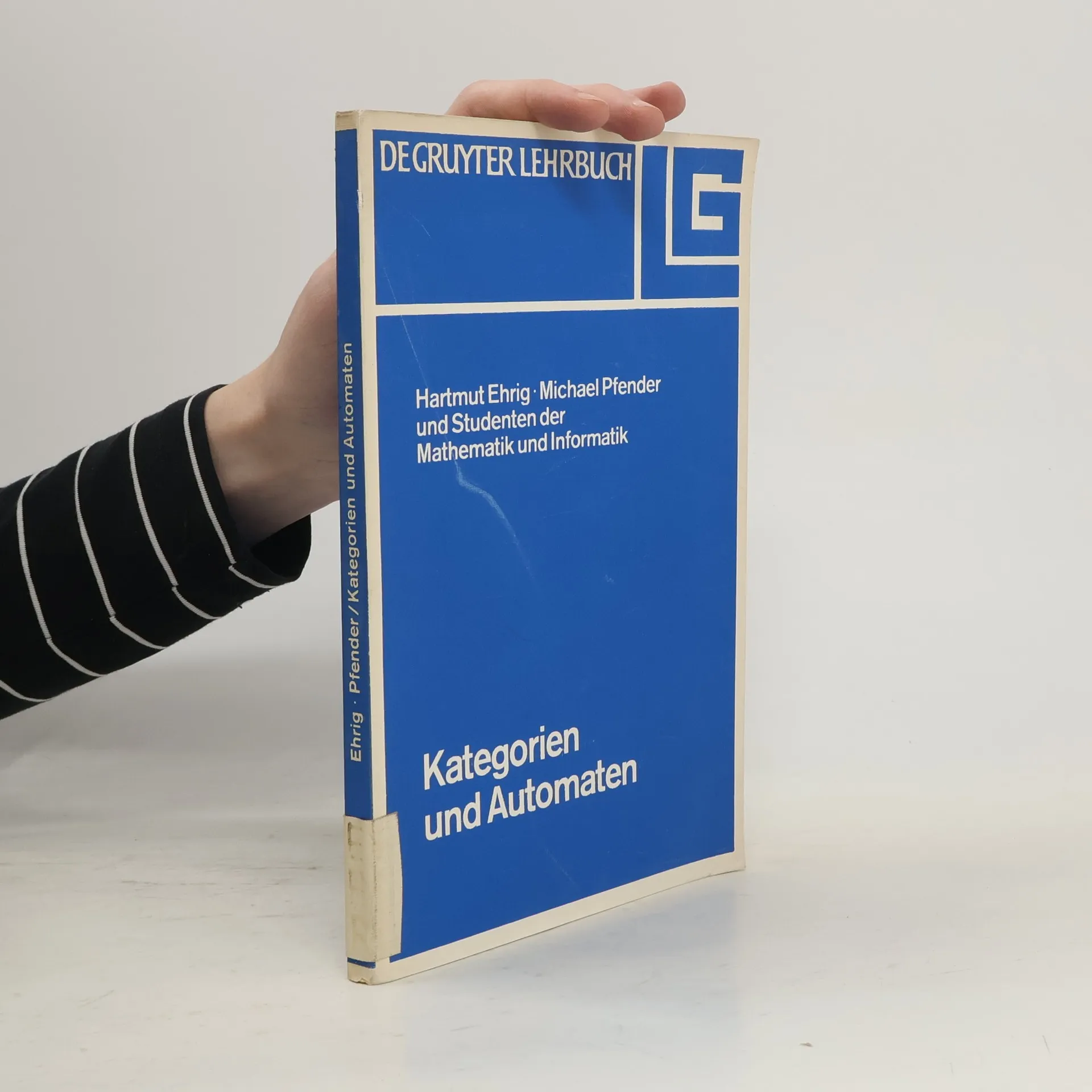
    Kategorien und Automaten
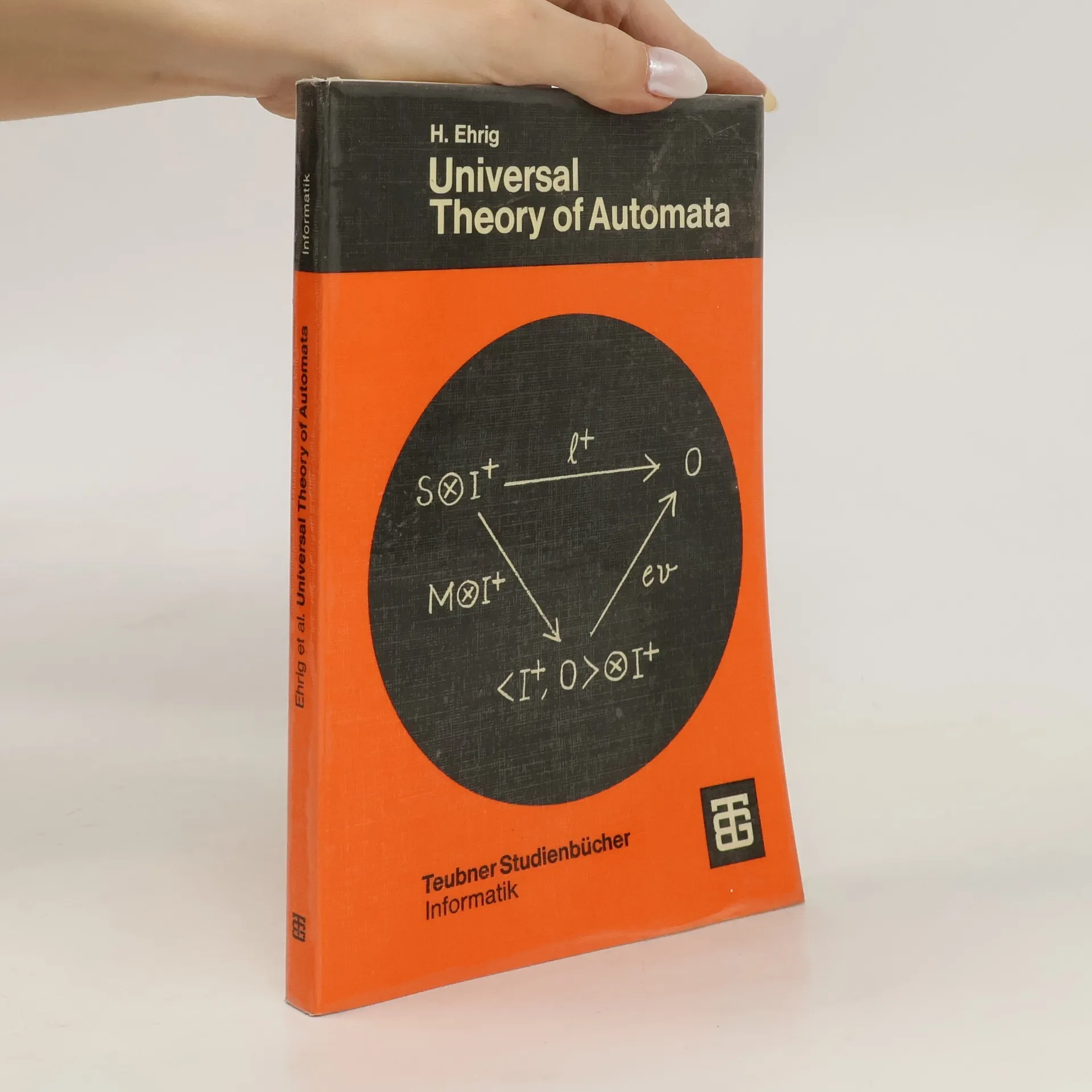
    Universal theory of automata
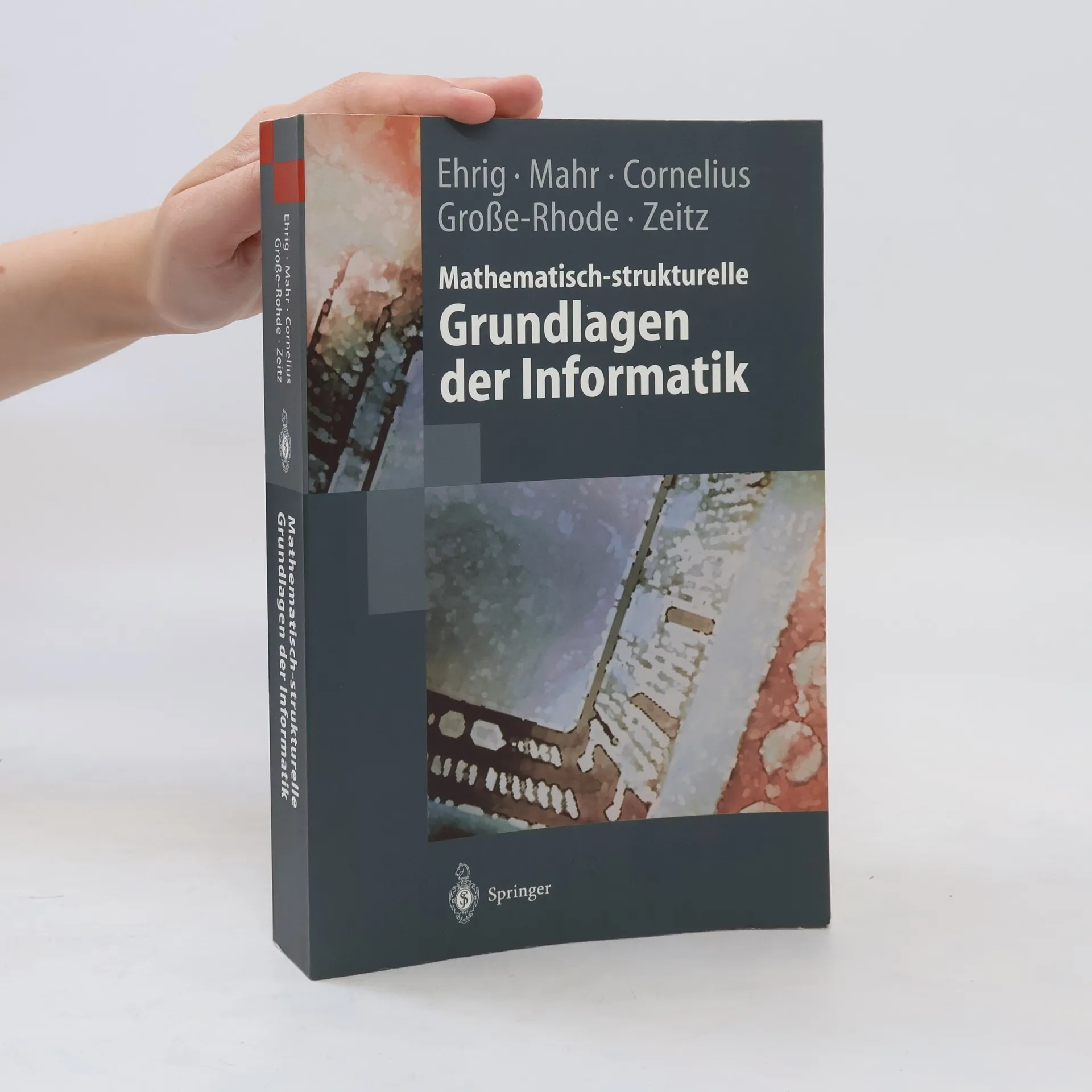
    Mathematisch-strukturelle Grundlagen der Informatik
    HANDBOOK OF GRAPH GRAMMARS AND COMPUTING BY GRAPH TRANSFORMATION - VOLUME 3
    • HANDBOOK OF GRAPH GRAMMARS AND COMPUTING BY GRAPH TRANSFORMATION - VOLUME 3

      CONCURRENCY, PARALLELISM, AND DISTRIBUTION

      • 455pages
      • 16 heures de lecture

      Graph grammars originated in the late 60s, motivated by considerations about pattern recognition and compiler construction. Since then, the list of areas which have interacted with the development of graph grammars has grown quite impressively. Besides the aforementioned areas, it includes software specification and development, VLSI layout schemes, database design, modeling of concurrent systems, massively parallel computer architectures, logic programming, computer animation, developmental biology, music composition, visual languages, and many others.The area of graph grammars and graph transformations generalizes formal language theory based on strings and the theory of term rewriting based on trees. As a matter of fact, within the area of graph grammars, graph transformation is considered as a fundamental computation paradigm where computation includes specification, programming, and implementation. Over the last three decades, graph grammars have developed at a steady pace into a theoretically attractive and important-for-applications research field.Volume 3 of the indispensable Handbook of Graph Grammars and Computing by Graph Transformations presents the research on concurrency, parallelism, and distribution -- important paradigms of modern computer science. The topics considered include semantics for concurrent systems, modeling of concurrency, mobile and coordinated systems, algebraic specifications, Petri nets, visual design of distributed systems, and distributed algorithms. The contributions have been written in a tutorial/survey style by the top experts.

      HANDBOOK OF GRAPH GRAMMARS AND COMPUTING BY GRAPH TRANSFORMATION - VOLUME 3
    • In fünf sorgfältig aufeinander abgestimmten Teilen behandelt das Buch die wesentlichen mathematischen Elemente der formalen Spezifikation von Systemen und der Aussagen- und Prädikatenlogik, die für das Verständnis des formalisierten Problemlösens entscheidend und damit für Informatiker unerläßlich sind. Eine Einführung in die intuitive Mengentheorie vermittelt zunächst notwendige mathematische Grundlagen. Motiviert durch das Konzept von Datenstrukturen und abstrakten Datentypen werden dann algebraische Strukturen in der Informatik behandelt. Danach werden Aussagen- und Prädikatenlogik aus der Sicht der Mathematik und Informatik dargestellt. Schließlich führt die Kategorientheorie für Informatiker in die Welt der abstrakten Behandlung mathematischer Strukturen ein.Die Neuauflage wurde erweitert um Darstellungen zur Modellalgebra und zur Implementierung. Übungsaufgaben wurden ergänzt.

      Mathematisch-strukturelle Grundlagen der Informatik
      3,5
    • The book covers a comprehensive exploration of automata through various frameworks and theories. It begins with a unified representation of different types of automata, including deterministic, nondeterministic, stochastic, and topological, alongside their relation to monoidal categories. Key problems in automata theory are addressed, focusing on behavior, reduction, minimization, and realization of deterministic and nondeterministic automata, as well as transition monoids and structure theory. The text delves into general concepts of reduction and minimization, presenting systematic approaches and relevant theorems. It further examines the behavior of automata in closed categories, emphasizing deterministic cases, and discusses the implications of machine morphisms and behavior characterization. In pseudoclosed categories, the book explores nondeterministic automata, detailing their behavior and reduction processes. It also introduces power automata and initial automata, highlighting their construction, realization, and minimization techniques. The concept of scoop minimization is presented, along with a thorough structure theory of automata, which includes constructions of various automata types and characterizations of morphisms. An appendix provides foundational notions of category theory, encompassing essential concepts such as categories, diagrams, functors, and transformations. The book is a vital resource for und

      Universal theory of automata
    • Kategorien und Automaten

      • 170pages
      • 6 heures de lecture

      Frontmatter -- Vorwort -- Inhaltsverzeichnis -- Einleitung -- 1. Kategorien -- 2. Automaten -- 3. Limites in Kategorien -- 4. Universelle Konstruktionen von Automaten -- 5. Funktoren, Limites und adjungierte Funktoren -- 6. Schaltoperationen und Zerlegungen -- Bezeichnungen -- Literatur -- Sachregister -- Backmatter

      Kategorien und Automaten