





Brian Morris est un professeur émérite d'anthropologie dont l'œuvre explore la taxonomie populaire, l'ethnobotanique, l'ethnozoologie, la religion et le symbolisme. Il a mené des recherches sur le terrain parmi les chasseurs-cueilleurs d'Asie du Sud et au Malawi, s'appuyant sur une carrière pré-universitaire variée en tant qu'ouvrier de fonderie, marin et planteur de thé. Ses écrits examinent les liens complexes entre la nature et la culture humaine, les concepts de l'individu et la philosophie anarchiste. Morris offre des perspectives uniques sur la manière dont les sociétés classifient le monde et y comprennent leur place.
My Encounters with People and Wildlife in India and Malawi
732pages
26 heures de lecture
Brian Morris's journey from leaving school at fifteen to becoming an Emeritus Professor of Anthropology at Goldsmiths College highlights his diverse career in Malawi and extensive contributions to the field. His scholarly work encompasses anthropology, religion, symbolism, and radical politics, reflecting a deep engagement with hunter-gatherer societies and individual concepts. Notable recent publications include "Homage to Peasant Smallholders" and "Anthropology and Dialectical Naturalism," showcasing his ongoing exploration of critical themes in anthropology.
Focusing on the definitions of freedom, the book explores the life and thought of Bakunin, highlighting his significance as a political theorist. It emphasizes his commitment to uniting theory and practice within his anarchist philosophy. The portrayal of Bakunin reveals the monumental nature of his ideas and their enduring relevance in contemporary discussions on freedom and political theory.

Set against the backdrop of 1995, the narrative follows Brian as he faces imminent arrest for smuggling a kilogram of cocaine valued at one and a half million pounds. The story delves into the harrowing consequences of his actions, leading to a twelve-year prison sentence. With a fast-paced and often unsettling tone, it explores themes of crime, punishment, and the impact of choices on one's life trajectory.
The Eight Pillars of Survival Many survival and emergency preparedness experts today use the pyramid approach to survival prioritization, putting food, water, shelter and security in the largest block at the base of the pyramid and then community, sustainability and higher needs in smaller brackets at the top of the pyramid. My survival model takes a different and linear approach to survival using an eight-pillar system. The eight pillars that I use as the basis of my survival methodology are food, water, shelter, security, communication, health, survival navigation and fire-craft. In my system no one pillar takes priority to another initially. It is up to the survivor to assess their situation and then choose the pillar that is needed most to survive in the situation at hand. Much like a rifle pop-up target range where a shooter is expected to hit the closer (more dangerous) 50-meter target first before engaging the 300-meter target, the survivor needs to prioritize the pillars and choose the pillar that is most urgent and necessary to save his life under the circumstances. The foundation for my methodology is KISS which stands for “keep it simple, stupid”, an acronym widely used by the military to remind soldiers that the best solutions are often the simplest. I developed this 8 Pilar approach over decades of serving as a Green Beret in the US Army Special Forces
Focusing on the peasant-smallholders of the Shire Highlands in Southern Malawi, this ethnographic study delves into their social life and cultural practices. It examines the intricate relationship between these communities and their diverse natural landscape, highlighting the complexities of their connection to the land and its biodiversity. With the peasant-smallholders making up about 80 percent of the population, the book provides a detailed representation of their experiences and interactions with their environment.
Exploring the nature of reality, the author critiques contemporary theories in anthropology, advocating for its recognition as a historical social science. He introduces the concept of "dialectical naturalism" or "evolutionary realism," emphasizing its significance in bridging anthropology with philosophical inquiry. This thought-provoking treatise challenges readers to reconsider how cultural constructs shape perceptions of reality, while also reviving an often-overlooked philosophical tradition.
Er wächst ohne Vater in einer großen Familie in Wales auf. Er ist neugierig auf Menschen und unbekannte Länder, er lebt in Holland und dann bei Fischern auf Sri Lanka, er reist nach Indien, Nepal Brian Morris ist intelligent, sympathisch, aber drogenabhängig. Er arbeitet als Tierpfleger, Drogenkurier, Türsteher. Er dealt, um seine Sucht zu finanzieren. Er kämpft um seine junge Familie und verliert. Ohne jede Hoffnung für die Zukunft landet er im Gefängnis. Am tiefsten Punkt schreit er zu Gott. Brian Morris, geboren 1953 in Wales/Großbritannien, lebt heute mit seiner Frau und fünf Kindern in Swansea/Südwales. Nach seiner Haft arbeitete er in verschiedenen sozialen Projekten. Zurzeit studiert er Praktische Theologie am Bible College of Wales.
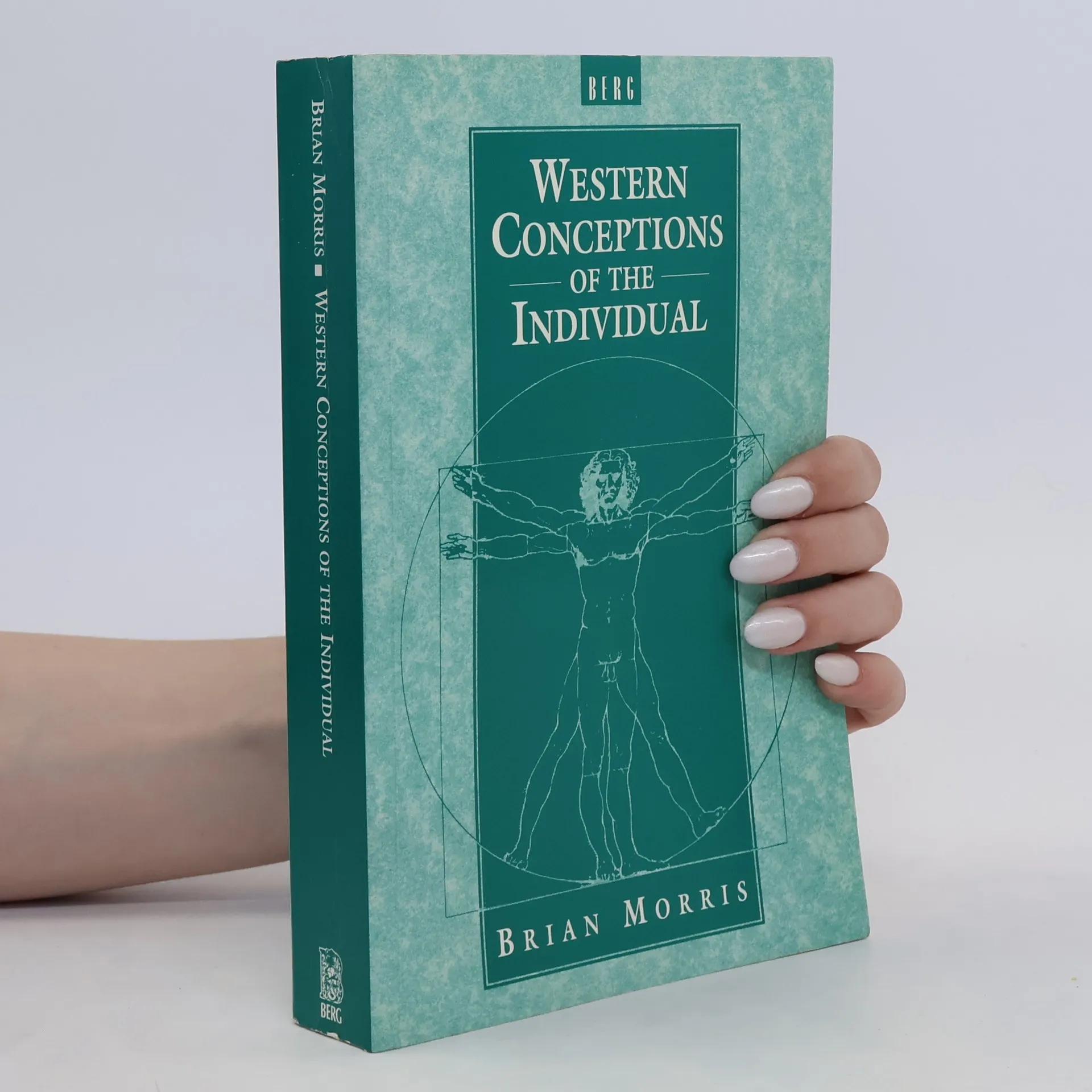
This is a comprehensive study of the varying conceptions of the human subject in the Western intellectual tradition. Although informed by an anthropological perspective, the author draws on material from all the major intellectual disciplines that have contributed to this tradition and offers biographical and theoretical vignettes of all the major Western scholars. By scrutinizing the classical texts of the Western tradition, he succeeds in delineating the differing conceptions of the human individual which emerge from these writings, and gives a guide to the most important ideas in Western cultural traditions.