

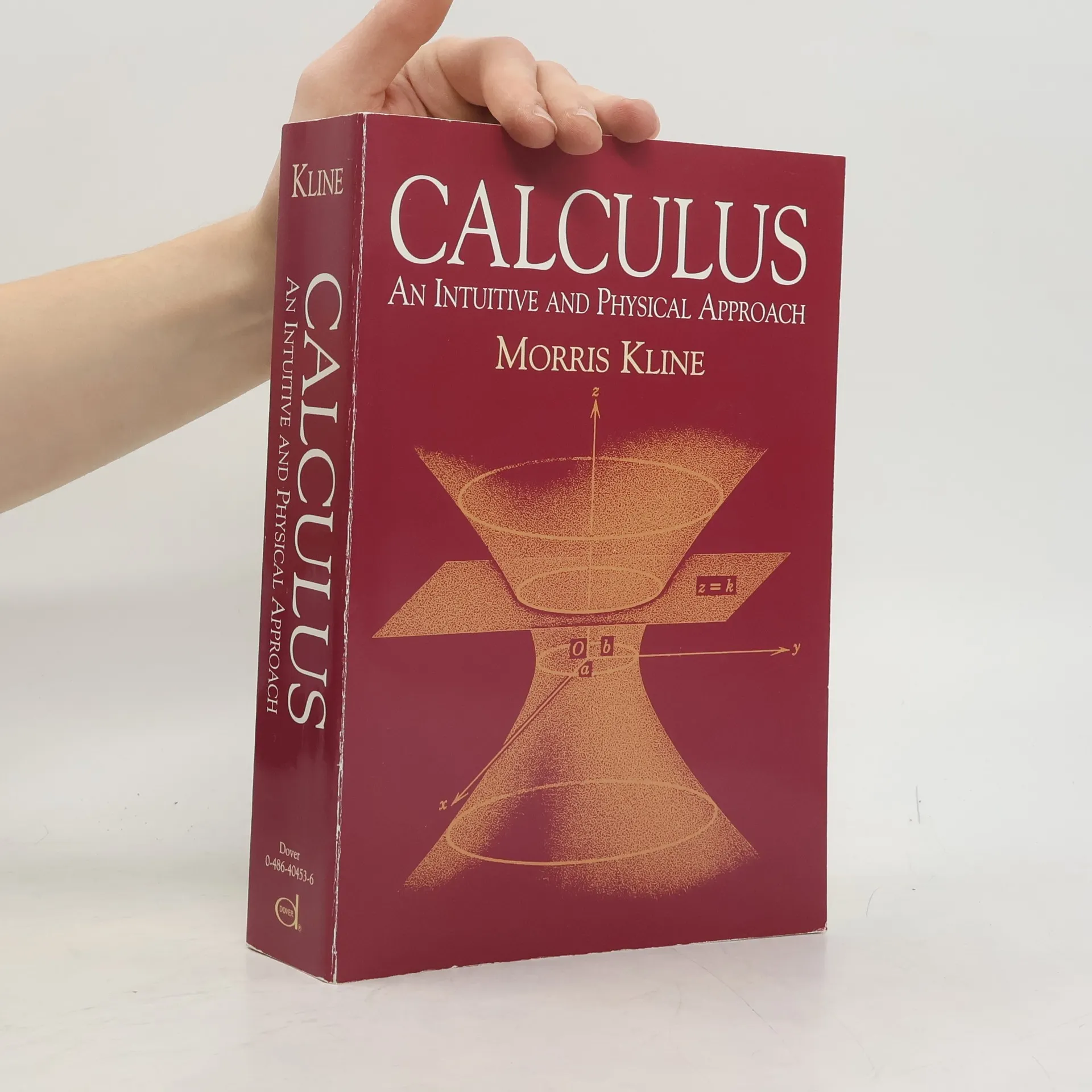
Application-oriented introduction relates the subject as closely as possible to science. In-depth explorations of the derivative, the differentiation and integration of the powers of x , and theorems on differentiation and antidifferentiation lead to a definition of the chain rule and examinations of trigonometric functions, logarithmic and exponential functions, techniques of integration, polar coordinates, much more. Clear-cut explanations, numerous drills, illustrative examples. 1967 edition. Solution guide available upon request.
Morris Klein Ordre des livres (chronologique)
Morris Kline était un professeur de mathématiques dont l'œuvre explorait l'histoire, la philosophie et la pédagogie de la discipline. Il s'est également distingué comme un vulgarisateur de sujets mathématiques, rendant les idées complexes accessibles à un public plus large. Ses écrits visaient à éclairer l'essence et l'importance des mathématiques.


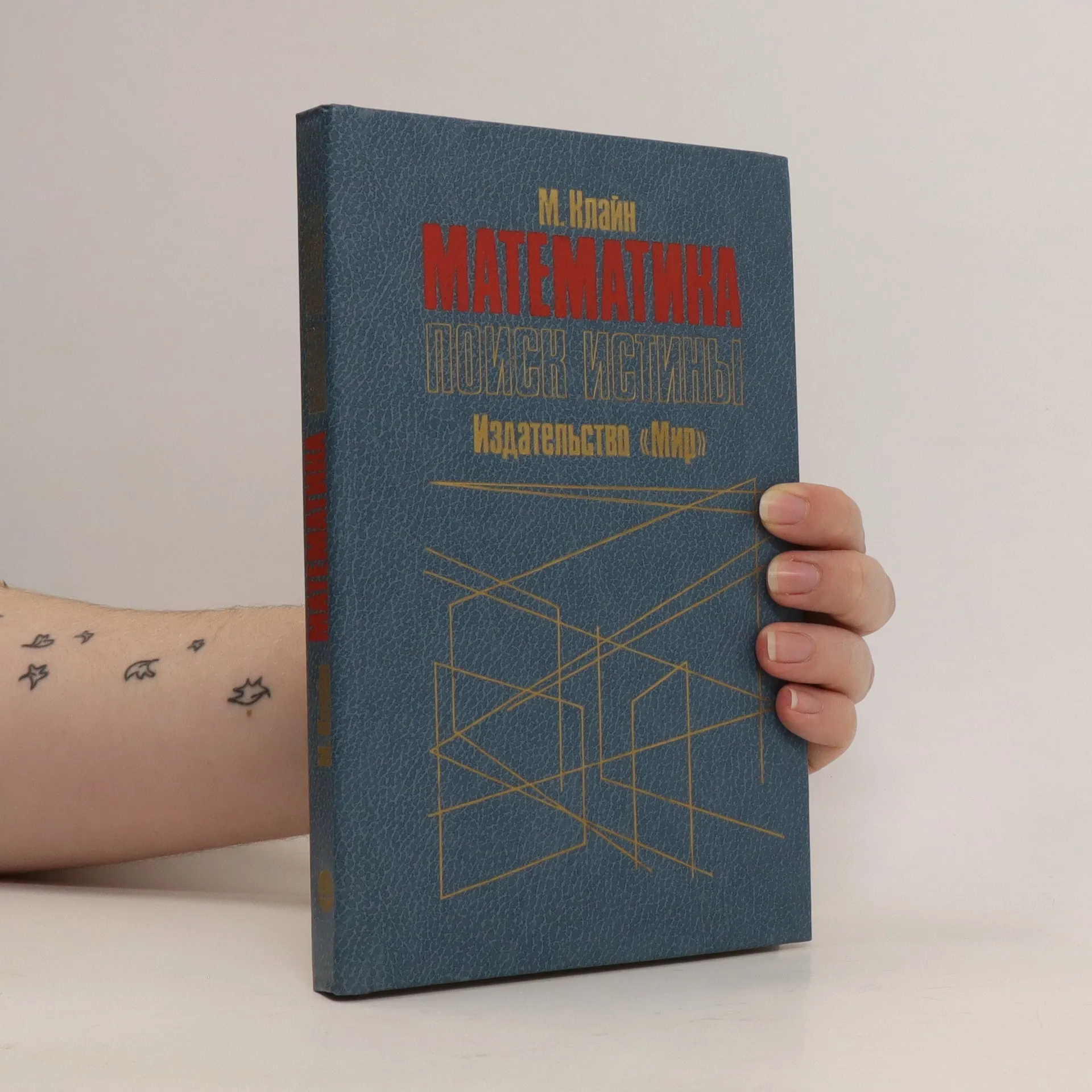
Matematika: Poisk istiny= Математика: Поиск Истины
- 296pages
- 11 heures de lecture
Книга известного американского математика, популяризатора науки Мориса Клайна ярко и увлекательно рассказывает о роли математики в сложном многовековом процессе познания человеком окружающего мира, ее месте и значении в физических науках. Имя автора хорошо знакомо читателям: его книга "Математика. Утрата определенности" (М.: Мир. 1984) пользуется заслуженным успехом в нашей стране. Предназначена для читателей, интересующихся историей и методологией науки.
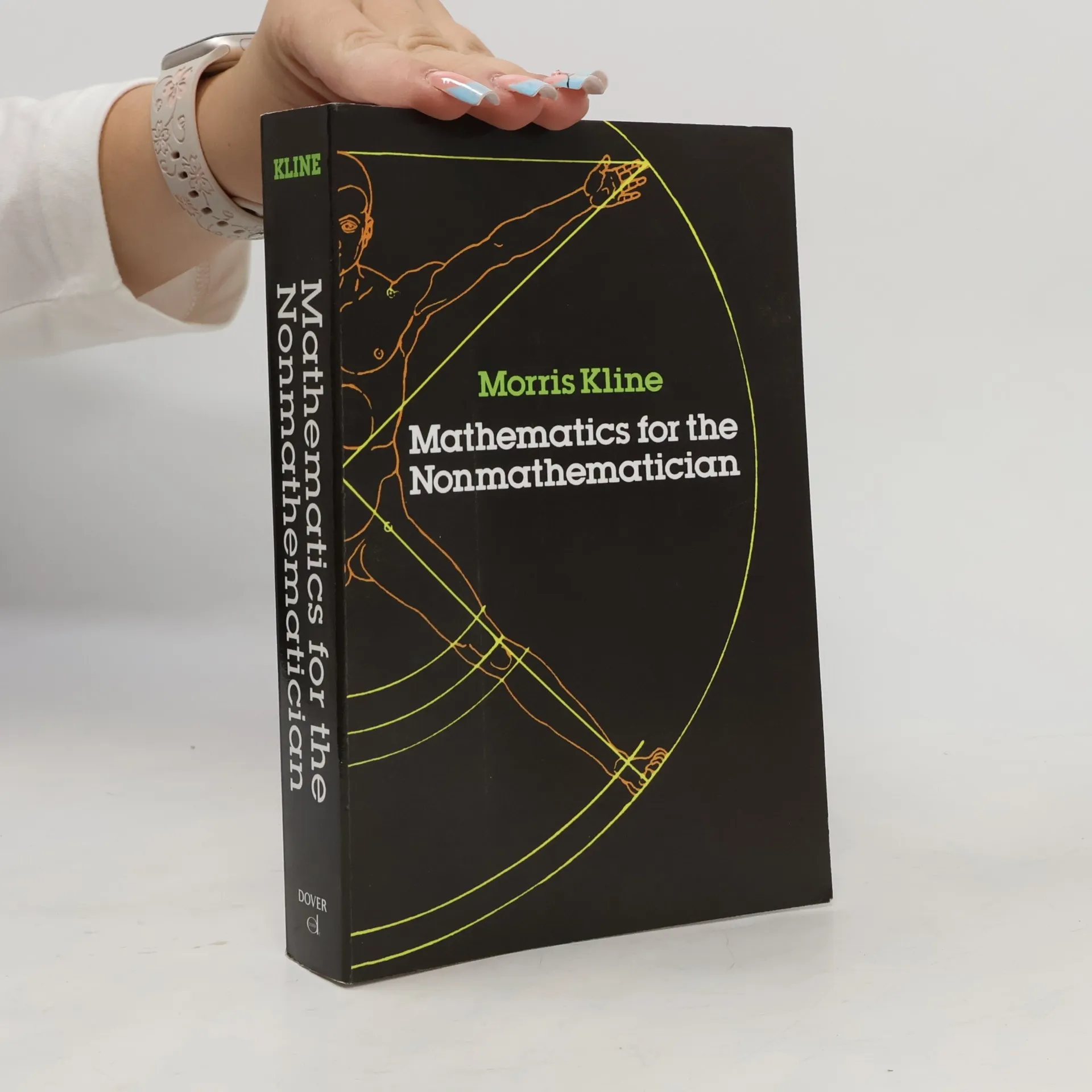
Mathematics for the Non-mathematician
- 641pages
- 23 heures de lecture
Practical, scientific, philosophical, and artistic problems have caused men to investigate mathematics. But there is one other motive which is as strong as any of these—the search for beauty. Mathematics is an art, and as such affords the pleasures which all the arts afford. The book covers various topics including the historical orientation of mathematics, logic and mathematics, the fundamental concept of numbers, algebra, Euclidean geometry, charting the earth and the heavens, the mathematical order of nature, the awakening of Europe, mathematics and painting in the Renaissance, projective and coordinate geometry, parametric equations, the application of formulas to gravitation, differential and integral calculus, trigonometric functions and oscillatory motion, non-Euclidean geometries, arithmetics and their algebras, the statistical approach to the social and biological sciences, and the theory of probability. It also discusses the nature and values of mathematics, includes a table of trigonometric ratios, answers to selected and review exercises, additional answers and solutions, and an index.
Warum kann Hänschen nicht rechnen?
- 209pages
- 8 heures de lecture