

Le normal et le pathologique constitue l’œuvre maîtresse de Georges Canguilhem : réflexion sur la vie et la mort ; valorisation du statut de l’erreur et de la rationalité dans l’histoire des sciences ; insistance sur les notions de continuité et de rupture, de norme ou d’anomalie ; mise à jour, dans le champ de la médecine, des relations entre expérimentation et conceptualisation. Cet reprend les communications que la Société Internationale d’Histoire de la psychiatrie et de la Psychanalyse [SIHPP] avait consacrées au 50e anniversaire du livre de Canguilhem.
Pierre Macherey Livres
17 février 1938
Pierre Macherey est un critique littéraire marxiste français dont l'œuvre propose une analyse approfondie des textes littéraires à travers une lentille marxiste. Figure clé du développement du post-structuralisme et du marxisme, son approche explore comment les œuvres littéraires reflètent les conditions socio-économiques et les mécanismes idéologiques. La rigueur théorique de Macherey et son profond engagement dans la relation entre la littérature et son contexte social ont rendu son travail très influent, particulièrement dans la théorie littéraire européenne.

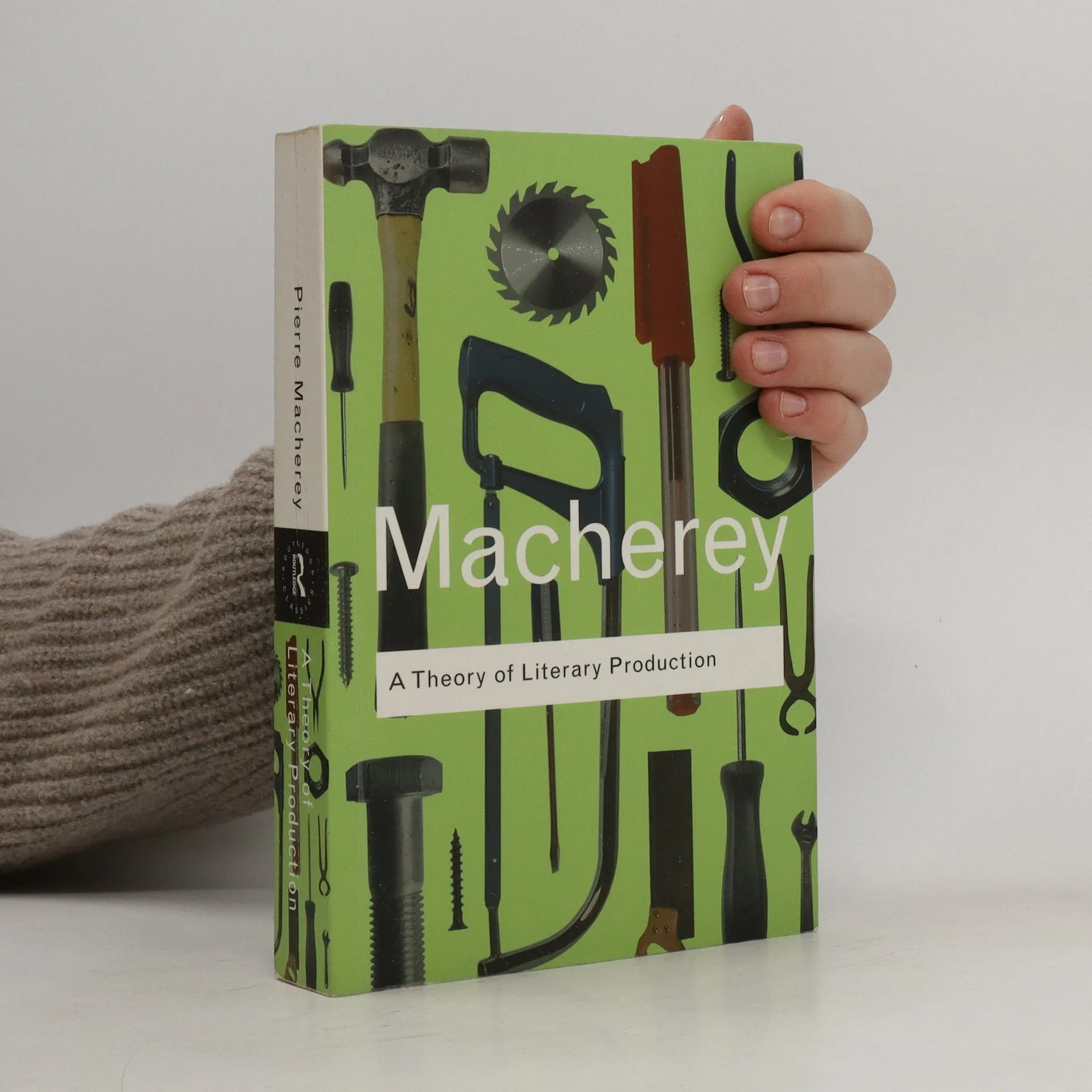

Who is more important: the reader, or the writer? Originally published in French in 1966, Pierre Macherey s first and most famous work, A Theory of Literary Production dared to challenge perceived wisdom, and quickly established him as a pivotal figure in literary theory. In this provocative work, Macherey puts the focus as much on the reader as the writer, stating that the very act of reading is a form of production in its own right, generating interpretation and meanings which are beyond the control of the author." Part of the birth of a whole new branch of post-structuralist theory, Macherey's work also influenced a new generation of critics - among them Jacques Derrida, his contemporary, and Terry Eagleton. His ideas have also led some observers to claim that he announced 'the death of the author' fully two years before Roland Barthes' famous essay.The reissue of this work as a Routledge Classic brings some radical ideas to a new audience, and argues persuasively for a totally new way of reading. As such, it is an essential work for anyone interested in the development of literary theory.
Lire le Capital
- 688pages
- 25 heures de lecture
"Une lecture philosophique du Capital n'est possible que comme l'application de ce qui est l'objet même de notre recherche, la philosophie de Marx dans les oeuvres du marxisme. Il s'agit donc de produire, au sens précis du mot qui semble signifier : rendre manifeste ce qui est latent ; mais qui veut dire transformer ce qui en un sens, existe déjà. Cette production, dans le double sens qui donne à l'opération de production la forme nécessaire d'un cercle, est la production d'une connaissance. Concevoir dans sa spécificité la philosophie de Marx est donc concevoir l'essence du mouvement même par lequel est produite sa connaissance ou concevoir la connaissance comme production."