

Bookbot

Donald F. Kettl

    Donald F. Kettl est un universitaire de premier plan en politique publique et en management, profondément investi dans la compréhension du fonctionnement et de la gestion des organisations publiques. Son œuvre exhaustive, comprenant de nombreux livres et monographies, explore des questions cruciales auxquelles le gouvernement contemporain est confronté, la gestion des risques et des catastrophes, et la révolution mondiale du management public. Kettl est reconnu pour son analyse perspicace des mécanismes de gouvernance et sa capacité à diagnostiquer les défaillances institutionnelles et à proposer des réformes. Ses écrits s'appuient souvent sur l'expérience pratique, offrant des perspectives précieuses tant aux décideurs politiques qu'au grand public.

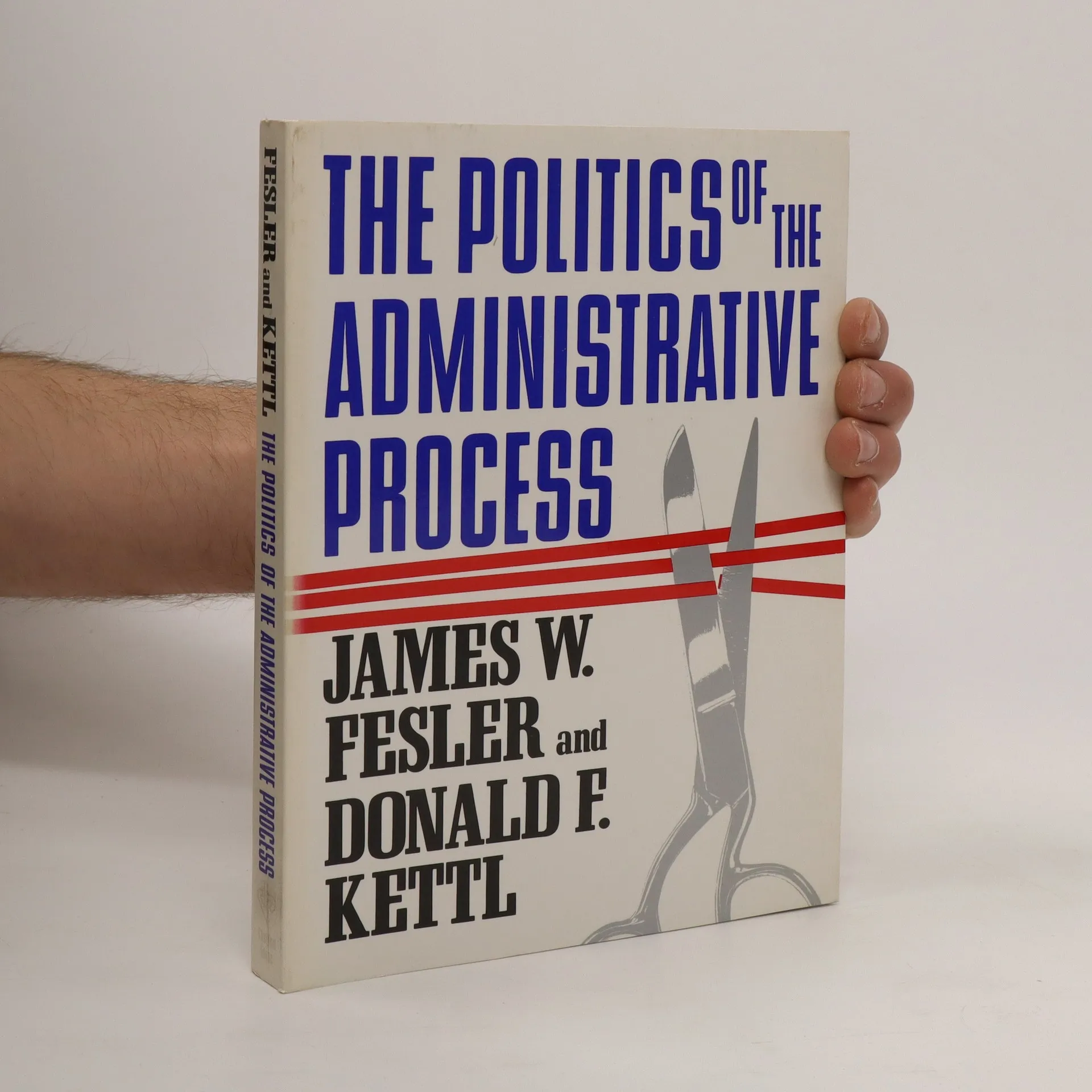
    The politics of the administrative process
    The Divided States of America
    The Little Guide to Writing for Impact
    The Divided States of America: Why Federalism Doesn't Work
    • "As James Madison led America's effort to write its Constitution, he made two great inventions-the separation of powers and federalism. The first is more famous, but the second was most essential because, without federalism, there could have been no United States of America. Federalism has always been about setting the balance of power between the federal government and the states-and that's revolved around deciding just how much inequality the country was prepared to accept in exchange for making piece among often-warring states. Through the course of its history, the country has moved through a series of phases, some of which put more power into the hands of the federal government, and some rested more power in the states. Sometimes this rebalancing led to armed conflict. The Civil War, of course, almost split the nation permanently apart. And sometimes it led to political battles. By the end of the 1960s, however, the country seemed to have settled into a quiet agreement that inequality was a prime national concern, that the federal government had the responsibility for addressing it through its own policies, and that the states would serve as administrative agents of that policy. But as that agreement seemed set, federalism drifted from national debate, just as the states began using their administrative role to push in very different directions. The result has been a rising tide of inequality, with the great invention that helped create the nation increasingly driving it apart"-- Provided by publisher

      The Divided States of America: Why Federalism Doesn't Work
    • The Little Guide to Writing for Impact

      How to Communicate Research in a Way that People Will Read

      • 142pages
      • 5 heures de lecture

      Focusing on the writing process for researchers, the manual guides readers through creating impactful written work from inception to completion. It features a wealth of examples highlighting effective and ineffective writing, alongside the authors' personal experiences in transforming ideas into compelling narratives. This resource serves both as a comprehensive guide and a deep dive into specific writing challenges, making it invaluable for writers aiming to enhance their skills.

      The Little Guide to Writing for Impact
    • The Divided States of America

      • 248pages
      • 9 heures de lecture

      Federalism, an innovative system of power sharing conceived by James Madison, was intended to balance national and state interests, uniting the colonies to form the United States. However, it inherently created inequalities based on geographic location, leading to significant divisions among states and rendering federalism unstable. In this exploration of American federalism's history, pivotal moments are highlighted, such as the Civil War, which nearly fractured the nation, and the civil rights era, when there was a consensus that inequality posed a threat to liberty and necessitated federal intervention. Despite this agreement, disparities among states have only intensified, affecting public services like health care, infrastructure, education, and the environment. The author critiques the flaws in Madison's design and suggests potential reforms inspired by Alexander Hamilton's writings. This urgent call for reform emphasizes the need to confront the crisis of inequality in America and offers pathways to address these systemic issues.

      The Divided States of America