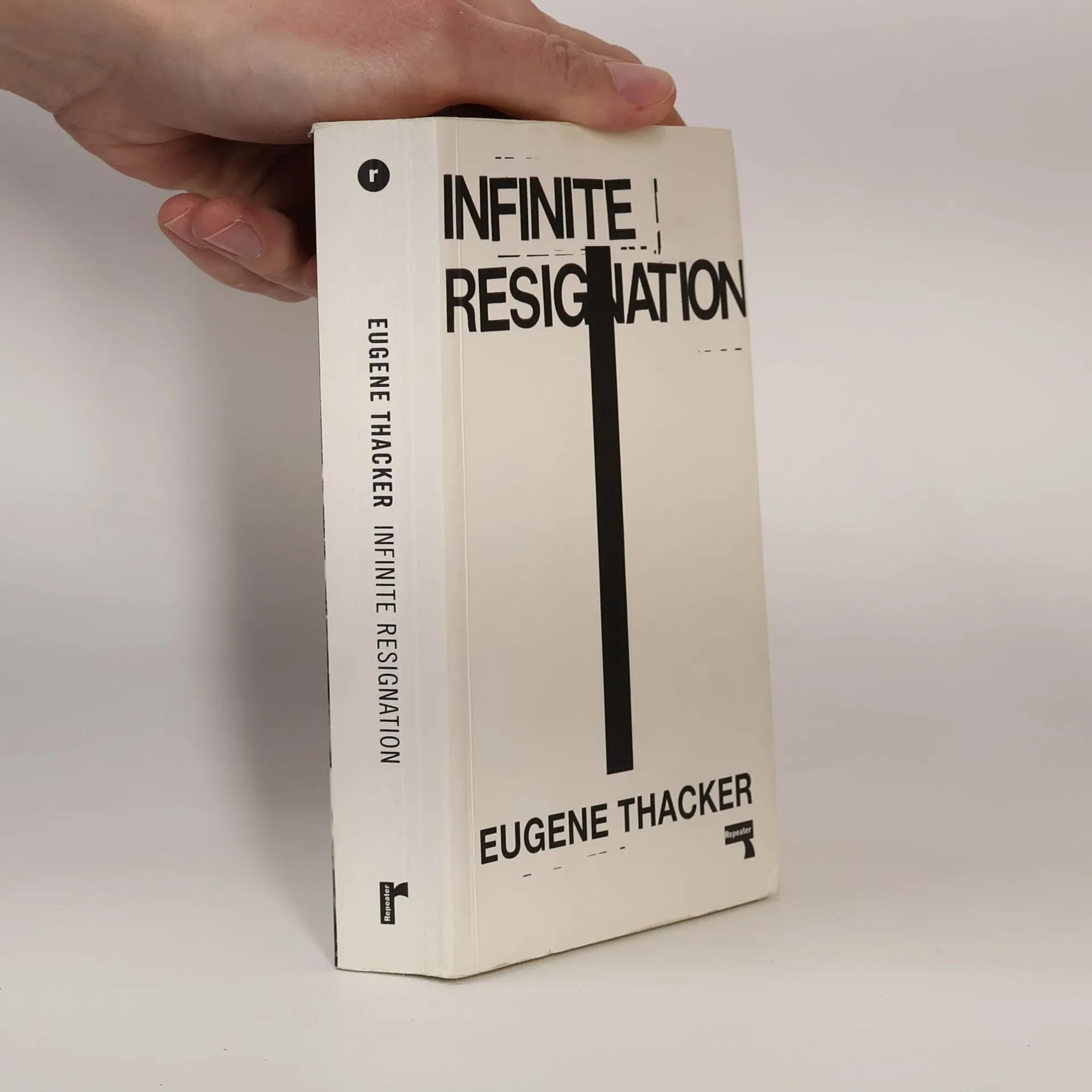
Infinite Resignation
- 386pages
- 14 heures de lecture
A collection of aphorisms, fragments, and observations on philosophy and pessimism.


Eugene Thacker est un auteur et philosophe dont les œuvres se concentrent sur des thèmes tels que le nihilisme, la philosophie et la théorie des médias. Son écriture explore les aspects profonds et souvent négligés de l'existence moderne. Thacker examine comment la pensée contemporaine et la technologie façonnent notre perception du monde et de nous-mêmes. Son approche est analytique et provocatrice, invitant les lecteurs à contempler les questions les plus fondamentales de l'être humain.

A collection of aphorisms, fragments, and observations on philosophy and pessimism.
Philosophy meets horror against the backdrop of an indifferent, unhuman cosmos.
Philosophy meets horror against the backdrop of an indifferent, unhuman cosmos.
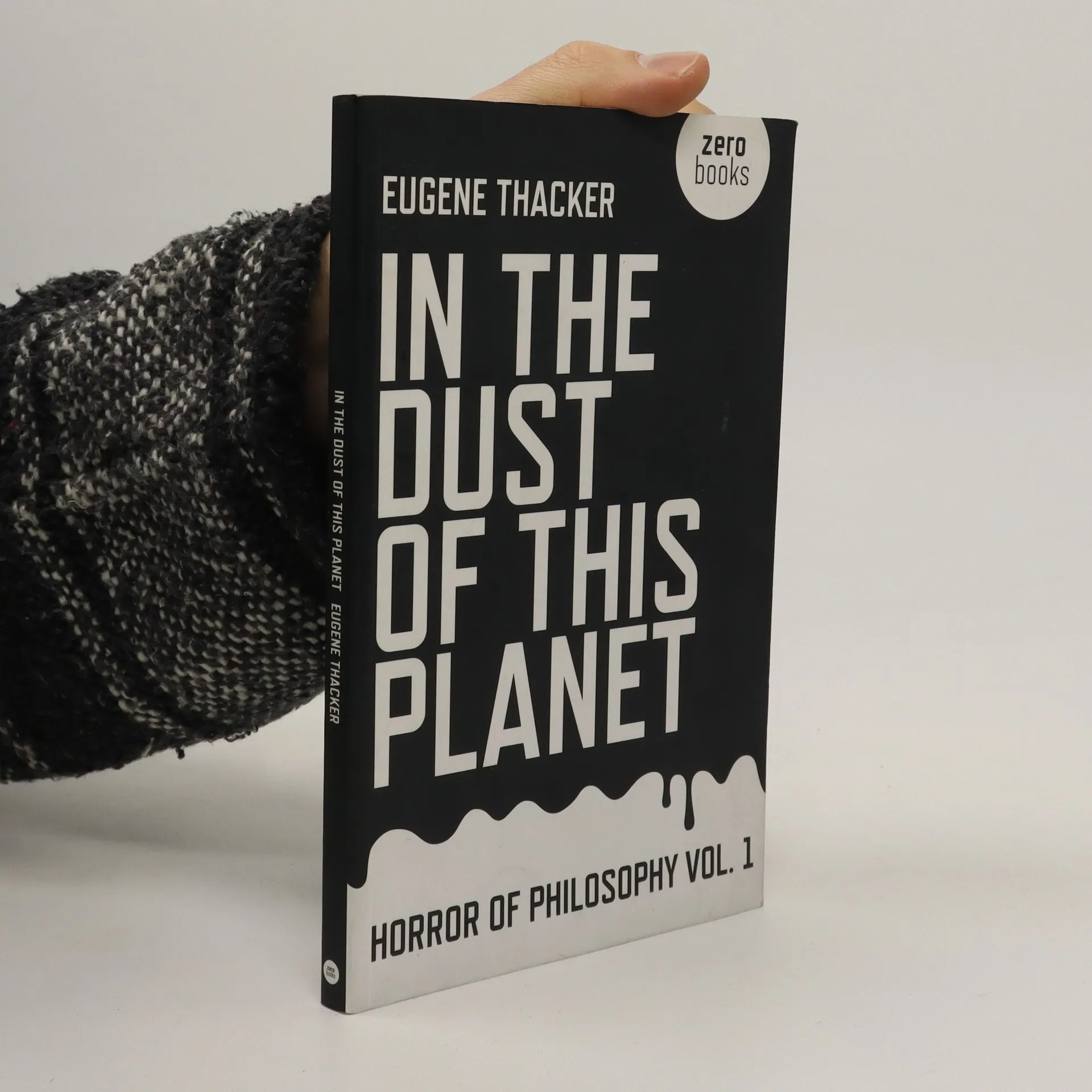
The world is increasingly unthinkable, a world of planetary disasters, emerging pandemics, and the looming threat of extinction. In this book Eugene Thacker suggests that we look to the genre of horror as offering a way of thinking about the unthinkable world. To confront this idea is to confront the limit of our ability to understand the world in which we live - a central motif of the horror genre. In the Dust of This Planet explores these relationships between philosophy and horror. In Thacker's hands, philosophy is not academic logic-chopping; instead, it is the thought of the limit of all thought, especially as it dovetails into occultism, demonology, and mysticism. Likewise, Thacker takes horror to mean something beyond the focus on gore and scare tactics, but as the under-appreciated genre of supernatural horror in fiction, film, comics, and music.
Die Welt ist zunehmend undenkbar geworden: Umweltkatastrophen, Pandemien, und am Horizont grinst die Fratze des Aussterbens der Menschheit. Angesichts dieser Szenarien sind neue Weltbetrachtungen vonnöten. Der Philosoph Eugene Thacker taucht dafür ein in die Horrorwelten in Literatur, Film, Comics und Musik und lotet die Grenzen der Verstehbarkeit unserer Welt aus. Für ihn ist Philosophie keine akademische Logikübung, stattdessen integriert er Okkultismus, Dämonologie und Mystik und zeigt nebenbei, dass Horror viel mehr ist als prickelndes Gruseln und Kunstblut.