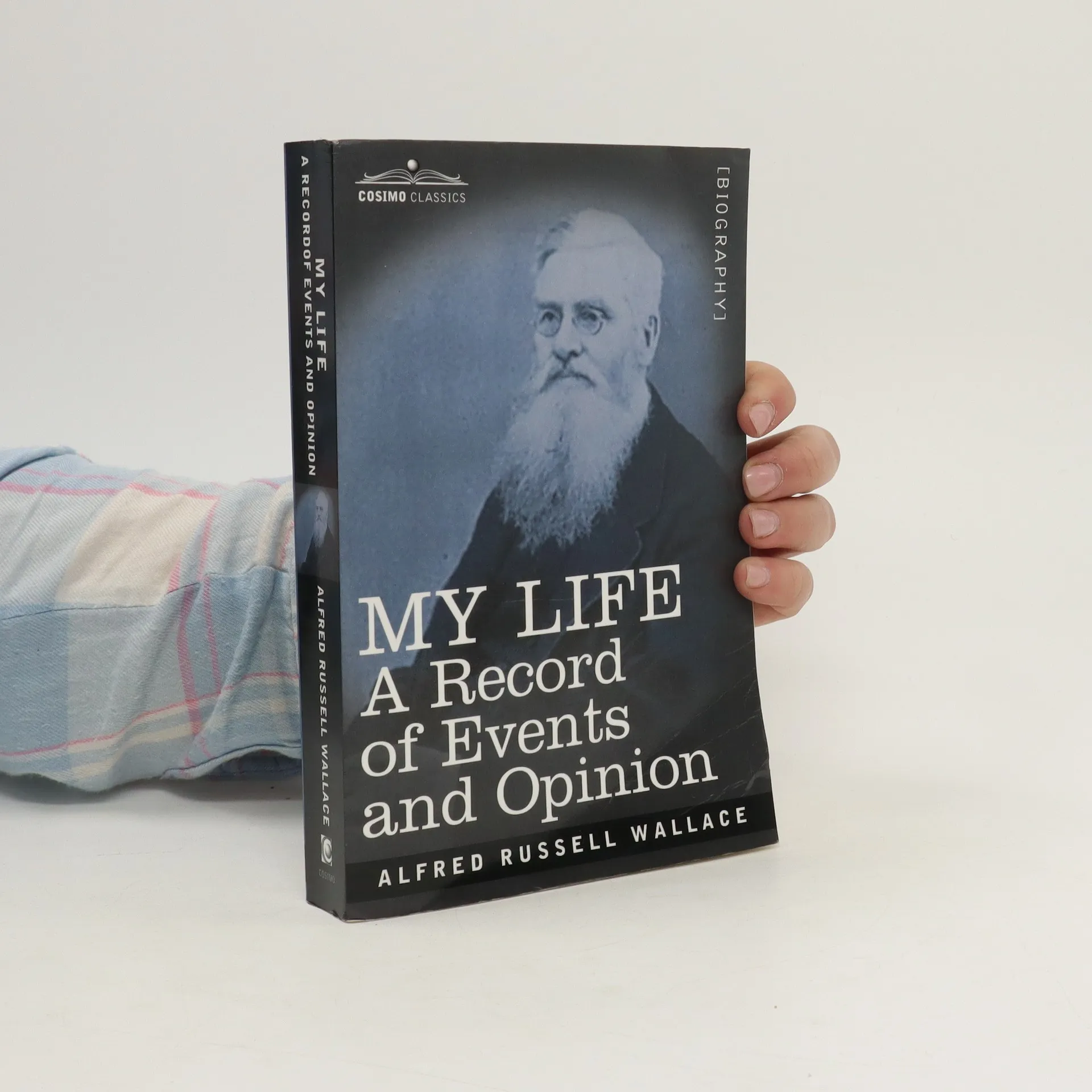
"Author of the curious The Wonderful Century, British biologist and explorer ALFRED RUSSEL WALLACE (18231913) here brings to readers a review of his own life. Discover: the studies that led him on exotic exploits, like his journeys through the Amazon River basin and the Malay archipelago researching plant and animal species; the radical social views that brought him much infamy at home, such as his refusal to believe that evolution, theories of which he developed in parallel with Darwin, could account for human endeavors such as mathematics and art. Spiritualist, creative thinker, and adventurer, Wallace led a singular life detailed with humor and humility in this autobiography. History buffs and those who are interested in the major scientific figures of the 19th century will love getting to know this influential scientist."
Alfred Russell Wallace Livres
Ce naturaliste et explorateur britannique est célèbre pour avoir proposé indépendamment la théorie de la sélection naturelle, ce qui a incité Charles Darwin à publier ses propres découvertes. Le vaste travail de terrain de Wallace dans le bassin amazonien et l'archipel malais l'a conduit à identifier la ligne de Wallace, une frontière biogéographique, consolidant ainsi son statut de "père de la biogéographie". Au-delà de la co-découverte de la sélection naturelle, il a contribué à la théorie de l'évolution avec des concepts tels que la coloration d'avertissement et l'effet Wallace, proposant comment la sélection naturelle favorise la spéciation. Wallace était également un visionnaire, partisan du spiritualisme, critique de l'injustice sociale et l'un des premiers scientifiques à exprimer des préoccupations concernant les impacts environnementaux.