
Agile is facing significant challenges, with a study revealing that 63% of organizations struggle with agile implementation. The root of the problem often lies with executive leadership, who may not fully understand agile principles or recognize the signs of success and failure. Agile transformation is a complex journey where individuals learn and experiment with new approaches. While coaching and training can enhance success, many Agile concepts are oversimplified or misapplied, leading to continued failure. Additionally, rigid practices, such as "agile team rooms," and a general resistance to change within the Agile community hinder progress. "Agile 2" emerges from the insights of fifteen Agile experts, refined by seven team members, to address these issues. It emphasizes the importance of balancing pairs of attributes: thoughtfulness and prescription; outcomes and outputs; individuals and teams; business and technical understanding; individual empowerment and effective leadership; adaptability and planning. With a fresh set of Agile principles, Agile 2 aims to guide organizations beyond software and hardware, extending to areas like "Agile HR" and "Agile Finance." While it offers powerful ideas, it acknowledges that no single set of ideas is sufficient for success, yet it serves as a vital guide for future endeavors.
Kurt Cagle Livres


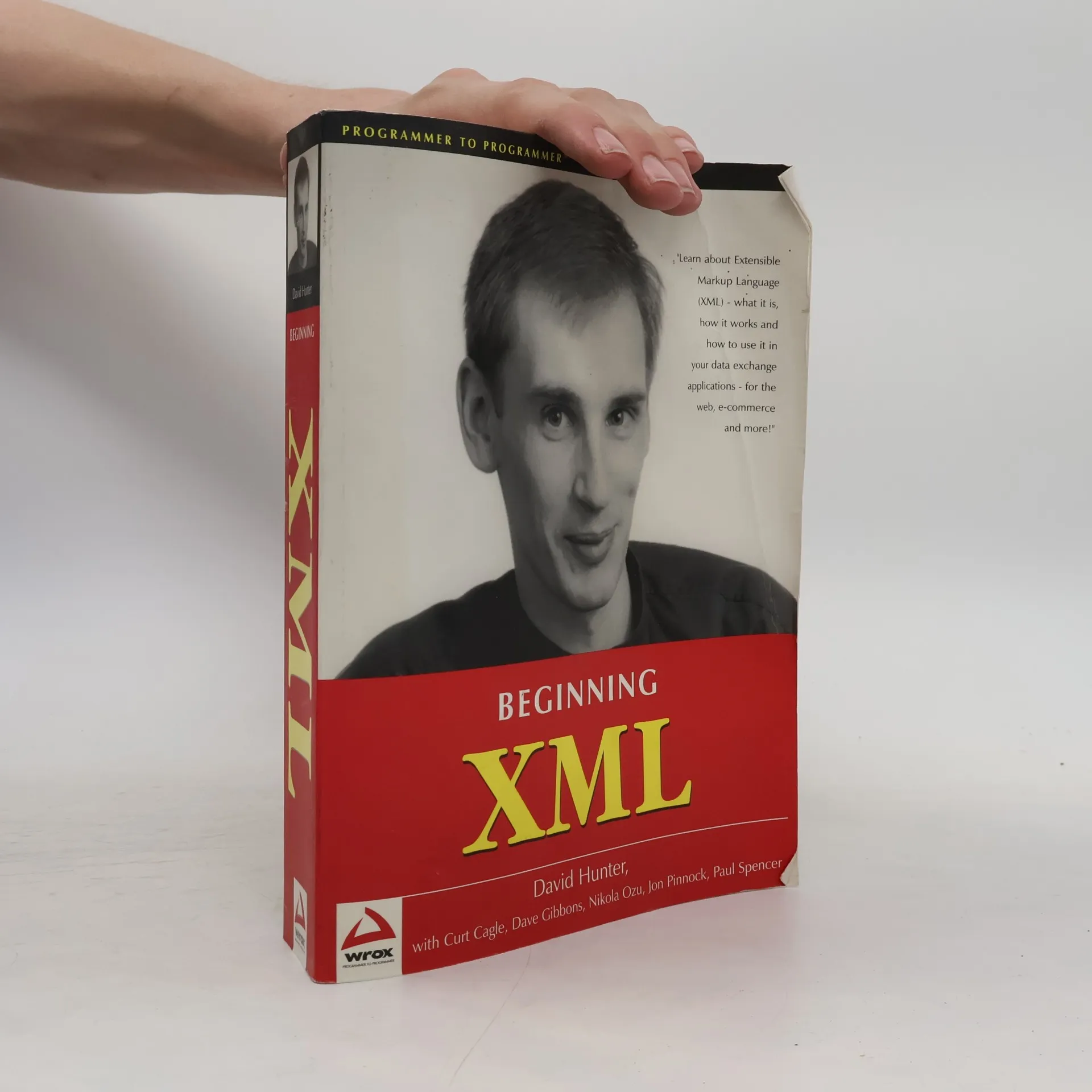
What is this book about? Extensible Markup Language (XML) is a rapidly maturing technology with powerful real-world applications, particularly for the management, display, and organization of data. Together with its many related technologies it is an essential technology for anyone using markup languages on the web or internally. This book teaches you all you need to know about XML -- what it is, how it works, what technologies surround it, and how it can best be used in a variety of situations, from simple data transfer to using XML in your web pages. It builds on the strengths of the first edition, and provides new material to reflect the changes in the XML landscape -- notably SOAP and Web Services, and the publication of the XML Schemas Recommendation by the W3C. What does this book cover? Here are just a few of the things this book covers: XML syntax and writing well-formed XML Using XML Namespaces Transforming XML into other formats with XSLT XPath and XPointer for locating specific XML data XML Validation using DTDs and XML Schemas Manipulating XML documents with the DOM and SAX 2.0 SOAP and Web Services Displaying XML using CSS and XSL Incorporating XML into tradition databases and n-tier architectures XLink and XPointer for linking XML and non-XML resources Who is this book for? Beginning XML, 2nd Edition is for any developer who is interested in learning to use XML in web, e-commerce or data-storage applications. Some knowledge of mark up, scripting, and/or object oriented programming languages is advantageous, but not essential, as the basis of these techniques are explained as required.
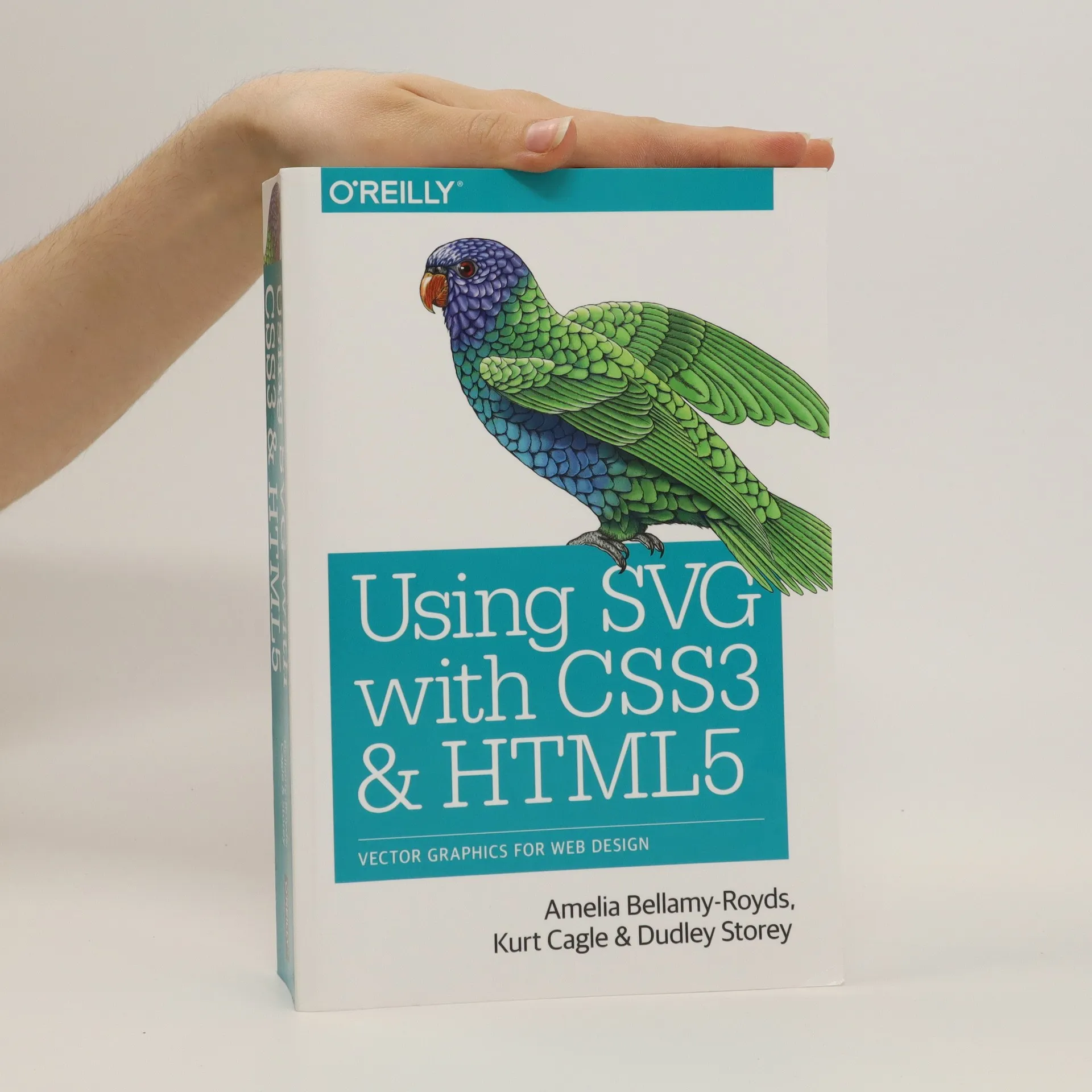
Using SVG with CSS3 and HTML5
- 844pages
- 30 heures de lecture
Starts with the basics, explaining how simple shapes and icons are defined in SVG, and then builds upon that foundation to create complex graphics and interactive, animated applications, covering all the features one would likely come across in web design, while avoiding areas with poor browser support.