

Bookbot

Alan Musgrave

    Alltagswissen, Wissenschaft und Skeptizismus. Eine historische Einführung in die Erkenntnistheorie.
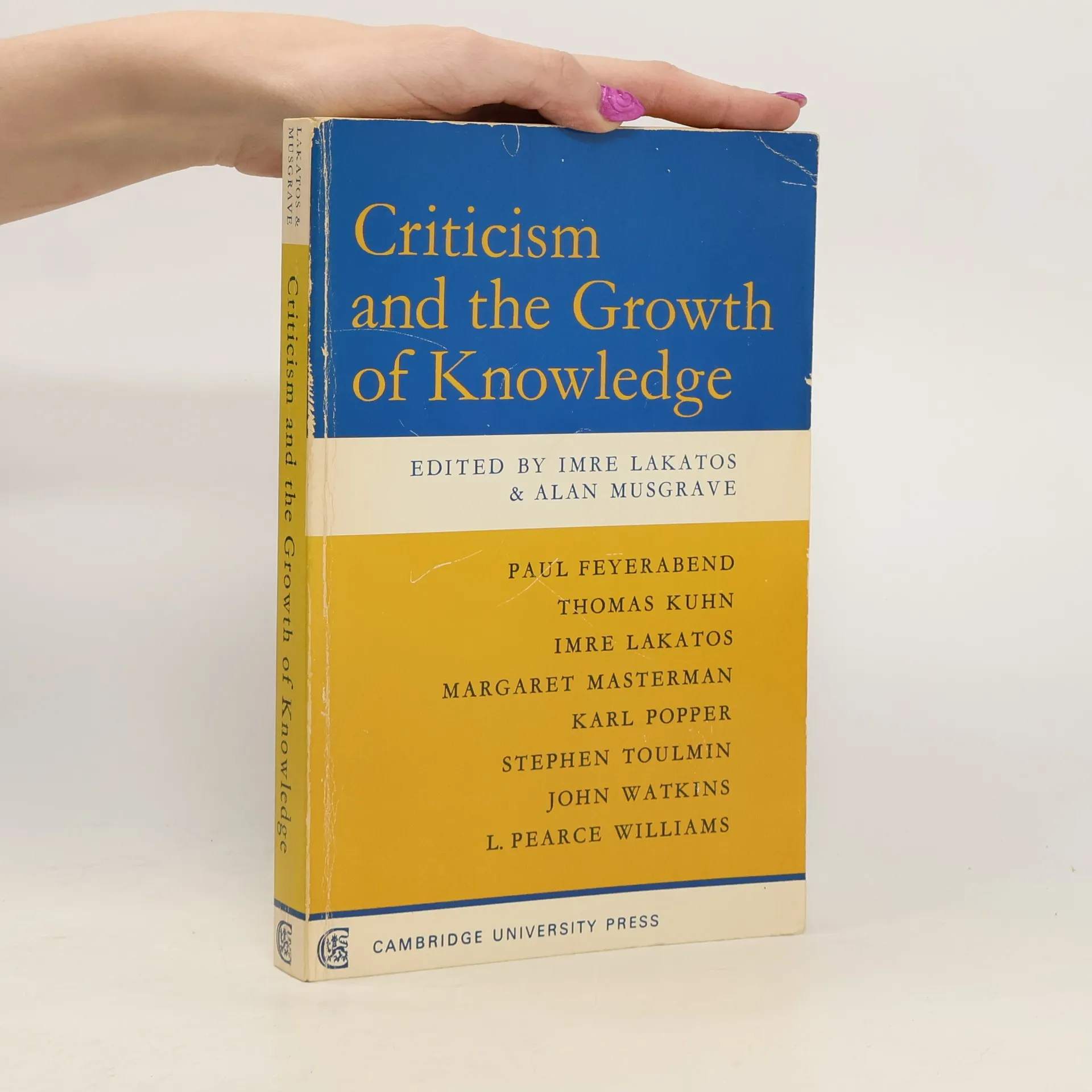
    Criticism and the Growth of Knowledge
    • 1993

      Can we know anything for certain? There are those who think we can (traditionally labeled the "dogmatists") and those who think we cannot (traditionally labeled the "skeptics"). The theory of knowledge, or epistemology, is the great debate between the two. This book is an introductory and historically-based survey of the debate. It sides for the most part with the skeptics. It also develops out of skepticism a third view, fallibilism or critical rationalism, which incorporates an uncompromising realism about perception, science, and the nature of truth.

      Alltagswissen, Wissenschaft und Skeptizismus. Eine historische Einführung in die Erkenntnistheorie.
    • 1974

      Criticism and the Growth of Knowledge

      • 292pages
      • 11 heures de lecture
      4,1(116)Évaluer

      Two books have been particularly influential in contemporary philosophy of science: Karl R. Popper's Logic of Scientific Discovery, and Thomas S. Kuhn's Structure of Scientific Revolutions. Both agree upon the importance of revolutions in science, but differ about the role of criticism in science's revolutionary growth. This volume arose out of a symposium on Kuhn's work, with Popper in the chair, at an international colloquium held in London in 1965. The book begins with Kuhn's statement of his position followed by seven essays offering criticism and analysis, and finally by Kuhn's reply. The book will interest senior undergraduates and graduate students of the philosophy and history of science, as well as professional philosophers, philosophically inclined scientists, and some psychologists and sociologists.

      Criticism and the Growth of Knowledge