

Acheter 10 livres pour 10 € ici !
Bookbot

Simon Jones

    Le matériel source fourni ne contient pas d'informations sur le style littéraire ou les thèmes de l'auteur, mais note qu'il s'agit d'un ancien joueur de cricket professionnel qui a joué pour l'Angleterre. Il existe plus d'un auteur portant ce nom.

    The War Underground 1914–18: Tactics and Equipment
    Lie-Ability
    Could Have Happened at parkrun
    Fields of Dreams
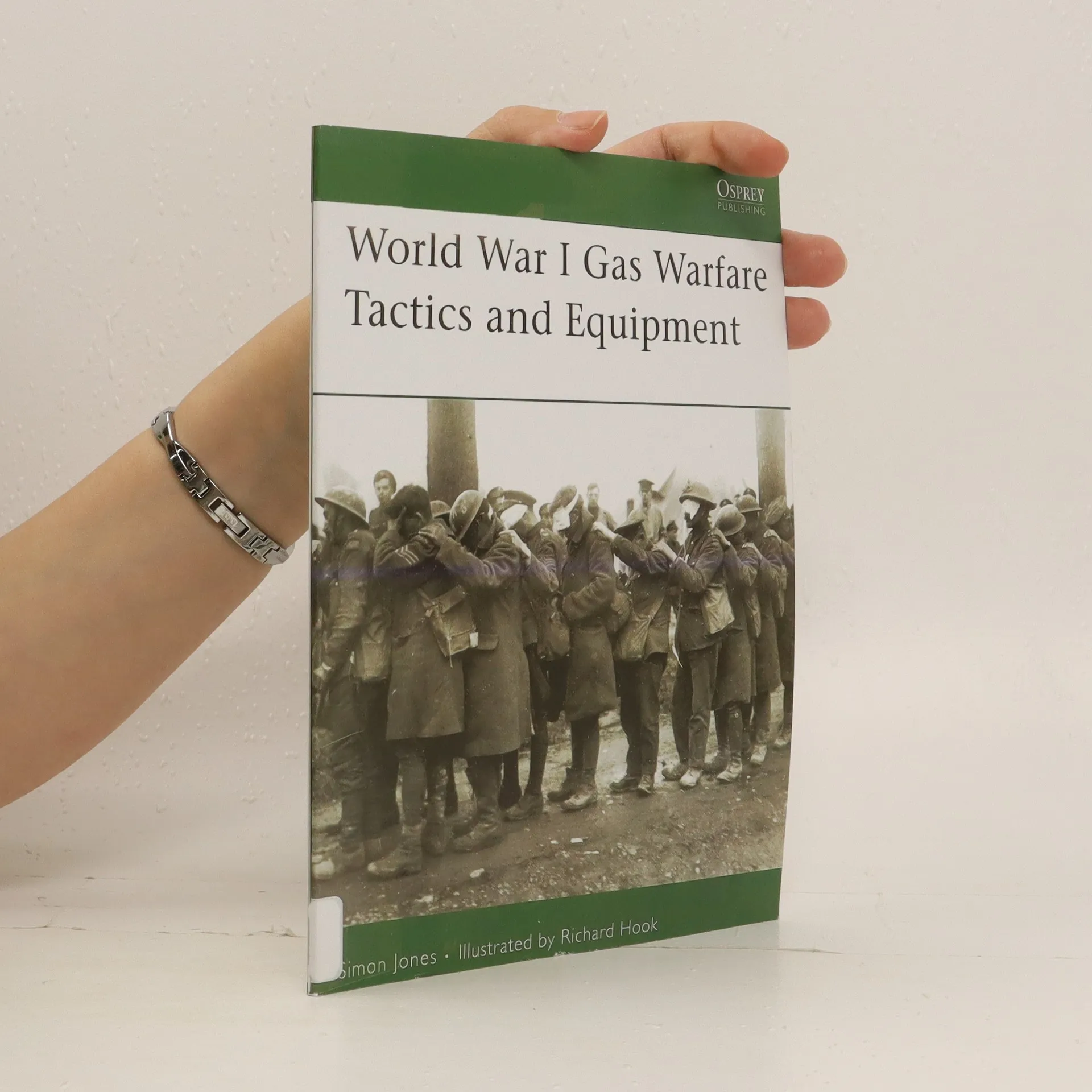
    World War I Gas Warfare: Tactics and Equipment
    • Battlefield Gas was first employed in April 1915 at the village of Langemarck near Ypres. At 1700 hours the Germans released a five mile-wide cloud of 168 tons of chlorine gas from 520 cylinders, causing panic and death in the French and Algerian trenches. Despite initial widespread condemnation and disgust, its use rapidly spread with all the armies entering into the race to produce gases, new ways to use them, and protective measures including masks and warning systems.For the first time in detail, this book charts the development of gas as a battlefield weapon and the steps taken to counter it. Delivery methods, including the use of artillery, the consequences of changing wind direction, and infantry advancing into an area just gassed, are all covered alongside key milestones in its introduction and usage.With an abundant array of artwork and photographs illustrating the gas masks, insignia, and protective clothing of the protagonists, this book conveys the horror of the gas attack and reveals the practical challenges for soldiers struggling to cope with this new form of warfare.Conveying the reality behind the iconic Sargent painting of a column of blindfolded gas casualties, it is a fascinating survey of one of the darkest facets of 20th century warfare.

      World War I Gas Warfare: Tactics and Equipment
    • This is an entertaining and light-hearted book that will be of interest to anyone who enjoys humour; it is not just for parkrun enthusiasts.Simon has based this anthology of short stories around scenarios that could have taken place at parkrun. He wrote this book to cheer up parkrunners who could no longer run because of COVID-19 and lockdown.It's great to read such a cheerful and happy book in the midst of what has been a very difficult time for all. I recommend it to everyone.

      Could Have Happened at parkrun
    • Lie-Ability

      • 218pages
      • 8 heures de lecture

      For leaders and companies, business success depends on the ability to build trust. Trusted brands succeed and sustain. Or so we used to think. Lie-Ability is about the corruption of truth, the loss of trust and the death of transparency. And, perhaps more importantly, what can be done about it.

      Lie-Ability
    • This absorbing illustrated study reveals the evolving tactics and techniques used by all sides in the underground war during 1914–18.Covering the Western Front but also the Gallipoli and Italian theatres, this study explores three aspects of World War I below military mining, attack tunnels and dugouts. In 1914–17, the underground war was a product of static trench warfare, essential to survive it and part of both sides' attempts to overcome it. In 1917–18 it was rendered largely obsolete by the development of the all-arms battle as mobility was restored to the battlefield.In the stagnant, troglodyte existence of trench warfare, military mining was a hidden world of heroism and terror in which hours of suspenseful listening were spent monitoring the steady picking of unseen opponents, edging quietly towards the enemy, and judging when to fire a charge. Break-ins to enemy mine galleries resulted in hand-to-hand fighting in the darkness. The ingenuity, claustrophobia and tactical importance of the underground war are discussed and depicted in this fully illustrated study from an acknowledged expert. The artwork plates include depictions of the specialized uniforms, weapons and equipment used underground, as well as vignettes that vividly convey the many aspects of subterranean warfare during World War I.

      The War Underground 1914–18: Tactics and Equipment