

Dismantle the overwhelming complexity in your IT projects with strategies and real-world examples from a leading expert on enterprise architecture. This guide describes best practices for creating an efficient IT organization that consistently delivers on time, on budget, and in line with business needs.IT systems have become too complex—and too expensive. Complexity can create delays, cost overruns, and outcomes that do not meet business requirements. The resulting losses can impact your entire company. This guide demonstrates that, contrary to popular belief, complex problems demand simple solutions. The author believes that 50 percent of the complexity of a typical IT project can and should be eliminated—and he shows you how to do it.You’ll learn a model for understanding complexity, the three tenets of complexity control, and how to apply specific techniques such as checking architectures for validity. Find out how the author’s methodology could have saved a real-world IT project that went off track, and ways to implement his solutions in a variety of situations.
Roger Sessions Ordre des livres (chronologique)
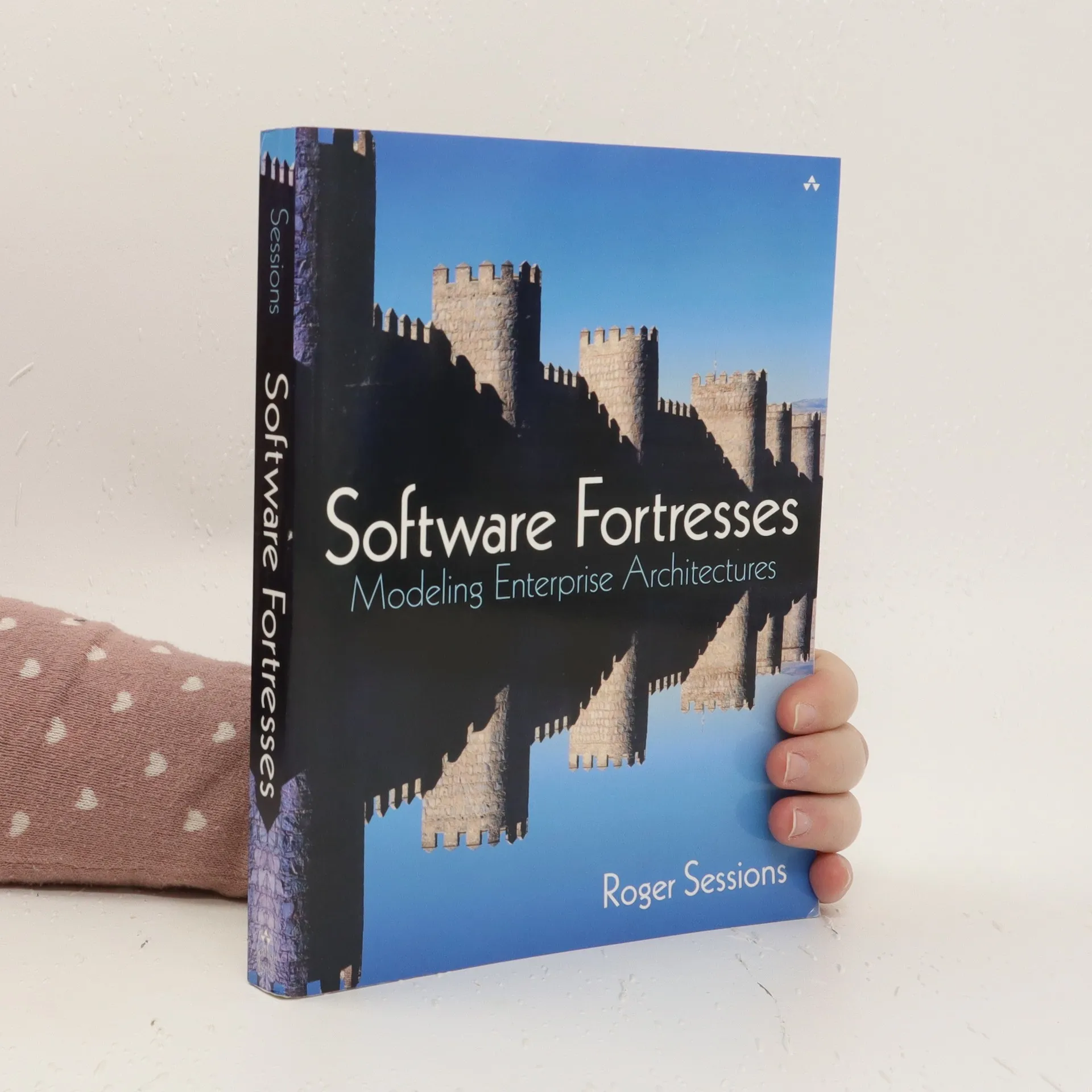
Software fortresses : modeling enterpise architectures
- 304pages
- 11 heures de lecture
This book presents a novel approach for modeling large enterprise systems through the software fortress model. In this model, enterprise architecture is conceptualized as a collection of self-contained, mutually suspicious, and marginally cooperating software fortresses that interact via carefully managed treaty relationships. The approach is intuitive and aligns well with existing technologies like .NET and Java 2 Enterprise Edition (J2EE). It aims to define and clarify the fundamentals of this modeling methodology for large enterprise software architectures. Key topics covered include the fundamental concepts and terminology of software fortresses, documentation techniques such as Fortress Ally Responsibility Cards and Sequence Ally Diagrams, and the appropriate use of drawbridges for interoperability. The book also addresses the innovative software fortress model for enterprise security, design strategies for fortress walls and guards, and the significance of loosely and tightly coupled transactions within the architecture. Additionally, it explores design and technology issues related to the six major software fortress types. This work is essential for enterprise software professionals, including managers looking to manage system complexity, architects designing interoperable and secure systems, consultants advising on .NET and J2EE, implementers understanding their systems' roles, and business analysts ensuring successf
A knowledge of C++ is often highly desirable and, in many cases, an essential skill in today's job market. In this book, specifically designed for C programmers interested in learning about C++, Sessions gives an introduction to the paradigm of object-oriented programming and the concept of developing classes. Developing classes in C++, developing them well, and learning to use them as building blocks for complex applications is the focus of this book. Sessions teaches object-oriented programming before C++, discusses the object-oriented subset of C++ (OOS/C++) and looks at this subset in detail.