


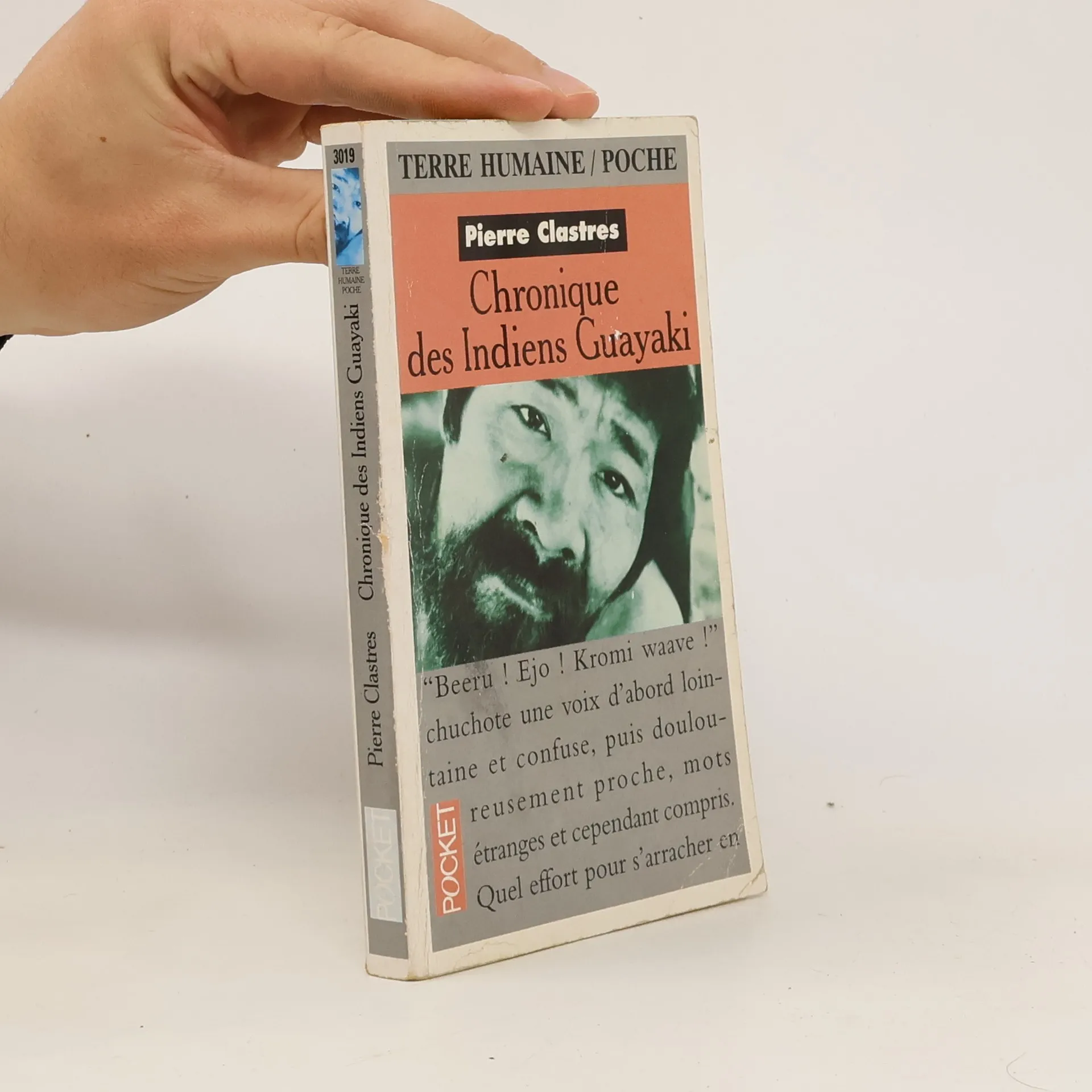
On les appelle Guayaki, « Rats féroces ». Eux-mêmes se dénomment Aché, « les Personnes ». Silencieux et invisibles, ces nomades parcourent la forêt tropicale à l'est du Paraguay. C'est ce qui leur a permis d'échapper si longtemps au sort de leurs voisins sédentaires : esclavage, mort, disparition. L'auteur a vécu un an dans leur intimité... Les incidents et anecdotes cocasses ou tragiques tracent peu à peu le portrait de ces Guayaki, paillards quand ils peuvent, graves lorsqu'il le faut : fêtes du miel, de l'amour, conflit au sein des bandes, meurtres, sacrifices, anthropophagie (ils se libèrent de leurs défunts en les mangeant). À la douceur succède la cruauté. Cette culture disparue repose sur la fidélité des Indiens à leurs anciens rites, et, au-delà, aux mythes de leur origine et de leur destin, qui suscitent en nous d'étranges échos. Ce livre est une chronique qui n'esquive aucun des problèmes que pose à l'ethnologie cette population indienne. De l'écologie très particulière d'une société de chasseurs à la logique la plus secrète de leur pensée, c'est le tout d'un univers culturel inconnu qui se révèle ici, sous le regard d'un des grands ethnologues français.
Pierre Clastres Livres
Pierre Clastres fut un anthropologue et ethnologue français, réputé pour son travail de terrain auprès du peuple Guayaki du Paraguay et sa théorie sur les sociétés sans État. Il critique la notion évolutionniste selon laquelle l'État serait la destinée ultime de toutes les sociétés, ainsi que le mythe rousseauiste du bon sauvage. Clastres soutenait que le désir d'autonomie est inné, amenant les sociétés à développer des coutumes qui préviennent activement l'émergence d'un pouvoir despotique. Il considérait l'État comme une structure de pouvoir hiérarchique spécifique qui surgit dans les sociétés ayant perdu les mécanismes empêchant la séparation du pouvoir de la communauté. Son œuvre offre une critique du déterminisme économique marxiste, posant la politique comme une sphère autonome qui contrecarre activement l'autorité dans les sociétés sans État.


Archeology of Violence
- 335pages
- 12 heures de lecture
Review: "The War machine is the motor of the social machine; the primitive social being relies entirely on war, primitive society cannot survive without war. The more war there is, the less unification there is, and the best enemy of the State is war. Primitive society is society against the State in that it is society-for-war." "Anthropologist and ethnographer Pierre Clastres was a major influence on Gilles Deleuze and Felix Guattari's Anti-Oedipus, and his writings formed an essential chapter in the discipline of political anthropology. The posthumous publication in French of Archeology of Violence in 1980 gathered together Clastres's final groundbreaking essays and the opening chapters of the book he had begun before his death in 1977 at the age 43. Elaborating upon the conclusions of such earlier works as Society Against the State, in these essays Clastres critiques his former mentor, Claude Levi-Strauss, and devastatingly rejects the orthodoxy of Marxist anthropology and other Western interpretive models of "primitive societies." Discarding the traditional anthropological understanding of war among South American Indians as arising from a scarcity of resources, Clastres instead identifies violence among these peoples as a deliberate means to territorial segmentatin and the avoidance of a State formation. In their refusal to separate the political from the social, and in their careful control of their tribal chiefs--who are rendered weak so as to remain dependent on the communities they represent--the "savages" Clastres presents prove to be shrewd political minds who resist in advance any attempt at "globalization.""
Society Against the State
- 218pages
- 8 heures de lecture
In this landmark text in anthropology and political science, Pierre Clastres offers examples of South American Indian groups that, though without hierarchical leadership, were both affluent and complex.
Chronicle of the Guayaki Indians
- 352pages
- 13 heures de lecture
The narrative captures Clastres's initial fieldwork in the 1960s, detailing his interactions with the Guayaki Indians, a distinctive tribe from Paraguay that has since disappeared. Through vivid observations, the book explores their culture, social structure, and way of life, offering a poignant glimpse into a world that has been lost to time. Clastres's anthropological insights highlight the complexities of the Guayaki's existence and their relationship with the surrounding environment.
Duchovní svět indiánských kočovníků očima francouzského etnologa. Autor, přední znalec araguayských kultur, strávil rok na východě země mezi příslušníky kmene Guayaquí a o svém pobytu napsal mimořádně výstižnou knihu. Všímá si v ní všech aspektů života zmíněného společenství, od narození dítěte až po projevy kanibalismu. Hluboký psychologický vhled se prolíná s líčením materiálních podmínek života kmene.Perokresby v textu.
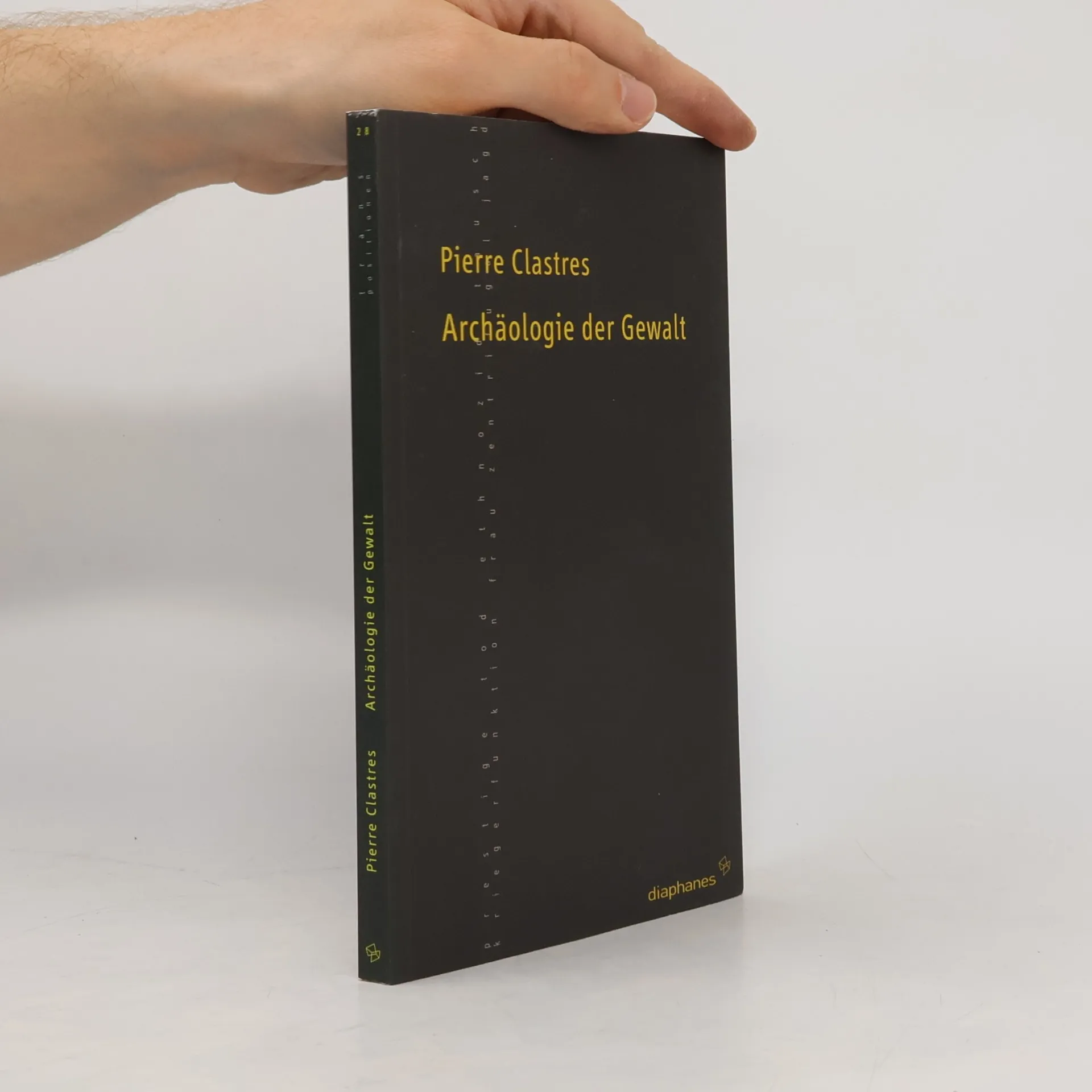
Archäologie der Gewalt
- 128pages
- 5 heures de lecture
Pierre Clastres untersucht die Rolle von Gewalt in primitiven Gesellschaften und deren Funktion zur Verhinderung der Entstehung eines Staatsapparates. Er argumentiert, dass Stammesgesellschaften Gewalt nicht nur als Teil ihrer Existenz akzeptieren, sondern sie systematisch einsetzen, um das "kalte Monster" des Staates zu vermeiden. Clastres widerlegt gängige Theorien, die Krieg als Ergebnis von Jagd oder misslungenen Handelsbeziehungen betrachten, und beschreibt stattdessen die primitive Gesellschaft als eine, die sich in einem ständigen Kriegszustand befindet.
Staatsfeinde
Studien zur politischen Anthropologie