
Bookbot

Morten Bergsmo

    Historical Origins of International Criminal Law
    Historical Origins of International Criminal Law
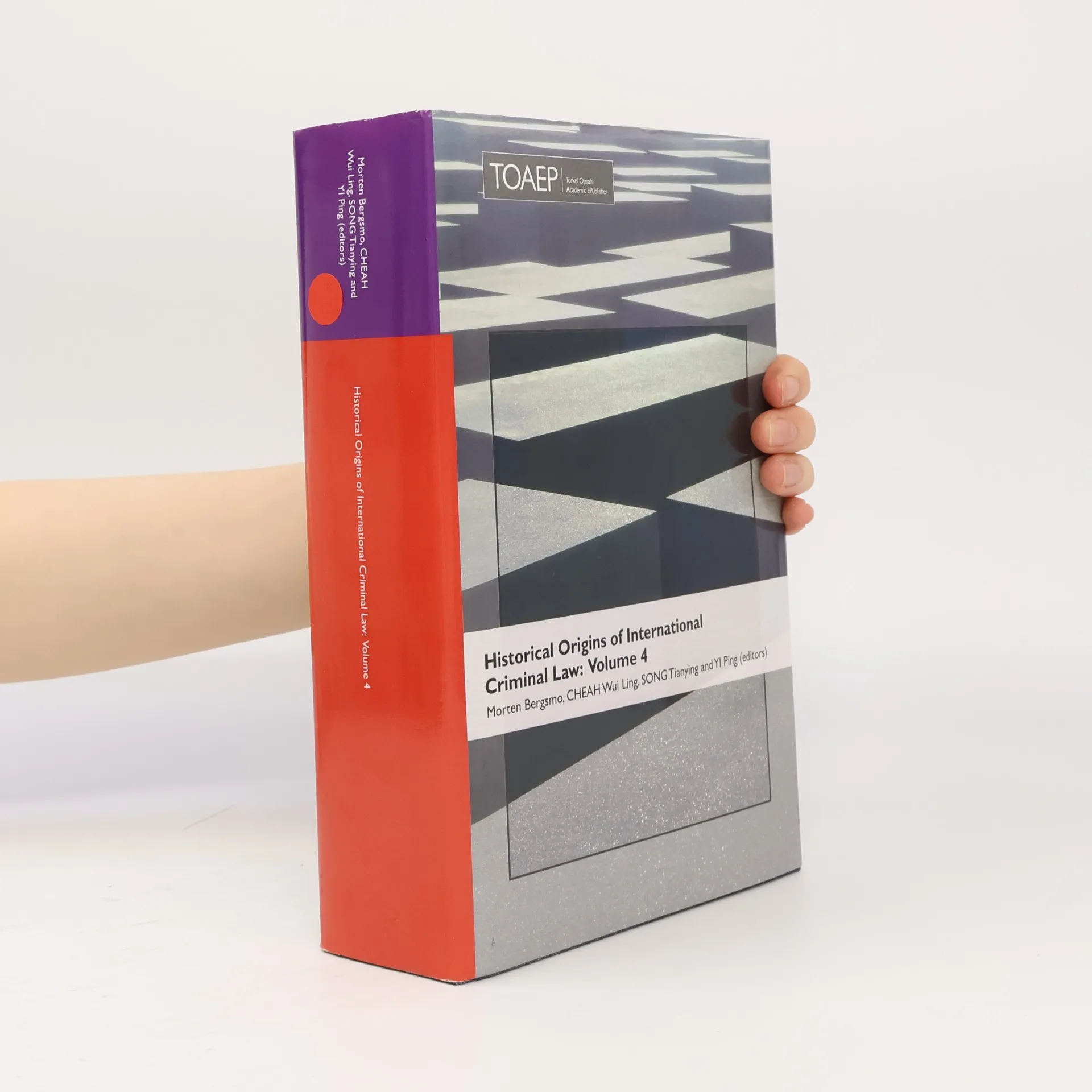
    • This fourth volume in the series Historical Origins of International Criminal Law concentrates on institutional contributions to the development of international criminal law rather than taking a chronological (Volumes 1 and 2) or doctrinal (Volume 3) approach. It analyses contributions made by institutions such as the Nuremberg, Tokyo, ex-Yugoslavia and Rwanda tribunals, INTERPOL, the International Association of Penal Law, the Far Eastern and Pacific Sub-Commission, and internationalised fact-finding mandates. It considers the role played by some jurisdictional principles and work methods of international and national institutions. Part 4 also looks at wider trends in the development of international criminal law. The contributors include Wegger Christian Strommen, LING Yan, Anuradha Bakshi, ZHU Wenqi, Volker Nerlich, David Re, LIU Daqun, Serge Brammertz, Kevin C. Hughes, Patricia Pinto Soares, Mareike Schomerus, Seta Makoto, Natalia M. Luterstein, Hilde Farthofer, Itai Apter, Md. Mostafa Hosain, Helge Brunborg, Mutoy Mubiala, Yaron Gottlieb, Mark A. Lewis, Marquise Lee Houle, Tina Dolgopol, Rahmat Mohamad, Barrie Sander, Furuya Shuichi, Chris Mahony, ZHANG Binxin and the editors. In his foreword, Wegger Christian Strommen notes that the four-volume project "draws our attention to the common legacy and interests at the core of international criminal law. By creating a discourse community with more than 100 scholars from around the world, [CILRAP] has set in motion a wider process that will serve as a reminder of the importance of the basics of international criminal law.""

      Historical Origins of International Criminal Law
    • Historical Origins of International Criminal Law

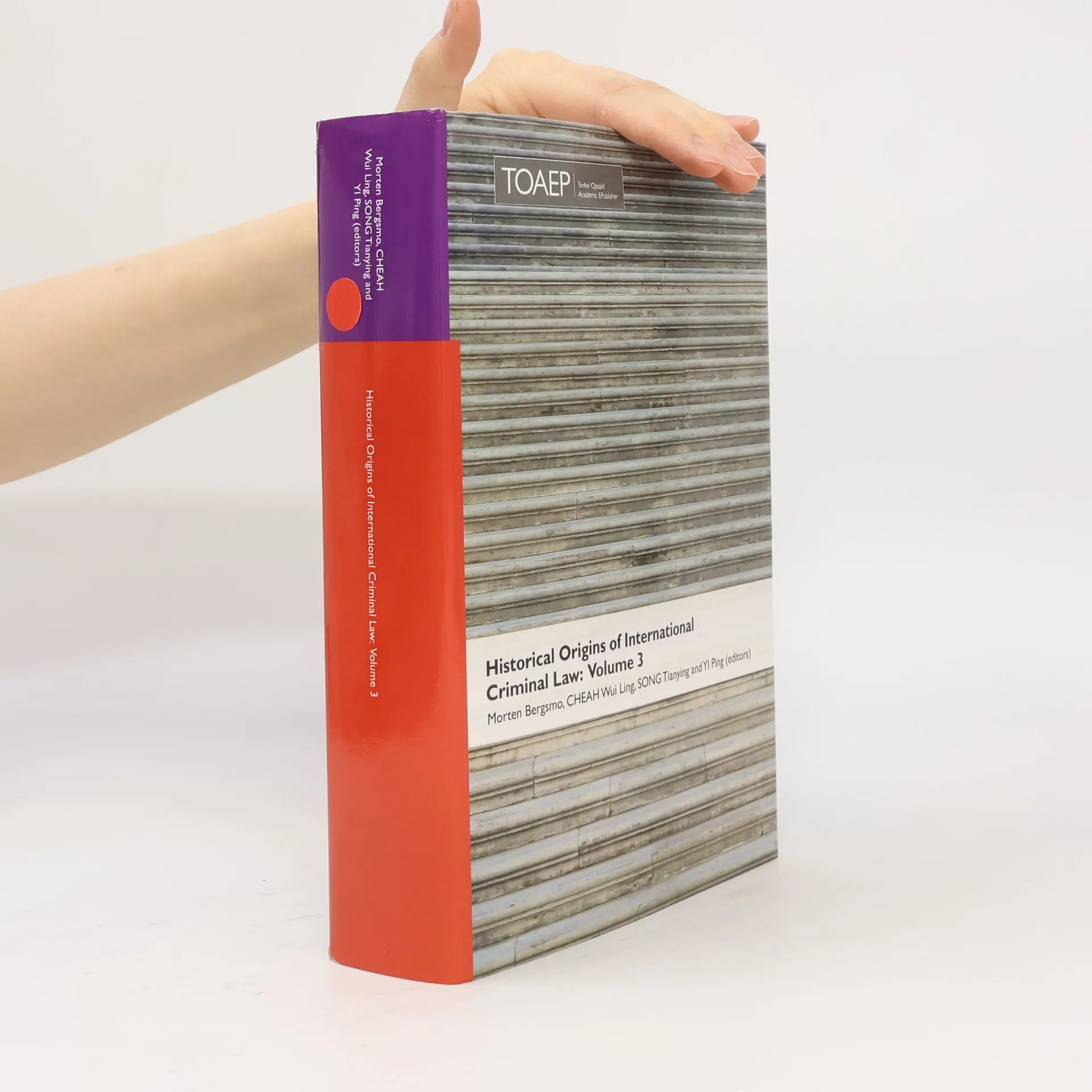
      Volume 3

      • 846pages
      • 30 heures de lecture

      This volume carries on the "comprehensive and critical mapping of international criminal law's origins" started by the previous two volumes. Twenty-seven authors investigate the evolution of legal doctrines and pertinent historical events, many in an attempt to inform contemporary theory and practice. Contributors include Narinder Singh, Eivind S. Homme, Manoj Kumar Sinha, Emiliano J. Buis, Shavana Musa, Jens Iverson, Gregory S. Gordon, Benjamin E. Brockman-Hawe, William Schabas, Patryk I. Labuda, GUO Yang, Philipp Ambach, Helen Brady, Ryan Liss, Sheila Paylan, Agnieszka Klonowiecka-Milart, Meagan Wong, Marina Aksenova, Zahra Kesmati, Chantal Meloni, Hitomi Takemura, Hae Kyung Kim, ZHANG Binxin, Morten Bergsmo, CHEAH Wui Ling, SONG Tianying and YI Ping. Part 1 of the book further expands the landscape of international criminal law in terms of geography, time and diversity of legal concepts in their early forms. Parts 2 and 3 turn to the origins and evolution of specific doctrines of international criminal law. Part 2 explores four core international war crimes, crimes against humanity, genocide, and aggression. Part 3 examines doctrines on individual criminal modes of liability, grounds of criminal defence, and sentencing criteria. The doctrine-based approach allows vertical consolidation within a concept. The chapters also identify common and timeless tensions in international criminal law, symptomatic of ongoing struggles, offering parameters for assessment and action.

      Historical Origins of International Criminal Law