
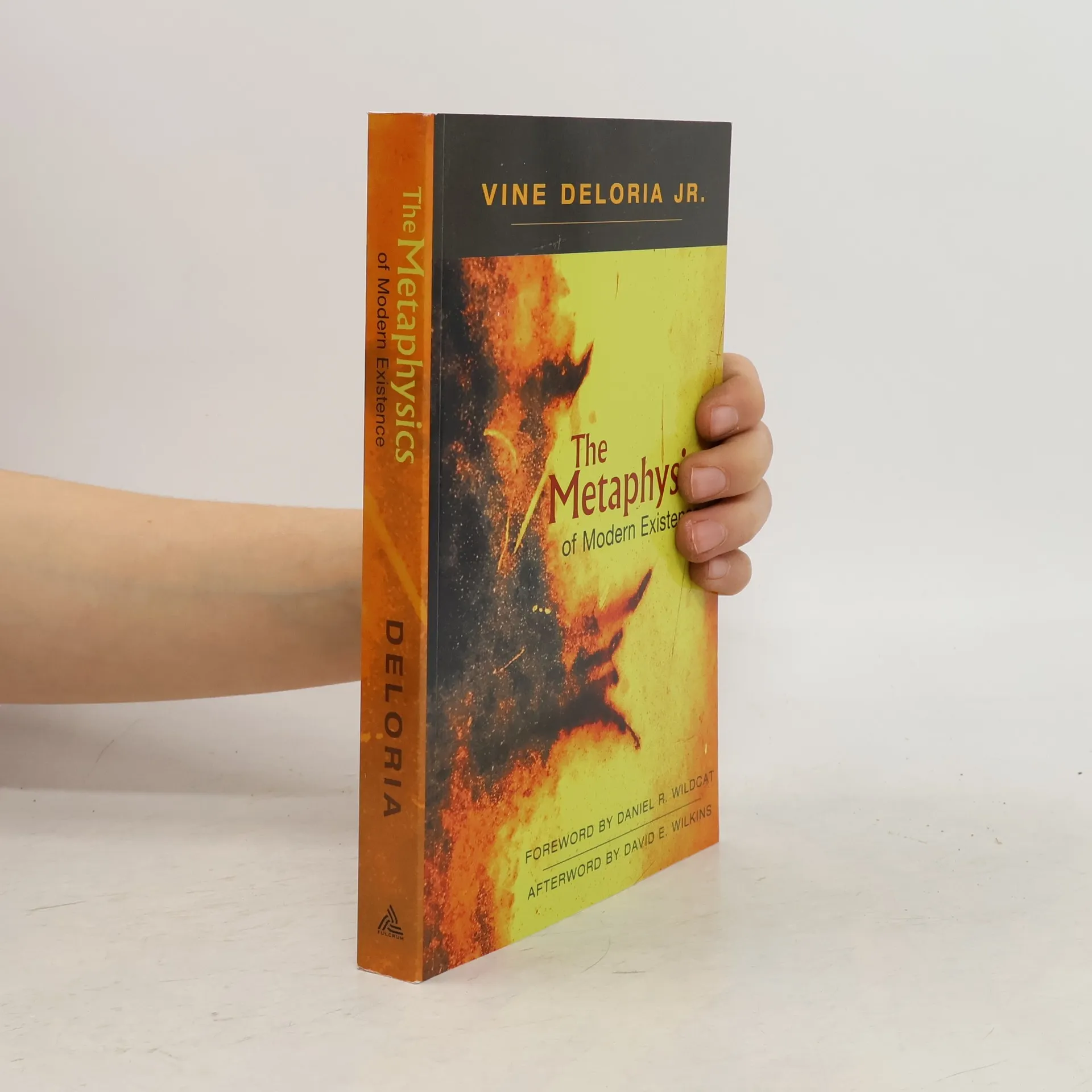
Vine Deloria, Jr., leading Native American scholar and author of the best-selling God is Red , addresses the conflict between mainstream scientific theory about our world and the ancestral worldview of Native Americans. Claiming that science has created a largely fictional scenario for American Indians in prehistoric North America, Deloria offers an alternative view of the continent's history as seen through the eyes and memories of Native Americans. Further, he warns future generations of scientists not to repeat the ethnocentric omissions and fallacies of the past by dismissing Native oral tradition as mere legends.
Vine Deloria Jr. Livres
Vine Deloria Jr. fut un influent auteur et activiste américain dont l'œuvre de 1969 a attiré l'attention nationale sur les enjeux des Amérindiens. Ses écrits ont suscité des mouvements pour les droits autochtones et offert des perspectives profondes sur l'histoire et la culture des peuples autochtones d'Amérique du Nord. Au cours de sa carrière universitaire, il a créé le premier programme de master en études amérindiennes aux États-Unis et a façonné de manière significative les domaines de la science politique et du droit. Sa voix distinctive continue de résonner, remettant en question les récits conventionnels et défendant les perspectives autochtones.


C.G. Jung and the Sioux Traditions
Dreams, Visions, Nature and the Primitive
- 226pages
- 8 heures de lecture
While visiting the United States, C. G. Jung visited the Taos Pueblo in New Mexico, where he spent several hours with Ochwiay Biano, Mountain Lake, an elder at the Pueblo. This encounter impacted Jung psychologically, emotionally, and intellectually, and had a sustained influence on his theories and understanding of the psyche. Dakota Sioux intellectual and political leader, Vine Deloria Jr., began a close study of the writings of C. G. Jung over two decades ago, but had long been struck by certain affinities and disjunctures between Jungian and Sioux Indian thought. He also noticed that many Jungians were often drawn to Native American traditions. This book, the result of Deloria's investigation of these affinities, is written as a measured comparison between the psychology of C. G. Jung and the philosophical and cultural traditions of the Sioux people. Deloria constructs a fascinating dialogue between the two systems that touches on cosmology, the family, relations with animals, visions, voices, and individuation.