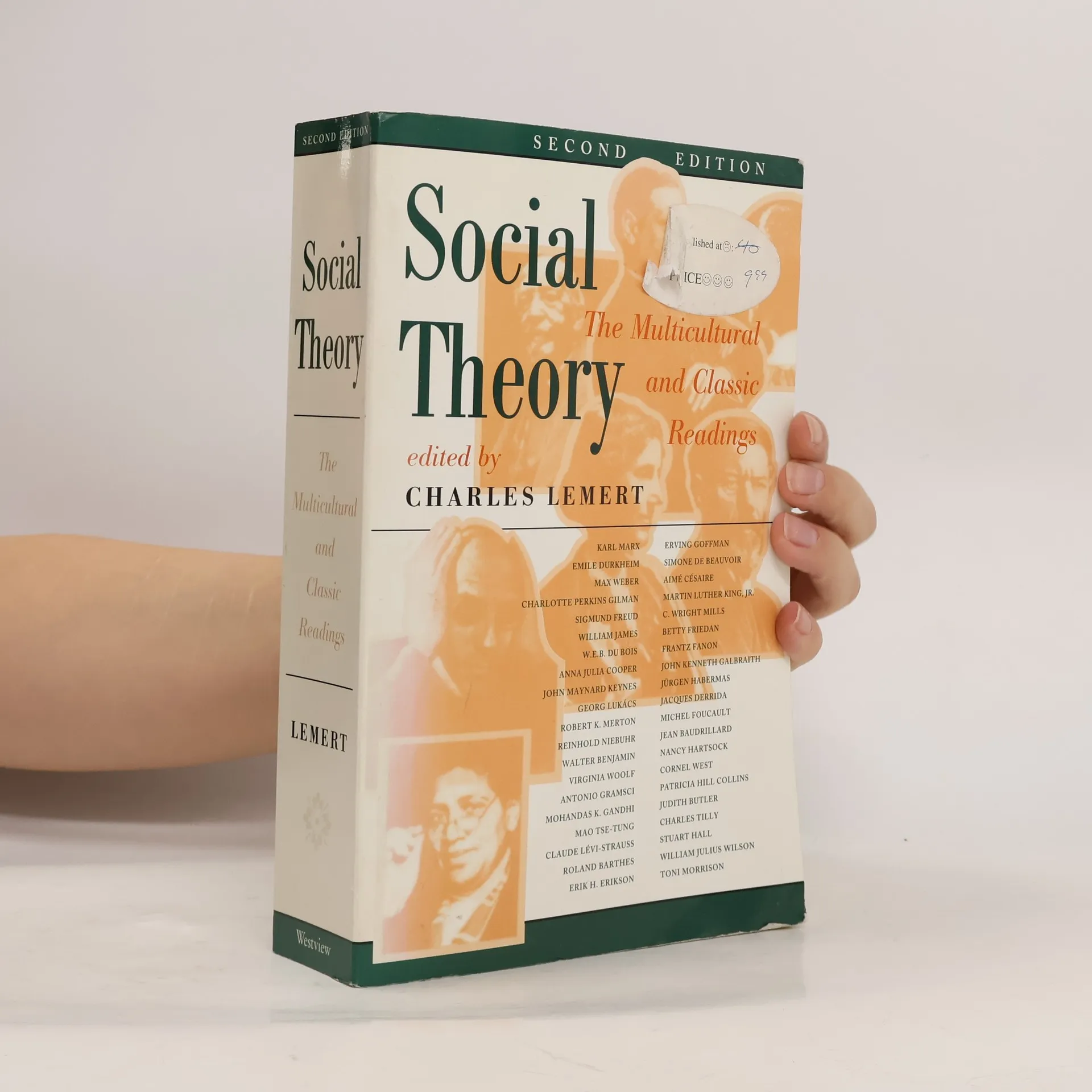
This first truly multicultural anthology collects important, readable texts representative of the full range of social theory as it has developed from the nineteenth century to the present. Now that social theory is practiced in many disciplines, it is time to reflect on the variety of theories being read today and the earlier sources that are customarily neglected. If today we read Donna Haraway, Henry Louis Gates, and Michel Foucault, we should also read and understand Charlotte Perkins Gilman and W.E.B. Du Bois, alongside Weber, Simmel, William James, and others of their contemporaries from the end of the nineteenth century.This book, therefore, sets a wider gauge for the understanding of the history of social thought than could have been possible before. It brings texts together in unexpected and exciting ways: those of Parsons and Dorothy Smith, Merton and Lacan, Wallerstein and Frantz Fanon, James Coleman and Molefi Asante. Extensive introductory essays by the editor situate the writings in their times, identifying the currents of social change that shaped fundamental questions of modern and postmodern life. The second edition includes new readings, a new section covering the postmodern controversies of recent years, and a postscript that addresses the changes and directions in social theory.
Charles C. Lemert Livres
Charles Lemert est un théoricien social et sociologue américain dont le travail se concentre sur l'examen critique de la société moderne et de ses expressions culturelles. Ses analyses se penchent souvent sur les questions d'identité, de culture mondiale et de la relation entre théorie et pratique. L'approche de Lemert se caractérise par un effort pour présenter des concepts sociologiques complexes de manière accessible, en les reliant à la vie quotidienne. Par ses textes, il encourage les lecteurs à réfléchir plus profondément aux processus sociaux et à leurs impacts.