

Acheter 10 livres pour 10 € ici !
Bookbot

Arne Naess

    27 janvier 1912 – 12 janvier 2009

    Næss était un philosophe norvégien, reconnu comme le fondateur du concept d'Écologie Profonde. Il a combiné sa vision écologique avec la non-violence gandhienne et a participé à des actions directes. Son travail philosophique initial a exploré l'interprétation et la précision, qu'il a ensuite simplifiées dans un manuel pratique sur la communication et l'argumentation. À partir des années 1960, son travail s'est de plus en plus concentré sur ce qui est devenu connu sous le nom d'écologie profonde, un terme qu'il a introduit publiquement pour la première fois en 1972.

    Myslieť ako hora: K stretnutiu Rady všetkých bytostí
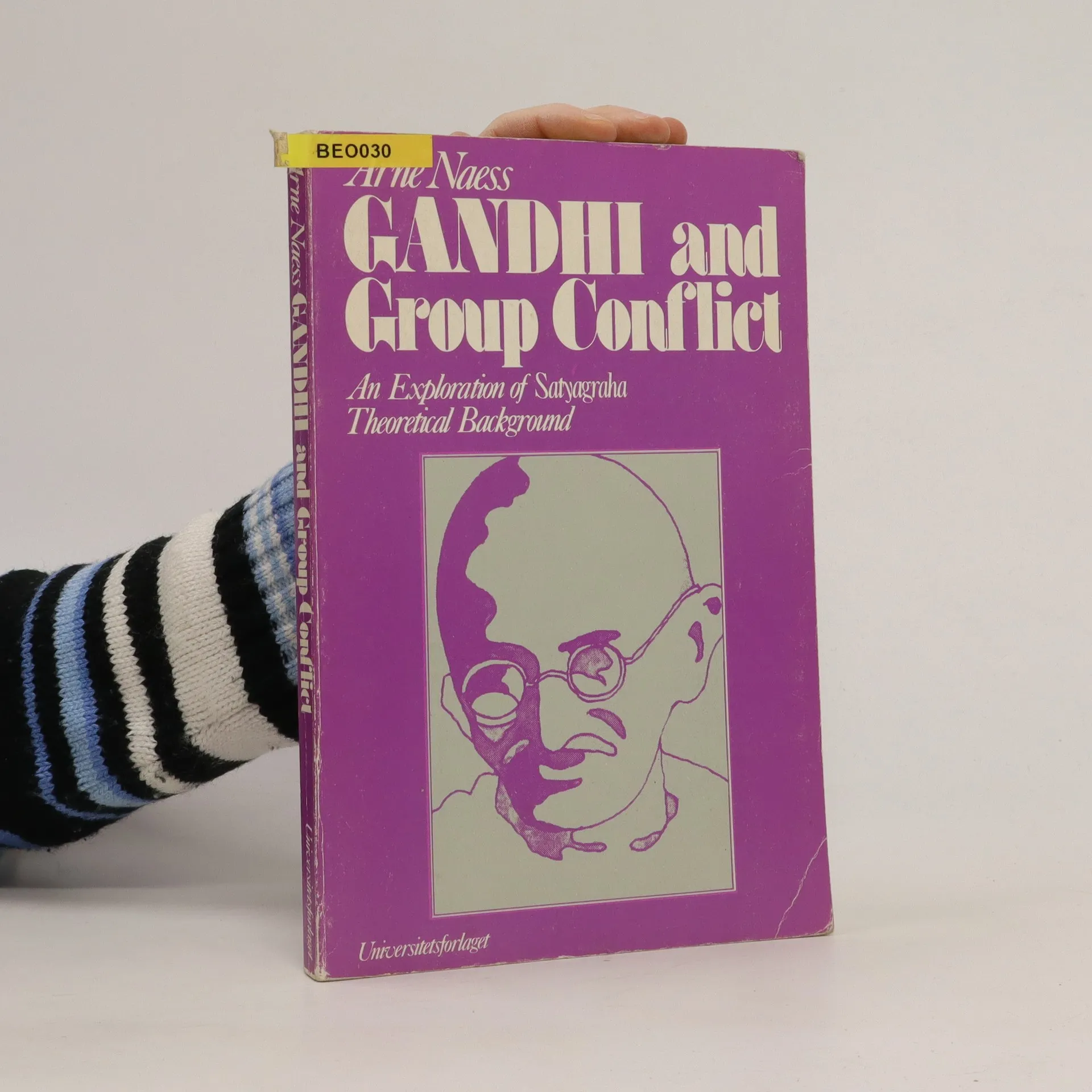
    Gandhi and Group Conflict
    There is No Point of No Return
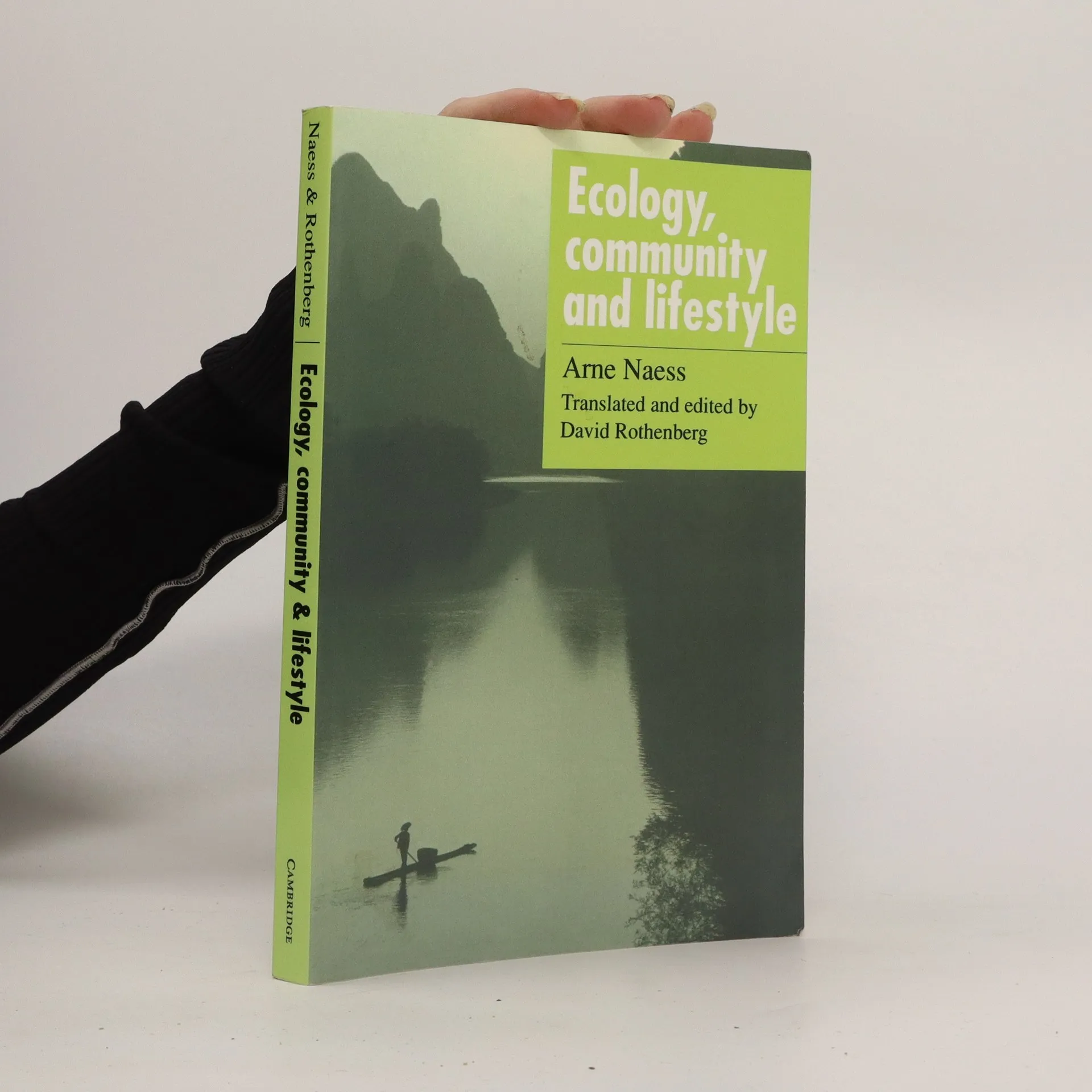
    Ecology, Community and Lifestyle
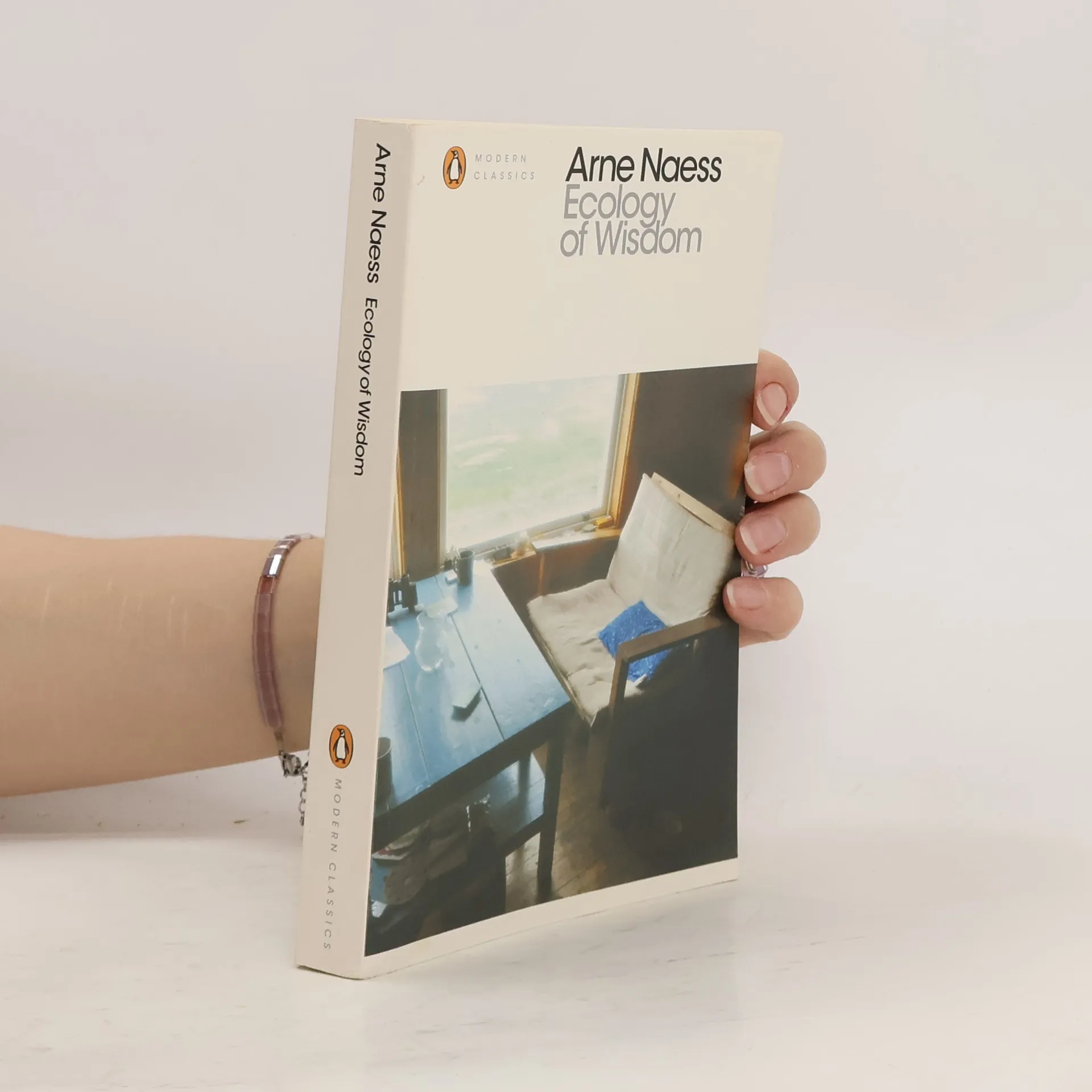
    Ecology of Wisdom
    Thinking Like a Mountain
    • 2021

      "Emphasizing joy in the world, human cooperation and the value of all living things, this selection of Arne Naess' philosophical writings is filled with wit, learning and an intense connection with nature."--Provided by publisher

      There is No Point of No Return
    • 2016

      Ecology of Wisdom

      • 352pages
      • 13 heures de lecture
      3,9(29)Évaluer

      'The smaller we come to feel ourselves compared with the mountain, the nearer we come to participating in its greatness.' Philosopher, mountaineer, activist and visionary, Arne Naess's belief that all living things have value made him one of the most inspirational figures in the environmental movement. Drawing on his years spent in an isolated hut high in the Norwegian mountains, and on influences as diverse as Gandhi's nonviolent action and Spinoza's all-encompassing worldview, this selection of the best of his writings is filled with wit, charisma and intense connection with nature. Emphasizing joy, cooperation and 'beautiful actions', they create a philosophy of life from a man who never lost his sense of wonder at the world. 'Arne Naess's ideas ... inspired environmentalists and Green political activists around the world' The New York Times

      Ecology of Wisdom
    • 2013

      Schon in den 1970er Jahren sah der norwegische Philosoph Arne Næss, die Welt auf eine ökologische Katastrophe zusteuern und war darüber tief besorgt. Obwohl er die konventionelle Ökologie mit ihren konkreten reformerischen Anstrengungen hoch schätzte und immer unterstützte, war Næss doch der Überzeugung, dass es für die Rettung von Mensch und Natur mehr bedarf als das Reparieren der entstandenen Schäden. So gab er nach 30 Jahren seinen Lehrstuhl in Oslo auf und widmete sich der Begründung einer tiefenökologischen Philosophie. Die Gestaltung einer nachhaltigen Welt ist der Tiefenökologie zufolge nicht nur eine Frage der umweltfreundlichen Technik und Ökonomie, sondern eine der Lebens- und Weltanschauung. Die tiefenökologische Sicht auf die Welt strebt keinen hohen Lebensstandard, sondern eine menschenwürdige Lebensqualität an. Diese schließt eine Ausdehnung der Fürsorge für andere Menschen und die nichtmenschliche Natur ein. Eine solche, tief empfundene ganzheitliche Sicht jedes Einzelnen bringt eine ökologische Klugheit hervor, die ganz unvermeidlich in Normen und Regeln und in politisches Handeln mündet.

      Die Zukunft in unseren Händen
    • 2000

      Gandhi

      • 128pages
      • 5 heures de lecture

      "Call me a Gandhist by all means. Gandhi is one of the people who has influenced me the most," writes Norway's leading philosopher, Arne Næss, in this book. Arne Næss has worked with Mahatma Gandhi's ideas since he was eighteen - in other words, for more than seventy years.The book contains a short biography of Gandhi's fascinating life history, but Næss's main emphasis is on Gandhi's ideas. "What can we learn from Gandhi today?" asks the author. His reply: that we must try harder to understand other people. If we communicate well, it is more difficult to dismiss others' way of life as incomprehensible or inferior. If we see them in a more open and generous life, there will always be something we can learn from them. Better communication with our fellow human beings in the most important prerequisite for solving problems large or small. Nowadays, most conflicts are actually resolved non-violently, whether in private life or in the economic sphere. Arne Næss demonstrates this and uses it to show how Gandhi is a thinker for our time, for the individual and for the communities we belong to. The book also provides an outline of Gandhi's political ethics, and places him in context with other thinkers like Luther, Hobbes, Nietzsche and Tolstoy. This is a fascinating presentation of one of the most central philosophers of our time.

      Gandhi
    • 1993

      Ecology, Community and Lifestyle

      • 223pages
      • 8 heures de lecture
      3,9(128)Évaluer

      The basic thesis of the work is that environmental problems are only to be solved by people - people who will be required to make value judgements in conflicts that go beyond narrowly conceived human concerns. Thus people require not only an ethical system, but a way of conceiving the world and themselves such that the intrinsic value of life and nature is obvious, a system based on 'deep ecological principles'. The book encourages readers to identify their own series of such parameters - their own ecosophies. Ecology, Comunity and Lifestyle will appeal to philosophers, specialists working on environmental issues, and the more general reader who is interested in learning some of the foundational ideas of the rapidly expanding field of environmental philosophy.

      Ecology, Community and Lifestyle
    • 1993
    • 1988

      Thinking Like a Mountain

      • 132pages
      • 5 heures de lecture
      4,2(146)Évaluer

      This book of readings, meditations, rituals and workshop notes prepared on three continents helps us remember that environmental defense is nothing less than "Self" defense. Including magnificent illustrations of Australia's rainforests, Thinking Like a Mountain provides a context for ritual identification with the natural environment, inviting us to begin a process of "community therapy" in defense of Mother Earth. It helps us experience our place in the web of life, rather than on the apex of some human-centred pyramid. An important deep ecology educational tool for activist, school and religious groups, Thinking Like a Mountain can also be used for personal reflection. Thinking Like a Mountain has been made available through New Catalyst Books. New Catalyst Books is an imprint of New Society Publishers, aimed at providing readers with access to a wider range of books dealing with sustainability issues by bringing books back into print that have enduring value in the field. For more information on New Catalyst Books .

      Thinking Like a Mountain
    • 1976
    • 1976
    • 1974