Bookbot

Paul J. Steinhardt

    Paul J. Steinhardt
    Universo senza fine
    Die Europäische Zentralbank: Herrschaft abseits von Volkssouveränität
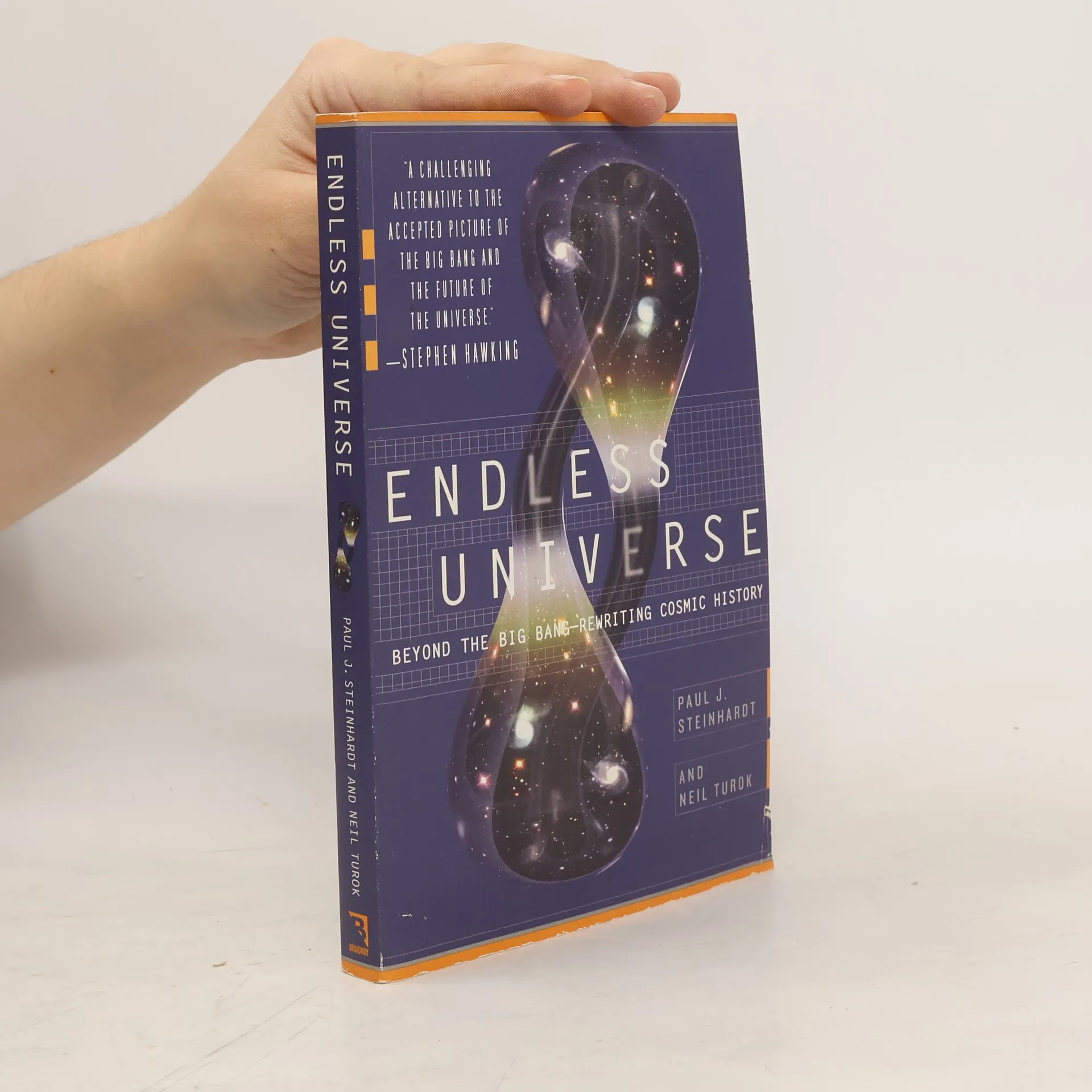
    Endless universe
    The Second Kind of Impossible: The Extraordinary Quest for a New Form of Matter
    • "When world-renowned physicist Paul Steinhardt began his career in the 1980s, scientists thought they had identified all the possible types of matter. But Steinhardt persisted in pursuing a wild fantasy he first imagined as a teenager, leading to a radical theory predicting an astonishing new form of matter that broke all the established rules. The breakthrough would launch him on a remarkable journey full of twists and turns that include international smugglers, corrupt scientists, secret diaries, fraudulent traders, political intrigue, and Russian security agents. The underlying science that Steinhardt and his team discover is deceptively simple, unexpectedly beautiful, and nothing short of revolutionary. Steinhardt's firsthand account is a scientific tale of suspense and adventure of the first order." -- Back cover

      The Second Kind of Impossible: The Extraordinary Quest for a New Form of Matter
      4,6
    • The Big Bang theory--the leading explanation for the origin of the universe--posits that space and time sprang into being about 14 billion years ago in a hot, expanding fireball of nearly infinite density. Over the last three decades, the theory has repeatedly had to be revised to address such issues as how galaxies and stars first formed and why the expansion of the universe is speeding up--let alone what caused the Big Bang in the first place. This book presents a bold new cosmology: Steinhardt and Turok recount remarkable developments in astronomy, particle physics, and superstring theory that together form the basis of their groundbreaking "Cyclic Universe" theory. According to this picture, the Big Bang was not the beginning of time, but the bridge to a past filled with endlessly repeating cycles, each accompanied by the creation of new matter and the formation of new galaxies, stars, and planets.--From publisher description.

      Endless universe
      4,0
    • Universo senza fine

      Oltre il Big Bang

      • 294pages
      • 11 heures de lecture

      Two world-renowned scientists present an audacious new vision of the cosmos that challenges the Big Bang theory. This widely accepted explanation for the universe's origin suggests that space and time began about 14 billion years ago in a hot, expanding fireball. Over the past three decades, the theory has undergone numerous revisions to address questions regarding the formation of galaxies and stars, as well as the accelerating expansion of the universe. However, the cause of the Big Bang remains unexplained. In their groundbreaking work, Paul J. Steinhardt and Neil Turok introduce a bold cosmology that posits the moment of creation as part of an infinite cycle of colossal collisions between our universe and a parallel world. They explore significant advancements in astronomy, particle physics, and superstring theory that underpin their “Cyclic Universe” theory. This perspective suggests that the Big Bang was not the beginning of time but a transition to a past characterized by endlessly repeating cycles of evolution, each generating new matter and forming new galaxies, stars, and planets. Their work addresses longstanding issues with the Big Bang model and offers a provocative new understanding of the cosmos's past and future, presenting a theory that could potentially solve cosmic mysteries.

      Universo senza fine