
Bookbot

Allan Garfield Gruchy

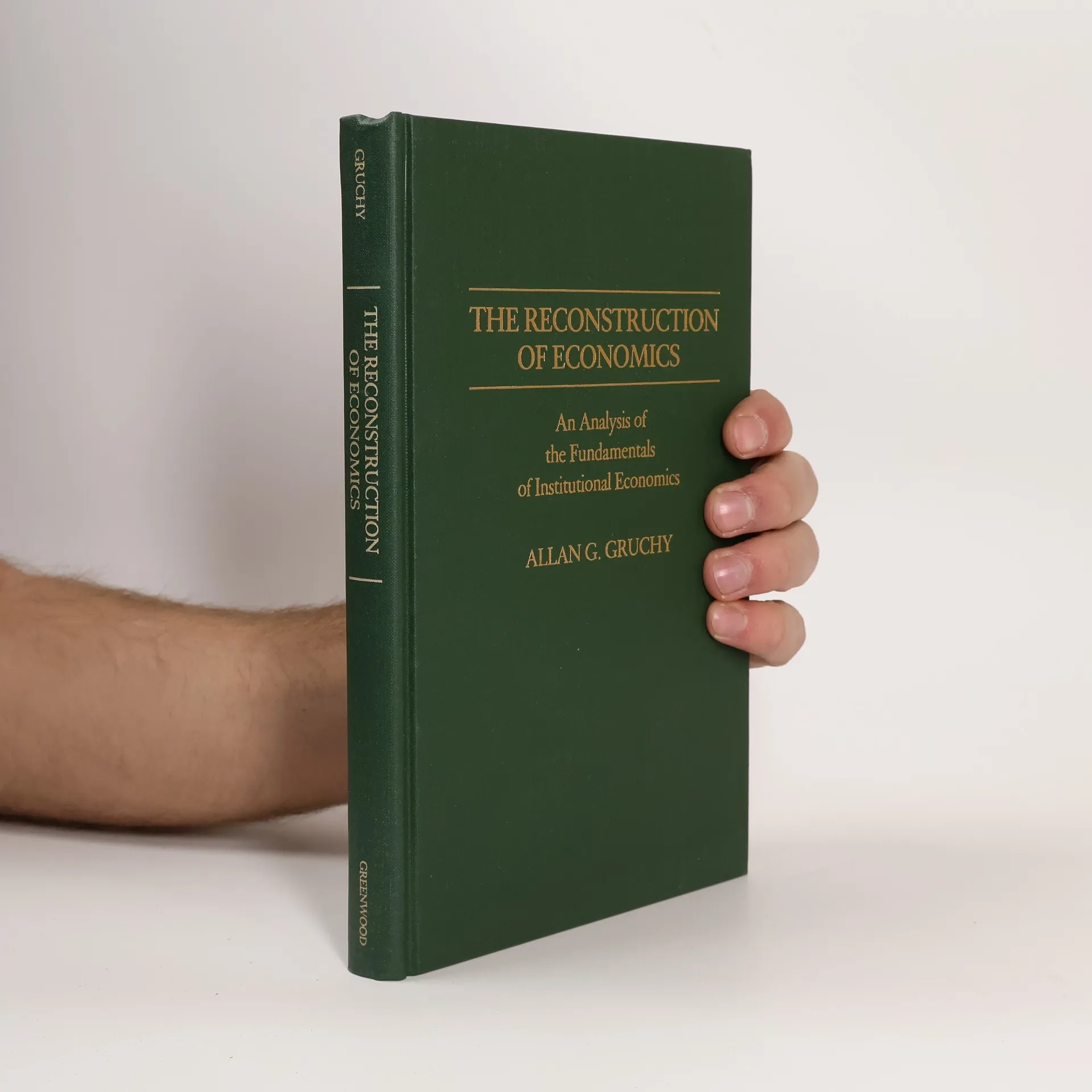
    The Reconstruction of Economics
    MODERN ECONOMIC THOUGHT
    • MODERN ECONOMIC THOUGHT

      • 690pages
      • 25 heures de lecture

      The movement to reconstruct economics was well established in the United States before 1929. By 1914, Thorstein Veblen had articulated his evolutionary or cultural version of economics. In the years leading up to World War I, Veblen's followers, including Wesley C. Mitchell and Robert F. Hoxie, actively defended this emerging institutional economics. By 1918, interest in this new economic theory had grown significantly, prompting discussions at the American Economic Association's annual meeting. By 1921, institutional economics had reached a peak in popularity. Following the 1920-21 depression, the movement continued to attract advocates, though it began to diverge from Veblen's earlier frameworks. Younger economists like John M. Clark and Rexford G. Tugwell introduced fresh perspectives, focusing more on immediate social and economic issues and envisioning reforms within the existing private-enterprise system. While they found some aspects of Veblen's work outdated, their approach remained fundamentally aligned with his tradition. This evolution in thought marked a significant shift in the quest to modernize economic science while retaining foundational principles.

      MODERN ECONOMIC THOUGHT2022
    • The Reconstruction of Economics

      An Analysis of the Fundamentals of Institutional Economics

      • 193pages
      • 7 heures de lecture

      Allan Gruchy, a prominent figure in the institutionalist school of economic thought, presents a significant work that is both insightful and profound. He aims to identify and articulate the essential unity of institutionalist economic thought, highlighting a crucial paradigm shift from traditional orthodox economics, which focuses on static equilibrium, to a dynamic process emphasized by institutionalist economics. Gruchy advocates for a much-needed reconstruction of economic theory. The orthodox approach, with its focus on efficiency and personal market forces, has often fallen short of addressing the complexities of the economic landscape. Over the past eighty years, institutional economists have developed an alternative framework, viewing the economic system as a continuous process aimed at meeting the material needs of individuals rather than merely maintaining competitive equilibrium. Despite the significant body of work in institutional economics, its distinctions from other approaches have sometimes been unclear. In this book, Gruchy, regarded as a leading authority in the field, clarifies these differences and presents a cohesive understanding of institutional economics, shaped by various intellectual and social currents.

      The Reconstruction of Economics1987