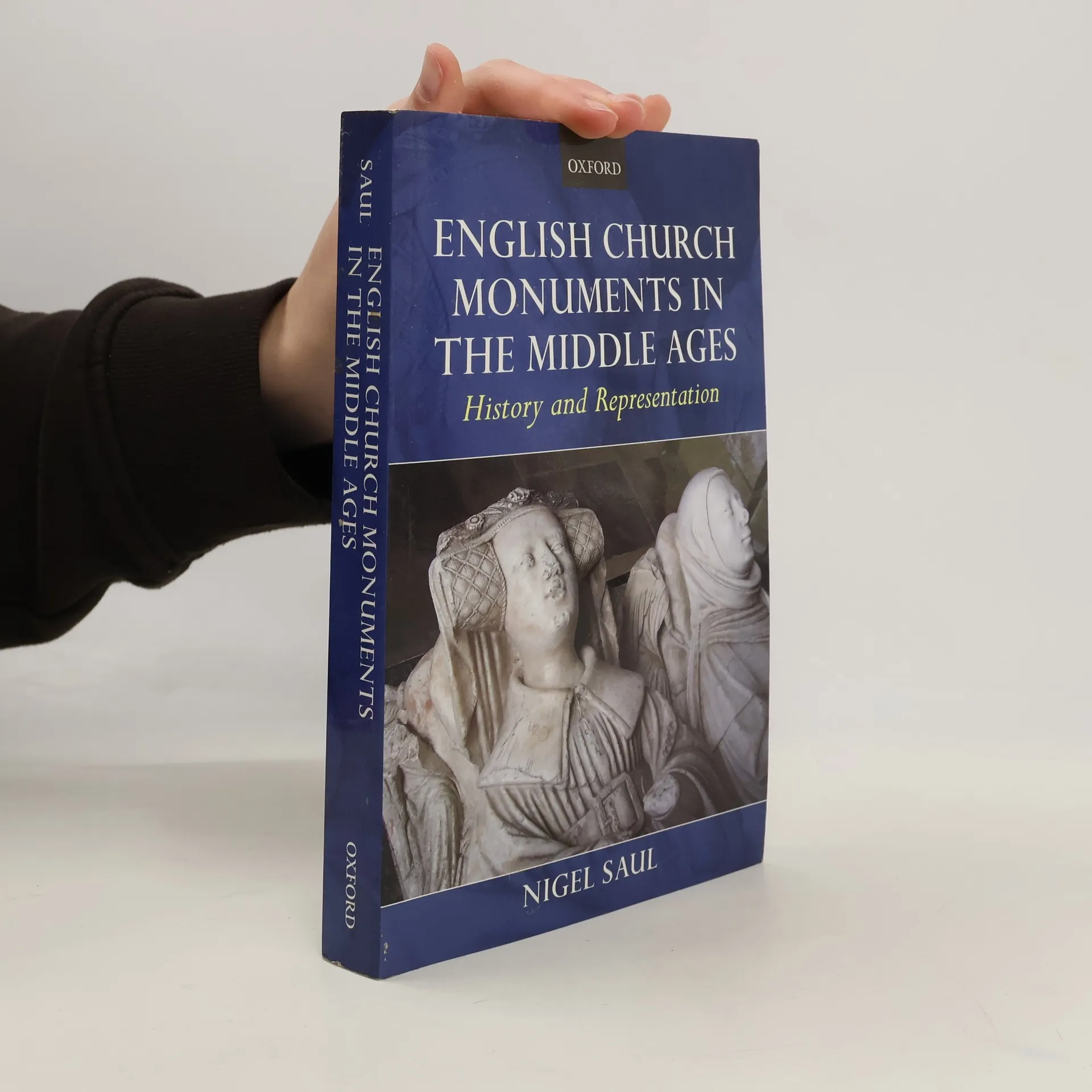
This work provides a comprehensive survey of English church monuments from the pre-Conquest period to the early sixteenth century, treating the subject within a historical context. It explores medieval monuments regarding their social significance and their role in the commemorative strategies of individuals. The text examines the production of monuments, their geographical distribution, the evolution of types, and design's role in conveying messages. A key theme is the self-representation of the commemorated, focusing on effigies of clergy, knights, esquires, and lesser landowners, while also analyzing women's effigial monuments through the lens of gender construction. The author utilizes monuments to gain insights into the lives of the commemorated and employs documentary sources to reveal the influences shaping these monuments. An innovative chapter discusses identity construction in inscriptions, highlighting how the liturgical role of monuments constrained opportunities for self-expression. The author aims to position monuments at the core of medieval studies, emphasizing their significance not only in the history of sculpture and design but also in social and religious history more broadly.
Saul Nigel Livres
Le professeur Nigel Saul est reconnu comme une autorité de premier plan dans l'histoire de l'Angleterre médiévale. Ses écrits explorent les complexités de la vie et de la société de cette époque, en utilisant des recherches approfondies pour donner vie au passé. L'approche de Saul est réputée pour sa minutie et son souci du détail, offrant aux lecteurs des perspectives pénétrantes sur les sujets qu'il aborde. Sa contribution littéraire réside dans sa capacité à rendre la connaissance historique accessible et captivante.