
Bookbot

Eric Rawson

    A Walk Down Edinburgh's Royal Mile
    The Fresh Air of the Summer Morning
    Capitalism and Slavery
    Banana Republic
    • Banana Republic

      • 261pages
      • 10 heures de lecture
      3,8(5)Évaluer

      When William Sydney Porter faces prison for embezzlement in Austin, Texas, he catches the first tramp steamer to Central America. The year is 1905. He washes up in the town of Coralio, in a country with no extradition treaty with the U.S. and a government at the mercy of American scoundrels, drunks, and robber-barons. Porter establishes himself as a newspaper printer, despite violent opposition from the most powerful individual in the country--Walter Whitaker, the president of the Vesuvius Fruit Company. Whitaker sees Porter's newspaper as a threat to his plans to overthrow the government and install a puppet who will give him concessions to build a railroad to the new Panama Canal. Loosely based on the history of U.S. intervention in the "banana wars" of the early twentieth century, as well as on the life and stories of O. Henry, Banana Republic is a comic tale of greed, ambition, and gunboat diplomacy.

      Banana Republic
    • Capitalism and Slavery

      • 288pages
      • 11 heures de lecture
      4,0(75)Évaluer

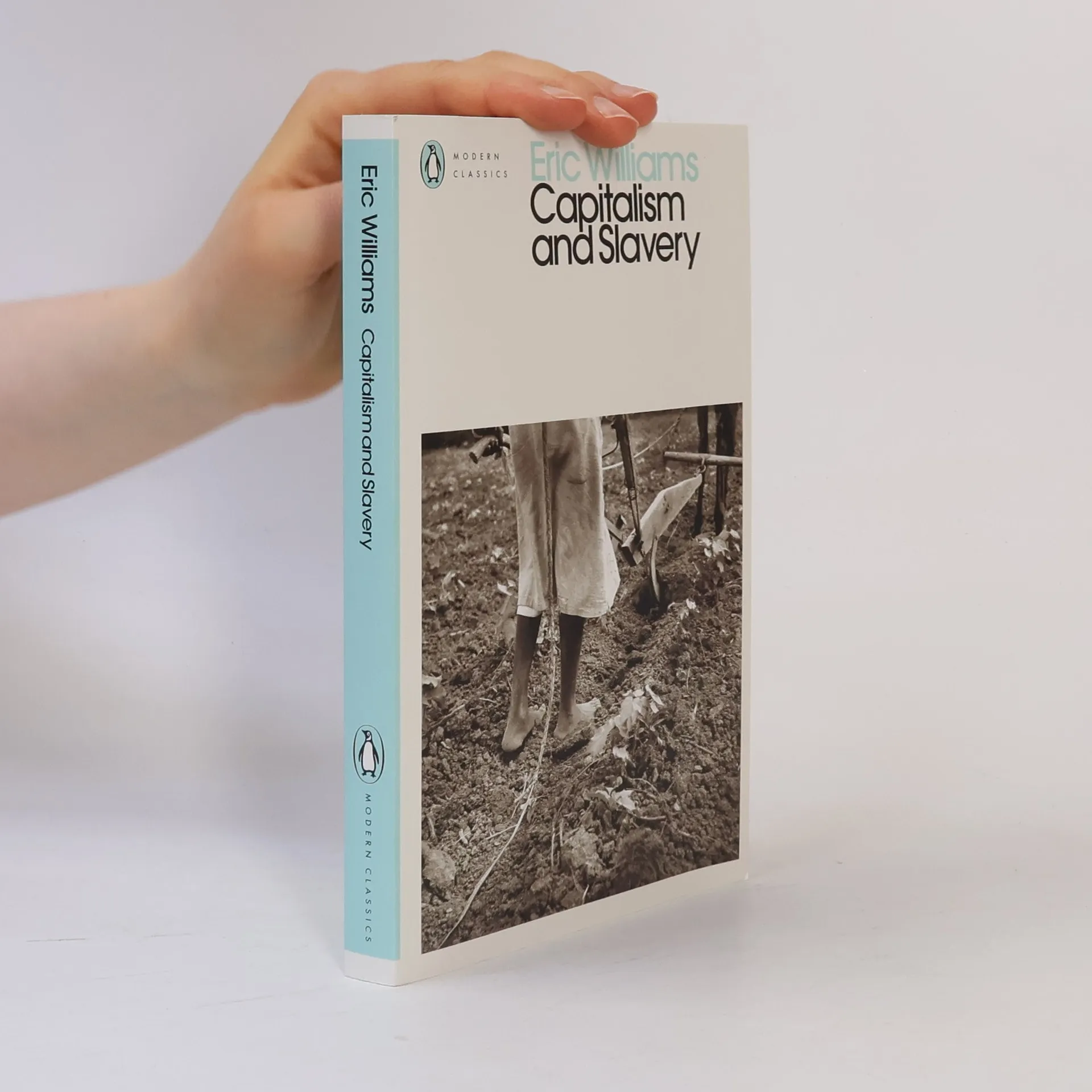
      "Slavery helped finance the Industrial Revolution in England. Plantation owners, shipbuilders, and merchants connected with the slave trade accumulated vast fortunes that established banks and heavy industry in Europe and expanded the reach of capitalism worldwide. Eric Williams advanced these powerful ideas in Capitalism and Slavery, published in 1944. Years ahead of its time, his profound critique became the foundation for studies of imperialism and economic development. Binding an economic view of history with strong moral argument, Williams's study of the role of slavery in financing the Industrial Revolution refuted traditional ideas of economic and moral progress and firmly established the centrality of the African slave trade in European economic development. He also showed that mature industrial capitalism in turn helped destroy the slave system. Establishing the exploitation of commercial capitalism and its link to racial attitudes, Williams employed a historicist vision that set the tone for future studies.William A. Darity Jr.'s new foreword highlights Williams's insights for a new generation of readers, and Colin Palmer's introduction assesses the lasting impact of Williams's groundbreaking work and analyzes the heated scholarly debates it generated when it first appeared."--Back cover.

      Capitalism and Slavery
    • This is the story of Duncan Napier who founded Edinburgh's herbalist shop in 1860. Looking back some 50 years to his early days as a herbalist, Duncan's story is one of real courage in adversity. Duncan describes his early days as a herbalist and gives a fascinating account of some of the ailments he was called upon to treat.

      The Fresh Air of the Summer Morning
    • Writing in 1824, the author and future publisher Robert Chambers described Edinburgh as "a truly romantic place" and that for visitors it offered " a perfectly unique scene, and one which, once contemplated, was not easily to be forgotten." What the young Robert Chambers wrote some 200 years ago still holds true today for the thousands of local folk and visitors who walk down Edinburgh's historic Royal Mile. There can be few streets anywhere in the world that are so steeped in history. Stretching from the Castlehill lying in the shadow of the majestic Edinburgh Castle, then running down the quaintly named Lawnmarket, the Royal Mile then enters the ancient High Street itself before descending down the Canongate past the Scottish Parliament building and finally ending at the Royal Palace of Holyrood. For well over a 1000 years, the Royal Mile has been at the heart of Scotland's capital city. 'A Walk Down Edinburgh's Royal Mile' is intended both as a guide book for our many visitors and as an informative reference book for those, perhaps living far away as expatriate Scots, who have an interest in Edinburgh's unique story. 'A Walk Down Edinburgh's Royal Mile' will also take you off the historic street into some of the ancient closes and wynds which run north to the present-day New Town and south to the Grassmarket and the Cowgate. Many visitors on the Royal Mile pass these by unaware of their treasure trove of tales. Here you will find some of the best stories such as the marital problems of Lady Stair, the ill-luck of Deacon Brodie, the unsolved murder of Thomas Begbie the bank messenger and the murderous activities of the villainous Burke and Hare. The book will introduce you to some of the remarkable characters who have made this journey. Here you will meet such Scottish monarchs as Robert Bruce, James IV and Mary, Queen of Scots. They are joined by other iconic Scots such as Bonnie Prince Charlie, Sir Walter Scott, John Knox, Elsie Inglis and Robert Burns. Here too you will find an assortment of characters including a notorious warlock, assassins, murderers, thieves, a servant boy roasted on a spit and a town councillor shot dead by a 10 years' old schoolboy. Your journey will introduce you to some colourful eccentrics including Lord Monboddo who first suggested our descent from apes and Hugo Arnot, the asthmatic lawyer, whose 'History of Edinburgh', published in 1779, gives us an invaluable account of the dramatic changes taking place in the city in the second half of the 18th century. Sharing your journey are some true Edinburgh 'local heroes' - George Drummond, six times elected as Lord Provost who was the driving inspiration behind the planned New Town; John Kay, the caricaturist who during a career that spanned more than 30 years from 1785 to 1807, has left us images and pen portraits of several hundred of his contemporaries who he observed from his little premises nestling behind St Giles Kirk, Sir William Chambers, another reforming Lord Provost and Sir Patrick Geddes the late 19th century conservationist who fought to preserve what little was left of the historic Old Town from civic destruction. Nor must we forget the celebrated 'Golden Age' of the late 18th century when Edinburgh rejoiced in the reputation of such intellectual giants as David Hume, Adam Smith, William Robertson, Adam Ferguson and James Hutton. What a cast of characters! 'A Walk Down Edinburgh's Royal Mile' draws from several contemporary sources in describing such events as the Great Fire of 1824 and the murder of David Rizzio, secretary to Mary, Queen of Scots. The book is generously illustrated with pictures of the Royal Mile as we can enjoy it today as well as contemporary prints and drawings.

      A Walk Down Edinburgh's Royal Mile