
Bookbot

Audrey Kurth Cronin

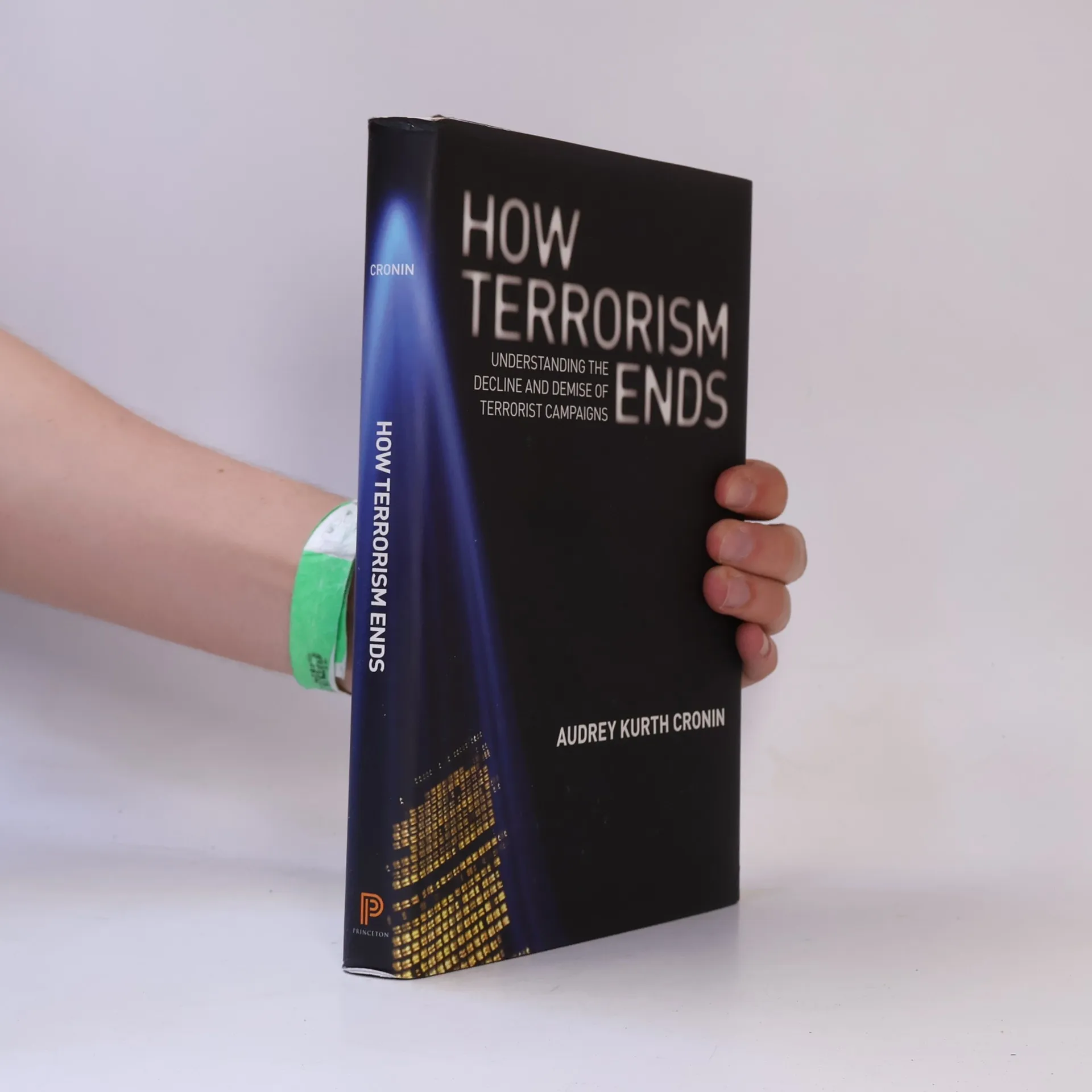
    How Terrorism Ends
    Great Power Politics and the Struggle over Austria, 1945-1955
    Power to the People
    • Power to the People

      • 448pages
      • 16 heures de lecture

      Never have so many possessed the means to be so lethal. The diffusion of modern technology—robotics, cyber weapons, 3-D printing, autonomous systems, and artificial intelligence—has granted ordinary individuals access to weapons of mass violence once monopolized by states. Despite efforts by governments to control this flow to individuals and non-state groups, these attempts are failing. Audrey Kurth Cronin explains that we are witnessing an intensification of an age-old trend: technological advancements combined with changes in user demographics have historically reshaped warfare. Accessible innovations in destructive force have driven new patterns of political violence, as seen with the inventions of dynamite and the AK-47, which inadvertently fueled terrorist and insurgent movements. Today, emerging technologies are transforming society and redistributing power, disrupting institutions, including armed forces. The "sharing economy" of the twenty-first century is emblematic of this shift. New "open" technologies are changing access to violence, while functions like mass mobilization and force projection, once state-controlled, are now utilized by non-state actors. Cronin emphasizes the need for strategic responses to harness the benefits of these technologies while mitigating the risks they pose to global security. As power in the form of lethal technology flows to the people, we must act wisely to ensure safety.

      Power to the People
      3,8
    • In this account of an unusual episode in the Cold War, Audrey Kurth Cronin examines the negotiations over Austria and the Soviet Union's sudden and surprising decision to withdraw its troops and accept the country as a neutral Western state, after having rejected any settlement for eight years.

      Great Power Politics and the Struggle over Austria, 1945-1955
    • How Terrorism Ends

      Understanding the Decline and Demise of Terrorist Campaigns

      • 311pages
      • 11 heures de lecture

      Why every terrorist movement comes to an end―and how this history can help us combat today's terrorist threatsAmid the fear following 9/11 and other recent terror attacks, it is easy to forget the most important fact about terrorist they always come to an end―and often far more quickly than expected. Contrary to what many assume, when it comes to dealing with terrorism it may be more important to understand how it ends than how it begins. Only by understanding the common ways in which terrorist movements have died out or been eradicated in the past can we hope to figure out how to speed the decline of today's terrorist groups, while avoiding unnecessary fears and costly overreactions. In How Terrorism Ends , Audrey Kurth Cronin examines how terrorist campaigns have met their demise over the past two centuries, and applies these enduring lessons to outline a new strategy against al-Qaeda.This book answers questions such How long do terrorist campaigns last? When does targeting the leadership finish a group? When do negotiations lead to the end? Under what conditions do groups transition to other forms of violence, such as insurgency or civil war? How and when do they succeed or fail, and then disappear? Examining a wide range of historical examples―including the anti-tsarist Narodnaya Volya, the Provisional IRA, Peru's Shining Path, Japan's Aum Shinrikyo, and various Palestinian groups―Cronin identifies the ways in which almost all terrorist groups die out, including decapitation (catching or killing the leader), negotiation, repression, and implosion.How Terrorism Ends is the only comprehensive book on its subject and a rarity among all the books on terrorism―at once practical, optimistic, rigorous, and historical.

      How Terrorism Ends