

Resisting Borders and Technologies of Violence
- 354pages
- 13 heures de lecture


A unique, stunning collection of images of Palestine in the late 19th and early 20th centuries and a testament to the vibrancy of Palestinian society prior to occupation. This book tells the story, in both English and Arabic, of a land full of people--people with families, hopes, dreams, and a deep connection to their home--before Israel's establishment in 1948, known to Palestinians as the Nakba, or "catastrophe." Denying Palestinian existence has been a fundamental premise of Zionism, which has sought not only to hide this existence but also to erase its memory. But existence leaves traces, and the imprint of the Palestine that was remains, even in the absence of those expelled from their lands. It appears in the ruins of a village whose name no longer appears in the maps, in the drawing of a lost landscape, in the lyrics of a song, or in the photographs from a family album. Co-edited by Teresa Aranguren and Sandra Barrilaro and featuring an introduction by Mohammed El-Kurd, the photographs in this book are traces of that existence that have not been erased. They are testament not to nostalgia, but to the power of resistance.
A critical collection of conversations with Toni Morrison, Alice Walker, Gayl Jones and other Black women writers that changed the scope of Black literature in the 20th century and beyond.
The third volume in this comprehensive study of social security in the Balkan states. Social security is presented from a broad perspective as a mechanism that addresses human needs, provides protection against social risks, reduces social tensions and secures peace. Various sectors of social policy, pension systems, health care systems, disability insurance, labor policy as well as social risks, such as poverty and unemployment, have been analyzed from historical, economic, political, sociological and security perspective. This book offers recommendations for improving the level of social security in the region. This volume focuses on the Republic of North Macedonia and the Republic of Montenegro. Contributors are: Dritero Arifi, Ngadhnjim Brovina, Pëllumb Çollaku, Dorota Domalewska, Besnik Fetahu, Remzije Istrefi, Maja Jandrić, Gordana Matković, Ruzhdi Morina, Artan Mustafa, Katarina Stanić, and Marzena Żakowska.
In this book, refugees and abductees recount their escapes from the wars in Darfur and South Sudan, from political and religious persecution, and from abduction by militias. In their own words, they recount life before their displacement and the reasons for their flight.
The culmination of a decade of collective research, this important volume offers an essential analysis of Brazilian economic thought.
This volume addresses pertinent questions related to cross-border labor migration and puts forward a "labor market" perspective that goes beyond the national frame of reference prevailing in most of the extant labor market scholarship. In four sections, the volume pulls together a number of key threads: How can we theoretically grasp "global labor markets?" What does existing empirical research reveal about the current state of affairs and the historical development of "global labor markets", provided that they can even be regarded as "global?" How is the emergence of border-crossing labor markets influenced by existing institutions, international intermediaries and social networks? The editors have crafted a coherent volume that enriches our understanding of both globalization and labor markets. Contributors include: Patrik Aspers, Peter-Paul Banziger, Martin Buhler, Rebecca Gumbrell-McCormick, Richard Hyman, Sven Kesselring, Eleonore Kofman, Ursula Mense-Petermann, Sigrid Quack, Alexandra Scheele, Helen Schwenken, Karen Shire, Marcel van der Linden, Thomas Welskopp, Tobias Werron, and Anna Zaharieva /p>
"This thorough and timely book collects essays on the political economy of Brazil, focusing on the federal administrations led by the Workers' Party (PT), under Presidents Lula and Dilma Rousseff. The essays examine the economic, political, and social aspects of these governments, and a whole spectrum of policies implemented - or not - between 2003 and 2016, with implications for the subsequent period up to, and including, the administration led by Jair Bolsonaro. What emerges from this examination is the inescapable recognition that those left leaning governments were neoliberal, but in different ways when compared with other administrations in Brazil's history. Their similarities and differences are examined in detail."-- Provided by publisher
Staughton Lynd's brilliant and masterful arguments against the Vietnam War and the best tactics and strategies to end it.
An essential new collection of reflections on the theory and methodology of social science research.
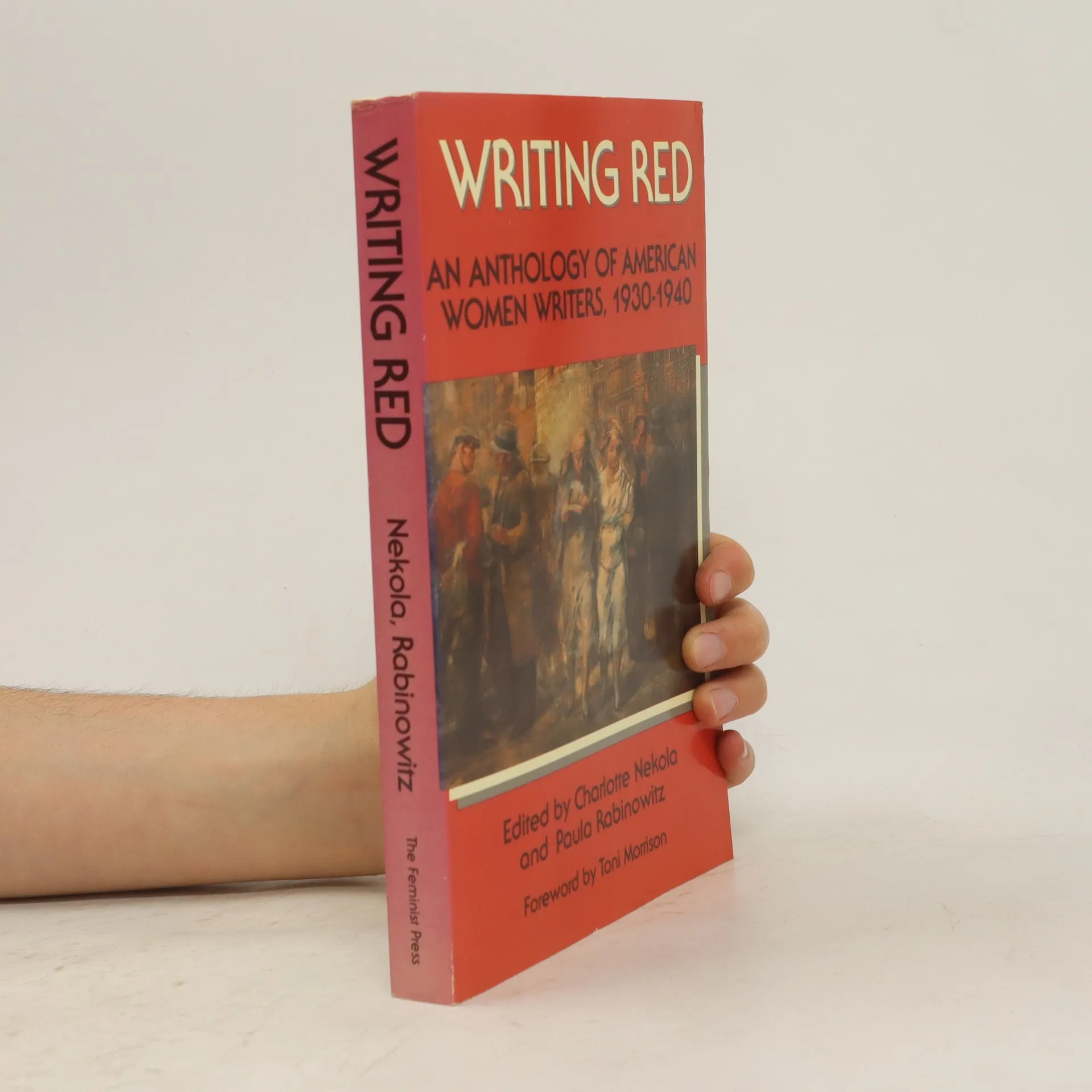
A landmark volume showcasing the vital writing of revolutionary women during the 1930s.
An important sociological intervention into the role played by media narratives-usually reflecting the ruling ideas-in shaping social and political responses to Europe's refugee 'crisis.'
This sweeping volume provides a thorough accounting of Gramsci's relevance to the history of science.
The Sentences That Create Us provides a road map for incarcerated people and their allies to have a thriving writing life behind bars-and shared beyond the walls-that draws on the unique insights of more than fifty contributors, most themselves justice-involved, to offer advice, inspiration and resources.
This landmark volume re-centres class analysis as a critical method in the study of states.
An engaging and ground breaking attempt to bring the insights of Trotsky's theory of uneven and combined development to bear on world literature.
This massive six volume set gathers together the most important spoken and written words of Debs for the first time, allowing a deeper understanding of radical political opposition in America during the first quarter of the twentieth century.
An important sociological intervention into the way that states enact welfare policies in the Neoliberal era.
A timely collection of essays examining the legacies and politics of knowledge production and the writing-back paradigm.
Part Field Notes from a Catastrophe, part 1984, part World War Z, John Feffer's striking new dystopian novel, takes us deep into the battered, shattered world of 2050. The European Union has broken apart. Multiethnic great powers like Russia and China have shriveled. America's global military footprint has virtually disappeared and the United States remains united in name only. Nationalism has proven the century's most enduring force as ever-rising global temperatures have supercharged each-against-all competition and conflict among the now 300-plus members of an increasingly feeble United Nations. As he navigates the world of 2050, Julian West offers a roadmap for the path we're already on, a chronicle of impending disaster, and a faint light of hope. He may be humanity's last best chance to explain how the world unraveled--if he can survive the savage beauty of the Splinterlands. John Feffer is the director of Foreign Policy in Focus at the Institute for Policy Studies. In 2012-2013, he was also an Open Society Fellow looking at the transformations that have taken place in Eastern Europe since 1989. He is the author of several books and numerous articles. He has also produced six plays, including three one-man shows, and published a novel.