
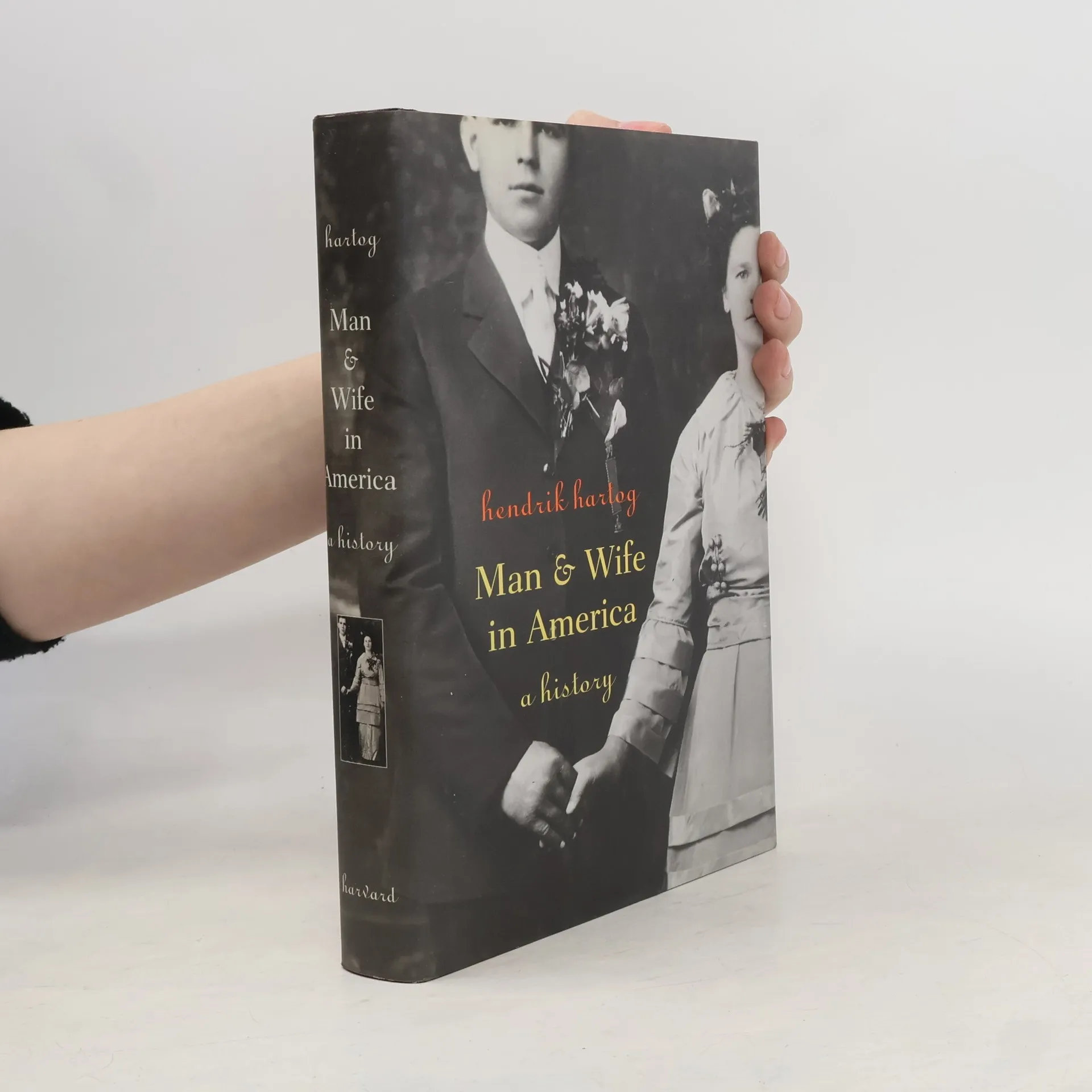
In nineteenth-century America, marriage was legally defined as a permanent bond characterized by the husband's authority and the wife's dependence. However, the law also provided avenues for individuals to escape this relationship. Hendrik Hartog explores these complexities, examining how husbands and wives navigated marriage within this legal framework. Through case records, he reveals the struggles and conflicts that challenge the notion of a stable marital golden age. Hartog illustrates how the law shaped marital relations and spousal identities, while individuals manipulated legal rules to meet their needs. The narrative features a diverse cast: wives seeking to leave abusive husbands, women leveraging their marital status for personal gain, accidental and intentional bigamists, men confronting their wives' lovers, and couples fighting for divorce in a culture that often denied them that option. As we engage with these stories, we see reflections of our own experiences and anxieties regarding marriage. Hartog connects our contemporary conflicts about marital roles and identities to the historical legal struggles that have defined and transformed marriage.
Hendrik Hartog Livres


The Trouble with Minna
A Case of Slavery and Emancipation in the Antebellum North
- 208pages
- 8 heures de lecture
The book delves into a pivotal 1840 case in New Jersey to examine the complexities of gradual emancipation in the early nineteenth century. By analyzing Minna's situation, where white individuals debated the financial responsibility for her care, Hartog highlights how language surrounding care evolved into a common theme in legal discussions. The narrative uncovers the contradictions within the legal status of slavery, illustrating a landscape where enslaved individuals could be considered both legally bound and free, reflecting the nuanced realities of that era.
"Hendrik Hartog's lively investigation of the legal histories of Progressive reform, childhood, criminality, repression, and free speech revolves around the mysterious Jack Robbins, an iconoclastic social reformer dedicated to the ideals of virtuous boyhood. In early twentieth-century Chicago, Robbins's Boys' Brotherhood Republic sought to keep boys out of the clutches of both vice and the nascent carceral state. The curiosity of Robbins's story is compounded by the racially and politically charged legal case that arose from his will, which established the extent to which last wishes must conform with dominant social values. Hartog crafts a twisty and engaging book full of surprising connections and persistent mysteries"--