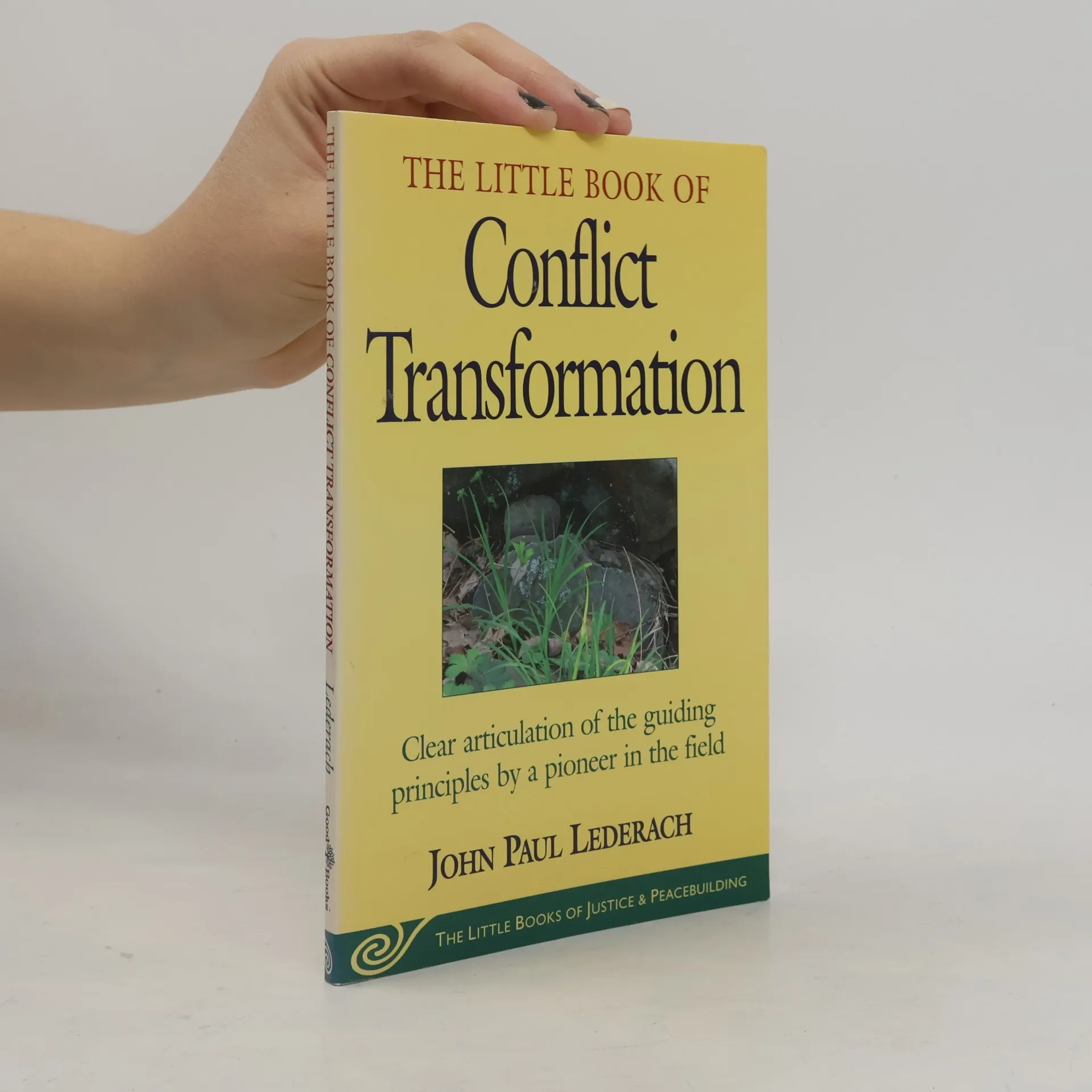
John Paul Lederach est un auteur de premier plan dans le domaine de la résolution des conflits et de la médiation. Son travail explore en profondeur les dimensions sociales et psychologiques de la construction de la paix et de la transformation sociétale. L'approche de Lederach met l'accent sur des stratégies pratiques et une compréhension approfondie de la dynamique des conflits, ce qui en fait une figure influente dans la construction de la paix internationale. Ses écrits offrent des perspectives précieuses à ceux qui recherchent des résolutions constructives aux situations tendues.
John Paul Lederach explores the evolution of his understanding of
peacebuilding by reflecting on his own experiences in the field.
Peacebuilding, in his view, is both a learned skill and an art. Finding this
art, he says, requires a shift in worldview. Conflict professionals must
envision their work as a creative act - an exercise of what Lederach calls the
moral imagination.
Since the early 1950s, John Paul Lederach has travelled worldwide as a
mediation trainer and conflict resolution consultant. He has worked with
governments, justice departments, and youth programs in Latin America, the
Philippines, Cambodia, Somalia, and Africa. Drawing on his experience,
Lederach explains the process and key variables used in teaching conflict
resolution.
Building Peace is John Paul Lederach's definitive statement on peacebuilding. Lederach explains why we need to move beyond "traditional" diplomacy, which often emphasizes top-level leaders and short-term objectives, toward a holistic approach that stresses the multiplicity of peacemakers, long-term perspectives, and the need to create an infrastructure that empowers resources within a society and maximizes contributions from outside.
Clear Articulation of the Guiding Principles by a Pioneer in the Field
64pages
3 heures de lecture
A guide to conflict resolution, or as the author prefers, “conflict transformation” that emphasizes the importance of building relationships and social structures through a radical respect for human rights and life.This clearly articulated statement offers a hopeful and workable approach to conflict—that eternally beleaguering human situation. John Paul Lederach is internationally recognized for his breakthrough thinking and action related to conflict on all levels—person-to-person, factions within communities, warring nations. He explores why "conflict transformation " is more appropriate than "conflict resolution " or " management ." But he refuses to be drawn into impractical idealism. Topics Firmly rooted in faith and Mennonite teachings, and related to the popular concept of restorative justice, conflict transformation is an idea with a deep reach. Its practice, says Lederach, requires "both solutions and social change." It asks not simply "How do we end something not desired?" but "How do we end something destructive and build something desired?" How do we deal with the immediate crisis, as well as the long-term situation? What disciplines make such thinking and practices possible?This title is part of The Little Books of Justice and Peacebuilding series.